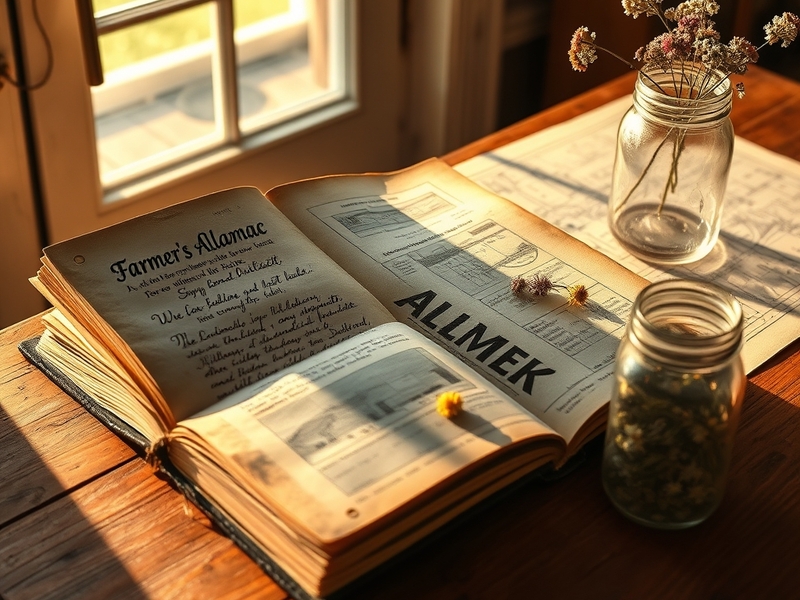
Long before smartphones and weather apps dominated daily forecasts, farmers relied on an unlikely tool to plan their planting and harvest: the Farmers’ Almanac. First published in 1792, this annual publication blends weather predictions, astronomical data, gardening tips, and practical advice into a single volume that has endured for over two centuries. While modern meteorology has advanced dramatically, the Almanac remains a cultural touchstone—and, for some, a trusted guide.
From Thomas Jefferson to TikTok: A Legacy Built on Tradition
The Farmers’ Almanac traces its origins to Robert B. Thomas, a Massachusetts farmer and amateur astronomer. Frustrated by the lack of reliable weather forecasting, Thomas began compiling his own predictions using a mix of astronomical cycles, weather lore, and historical patterns. His first edition, titled Farmers’ Almanac, debuted in 1792—just a year after George Washington’s first term as president. Unlike today’s glossy magazines, early editions were printed on cheap paper with ink that often smeared.
Thomas’s approach was unconventional by modern standards. He relied heavily on the “360-day year” method, a calculation tied to the solar cycle, rather than the Gregorian calendar. This quirk led to occasional inaccuracies, but it also gave the Almanac a mystical reputation. Over time, the publication expanded beyond weather forecasts to include planting guides, recipes, and even medical advice. By the 19th century, it had become a staple in rural American homes, with families passing down dog-eared copies year after year.
Today, the Almanac is more than just a relic of the past—it’s a multimedia brand. While the print edition still sells over 3 million copies annually, the brand has embraced digital platforms, including a robust website and social media presence. Its TikTok account, where editors share quirky tips like “plant beans during a waning moon,” has amassed a following of nearly 200,000 users. This blend of old-world charm and new-age virality proves that the Farmers’ Almanac has successfully evolved without losing its core identity.
The Science Behind the Predictions: Folklore or Forecasting?
Critics often dismiss the Farmers’ Almanac’s forecasts as little more than superstition, but its methods are rooted in more than just old wives’ tales. The Almanac uses a proprietary formula that combines solar activity, lunar phases, and historical weather data. While it doesn’t rely on the supercomputers and satellite imagery that power modern meteorology, its predictions are surprisingly consistent—with an accuracy rate that hovers around 50-60%, according to independent studies.
One of the Almanac’s most enduring claims is its ability to predict long-range weather patterns months in advance. For example, its 2023 forecast predicted a “cold and snowy winter” for the northeastern U.S., which largely came true during the early months of the year. However, skeptics argue that such forecasts are vague enough to encompass a range of outcomes. A “cold and snowy winter” could describe anything from a single blizzard to a season of relentless storms. The Almanac’s editors acknowledge this, calling their predictions “trends” rather than precise forecasts.
Despite the skepticism, the Farmers’ Almanac fills a niche that modern weather services often overlook. While the National Weather Service provides hyper-local, real-time updates, the Almanac offers a broader, big-picture view—one that resonates with farmers, gardeners, and outdoor enthusiasts who plan months ahead. It’s less about “will it rain this weekend?” and more about “when should I plant my tomatoes?” This practical focus has kept the publication relevant in an era of instant gratification.
The Almanac’s approach also highlights a fascinating intersection of science and folklore. Many of its weather adages—like “red sky at night, shepherd’s delight”—are based on observable patterns that have been refined over generations. While these sayings aren’t infallible, they reflect a deep understanding of local climates and seasonal changes. In an age where climate change is disrupting historical weather norms, the Almanac’s blend of tradition and adaptation offers a unique perspective.
Beyond Weather: The Almanac’s Hidden Gems
The Farmers’ Almanac is often pigeonholed as a weather guide, but its pages are packed with far more than just forecasts. One of its most beloved sections is the gardening advice, which includes optimal planting dates for everything from corn to zinnias. These recommendations are based on lunar cycles—a practice known as “planting by the moon.” While scientific studies on the topic are mixed, many gardeners swear by its effectiveness, citing better germination rates and healthier plants.
The Almanac also serves as a time capsule of rural American life. Recipes for old-fashioned dishes like scrapple and pickled watermelon rind offer a glimpse into 19th-century kitchens, while its medical advice—such as using turpentine for sprains or vinegar for fevers—reflects the home remedies of a bygone era. Some of these tips are harmless; others are downright dangerous. The Almanac’s editors have acknowledged that some older advice is outdated, but they preserve it for historical context.
Another standout feature is the Almanac’s “best days” calendar, which advises readers on the most auspicious times for activities like fishing, hunting, and even haircuts. These suggestions are rooted in astrological beliefs, with specific days tied to the moon’s phases. While modern science dismisses these claims, they add a layer of mystique to the publication. For many readers, the Almanac isn’t just a tool—it’s a ritual, a way to connect with the rhythms of nature in an increasingly digital world.
Here’s a closer look at some of the Almanac’s lesser-known but fascinating features:
- Astrological Insights: Each year includes a “Moon Sign Guide” that suggests the best times for various activities, from starting a diet to buying a car.
- Home and Garden Hacks: Tips range from homemade cleaning solutions to advice on when to fertilize your lawn.
- Historical Anecdotes: The Almanac often includes essays on historical events, such as the Great Blizzard of 1888 or the Dust Bowl, tying them to broader climate patterns.
- Riddles and Trivia: A section dedicated to brain teasers, proverbs, and odd facts keeps readers engaged beyond the practical advice.
- Economic Forecasts: Some editions include predictions about crop prices and market trends, offering a glimpse into agricultural economics.
The Modern Almanac: Adaptation in the Digital Age
The Farmers’ Almanac’s ability to thrive in the 21st century is a testament to its adaptability. While the print edition remains a cornerstone, the brand has expanded into podcasts, newsletters, and even a mobile app. Its website, farmersalmanac.com, offers interactive tools like a frost date calculator and a moon phase tracker, blending tradition with technology.
One of the Almanac’s most innovative moves has been its foray into social media. Its Instagram and TikTok accounts feature bite-sized tips, memes, and even behind-the-scenes looks at the editorial process. For example, a recent TikTok video showed an editor using a magnifying glass to pore over historical weather records—a nod to the Almanac’s meticulous research methods. This digital engagement has introduced the brand to younger audiences who might otherwise dismiss it as a relic of the past.
The Almanac has also partnered with modern platforms to reach new demographics. In 2022, it collaborated with Dave’s Locker Sports to create a series of articles on how weather impacts outdoor activities like hiking and fishing. These partnerships highlight the Almanac’s role as a bridge between old and new, offering timeless wisdom in a format that resonates with today’s audiences.
Yet, the Almanac’s digital expansion hasn’t been without challenges. The rise of AI-powered weather apps and hyper-personalized forecasts has made it harder for the Almanac to compete for attention. Some critics argue that its forecasts are too vague to be useful, while others question the validity of its methods. In response, the Almanac has doubled down on its “common sense” approach, emphasizing practicality over precision. As one editor put it, “We’re not trying to replace your weather app. We’re trying to give you a reason to look up from your phone.”
Why the Farmers’ Almanac Still Matters
In a world dominated by algorithms and data-driven predictions, the Farmers’ Almanac offers something rare: a human touch. Its forecasts may not be 100% accurate, but they provide a sense of continuity in an era of constant change. For many readers, the Almanac is more than a guide—it’s a tradition, a family heirloom passed down through generations. It reminds us that wisdom isn’t always found in spreadsheets or supercomputers; sometimes, it’s tucked between the pages of a well-worn book.
The Almanac also serves as a cultural artifact, reflecting the values and concerns of rural America. Its pages are filled with advice on self-sufficiency, from canning recipes to instructions for repairing tools. In an age of supply chain disruptions and climate anxiety, these skills are more relevant than ever. The Almanac doesn’t just predict the weather; it offers a blueprint for resilience.
Ultimately, the Farmers’ Almanac endures because it speaks to a universal human desire: the need to feel connected to the natural world. Whether you’re a farmer planning next year’s harvest, a gardener timing your tomato planting, or just someone who enjoys flipping through its quirky pages, the Almanac offers a way to slow down and observe the rhythms of the earth. In a fast-paced world, that’s a gift worth preserving.
As the Almanac enters its 232nd year, it faces the same question that has guided it since 1792: How do we balance tradition with progress? The answer, it seems, lies in the pages of the book itself—where old wisdom and new ideas coexist, side by side.