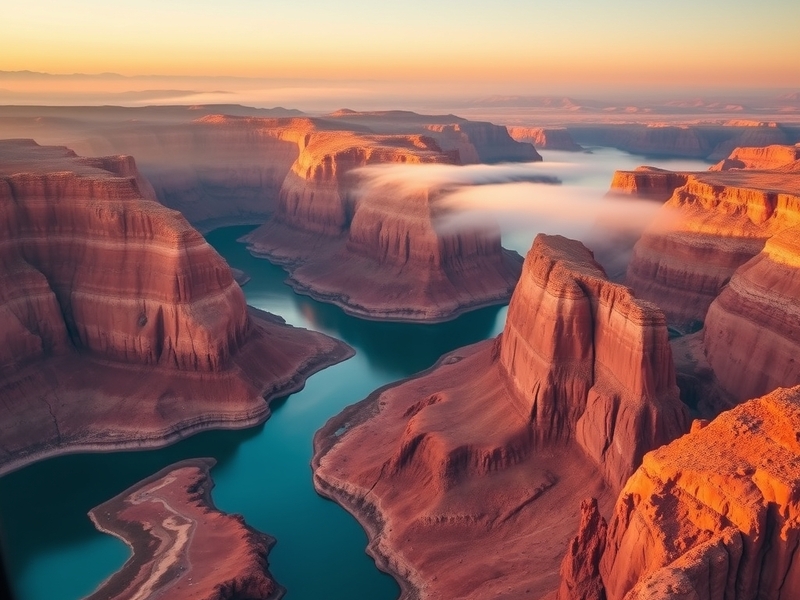
Lake Powell, one of the largest man-made reservoirs in the United States, stretches across the red-rock landscapes of Utah and Arizona, embodying both the grandeur of the American West and the pressing challenges of water management in the 21st century. Created by the construction of Glen Canyon Dam on the Colorado River in the 1950s and 1960s, the lake was envisioned as a symbol of human ingenuity—a way to control flooding, generate hydroelectric power, and ensure reliable water supplies for millions of people across seven states.
Yet today, Lake Powell faces an existential crisis. Years of prolonged drought, exacerbated by climate change and overuse of the Colorado River, have pushed water levels to historic lows. The lake’s dramatic decline has far-reaching consequences, from disrupting ecosystems and recreational economies to threatening the water security of cities like Las Vegas, Phoenix, and Los Angeles. As policymakers, scientists, and communities grapple with these challenges, Lake Powell has become a stark reminder of the fragile balance between human ambition and environmental limits.
How Lake Powell Became a Cornerstone of the American West
Lake Powell was born out of a vision to tame the Colorado River, a waterway known for its unpredictable floods and unreliable flows. The construction of Glen Canyon Dam, completed in 1966, created a reservoir capable of storing 27 million acre-feet of water—enough to cover the entire state of Utah in nearly seven inches of water. The dam’s primary purpose was to regulate the river’s flow, generate electricity for millions of households, and provide water for agriculture and urban centers in the Southwest.
The lake itself covers over 250 square miles, with nearly 2,000 miles of shoreline winding through canyons and mesas. When full, its deep blue waters contrast sharply with the surrounding desert, making it a popular destination for boating, fishing, and camping. The reservoir also supports a diverse ecosystem, including endangered fish species like the humpback chub and the razorback sucker, which rely on the lake’s fluctuating water levels and seasonal flows.
But the lake’s creation came at a cost. The flooding of Glen Canyon submerged ancient Indigenous lands, including sacred sites and archaeological treasures, displacing communities and erasing a cultural landscape that had existed for thousands of years. The controversy surrounding the dam’s construction remains a contentious issue, with critics arguing that the project prioritized economic development over environmental and cultural preservation.
Why Lake Powell Is Disappearing—and What It Means for the Region
The current crisis at Lake Powell is the result of a perfect storm of environmental and human factors. The Colorado River Basin has experienced more than two decades of drought, the most severe in over 1,200 years. Climate change has intensified the problem, reducing snowpack in the Rocky Mountains—the primary source of the river’s water—while increasing temperatures that accelerate evaporation from the reservoir. Meanwhile, the demands on the river’s water have only grown, with populations in cities like Denver, Albuquerque, and San Diego relying on it for survival.
As of mid-2024, Lake Powell’s water levels have dropped to just 22% of full capacity, a level not seen since the reservoir was first filling in the 1960s. The decline has forced the Bureau of Reclamation to implement emergency measures, including reduced water releases from upstream reservoirs like Lake Mead. These actions have raised alarms among water managers, who warn that continued declines could trigger a “dead pool” scenario—where the lake’s water level falls so low that it can no longer flow downstream to meet the needs of downstream users.
The consequences of Lake Powell’s decline extend far beyond its shoreline. The lake’s low water levels have stranded marinas, exposed barren “bathtub rings” of mineral deposits on canyon walls, and disrupted recreational activities that generate billions of dollars annually for local economies. More critically, the crisis threatens the stability of the entire Colorado River system, which supplies water to 40 million people and irrigates 5.5 million acres of farmland. If the lake’s water levels continue to drop, the region could face severe shortages, rationing, and conflicts over water rights.
The Path Forward: Solutions and Challenges
Addressing the crisis at Lake Powell will require a combination of short-term fixes and long-term strategies. In the immediate term, water managers are exploring ways to stabilize the reservoir’s levels, such as increasing water releases from upstream reservoirs or implementing conservation measures to reduce demand. The Bureau of Reclamation has also proposed plans to reduce water deliveries to some states, a move that is likely to face resistance from agricultural interests and urban water users.
Longer-term solutions will need to address the root causes of the crisis: overuse, climate change, and outdated water management policies. Some experts advocate for revising the Colorado River Compact, the 1922 agreement that allocates water among the seven basin states. Others argue for investing in water recycling, desalination, and efficiency improvements to reduce reliance on the river. Still, others propose more radical ideas, such as decommissioning Glen Canyon Dam and allowing the Colorado River to flow freely through Glen Canyon once again.
Whatever the path forward, one thing is clear: Lake Powell’s future will be shaped by the choices made today. The reservoir’s decline is not just an environmental issue; it is a test of our ability to adapt to a changing climate and manage shared resources in a sustainable way. The stakes could not be higher, for the communities that depend on the Colorado River and for the ecosystems that call it home.
For those who have visited Lake Powell, the sight of its shrinking waters is a sobering reminder of nature’s fragility. For those who rely on it for water and power, it is a call to action. And for all of us, it is a lesson in the importance of balancing human needs with the limits of our planet.
As policymakers, scientists, and communities work to address this crisis, Lake Powell stands as both a symbol of what we have achieved and a warning of what we stand to lose. The choices we make now will determine whether the lake’s blue waters continue to glisten in the desert sun—or whether they fade into the dry canyon walls, a relic of a bygone era.
For more on water management and environmental challenges in the Southwest, visit Dave’s Locker Travel and Dave’s Locker News for ongoing coverage and analysis.
Key Takeaways
- Lake Powell, the second-largest reservoir in the U.S., is facing severe water shortages due to drought, climate change, and overuse.
- The reservoir’s decline threatens water supplies for 40 million people, hydroelectric power generation, and recreational economies worth billions.
- Solutions include conservation, revised water management policies, and potentially decommissioning Glen Canyon Dam.
- The crisis highlights the need for sustainable water management in the face of climate change.
The story of Lake Powell is far from over. Its fate will be determined by the choices we make today—and the willingness of future generations to learn from our mistakes.