The clash between Stade Rennais FC and Paris Saint-Germain has become one of Ligue 1’s most intriguing fixtures in recent years. What began as a David versus Goliath narrative has evolved into a rivalry defined by tactical battles, young talent, and PSG’s relentless pursuit of dominance. On paper, the numbers heavily favor PSG, but Rennes have consistently proven they’re more than just a stepping stone for Mbappé, Neymar, and company.
Historic Context: From Underdogs to Contenders
Rennes’ rise from mid-table side to consistent top-four challengers tracks closely with the club’s investment in youth development and shrewd transfer strategy. Since 2018, Rennes have sold players like Ousmane Dembélé, Eduardo Camavinga, and Raphinha for combined fees exceeding €300 million—funding that allowed them to retain and strengthen their squad rather than watch it dismantled annually. PSG, meanwhile, have spent freely in the same period, assembling a squad brimming with superstars but lacking the cohesion that comes from long-term project stability.
The teams first met in Ligue 1 during the 2013–14 season. That fixture ended 2-0 to PSG, but Rennes claimed a 2-2 draw in the reverse leg at the Parc des Princes, marking the start of their reputation as a side capable of unsettling the capital club. Since then, the head-to-head record reads 12 wins for PSG, 6 draws, and 2 victories for Rennes—hardly a balanced ledger, yet one that overlooks several performances where Rennes outplayed their opponents, only to fall victim to late individual errors or refereeing decisions.
Tactical Battles Define the Modern Rivalry
The tactical meeting between Rennes’ disciplined structure and PSG’s fluid, possession-heavy approach has produced some of the most compelling football in French football. Julien Stéphan, who led Rennes to their first Coupe de France triumph in 2019, instilled a pressing system that disrupts PSG’s buildup. Under Stéphan, Rennes often deployed a 4-4-2 diamond, forcing PSG into wide areas and exploiting spaces behind their full-backs.
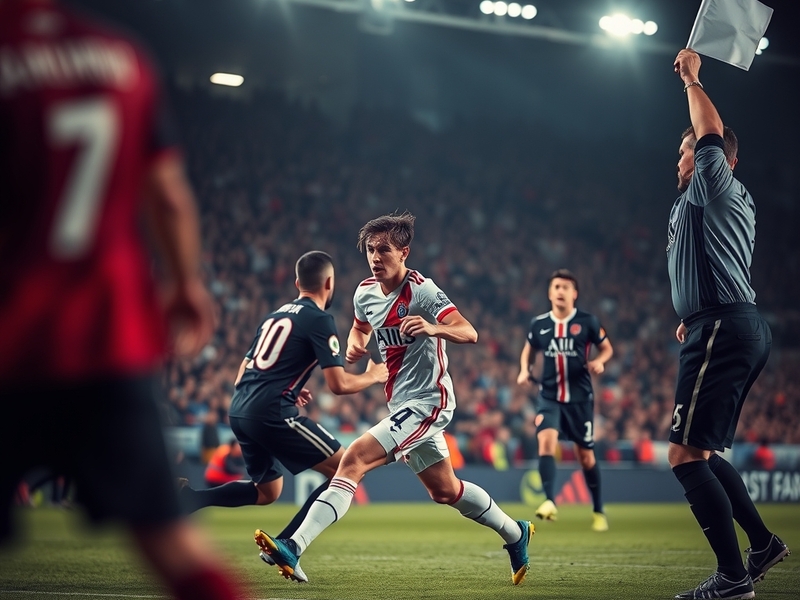
Recent encounters have seen PSG adapt under Christophe Galtier and now Luis Enrique, shifting between a 4-3-3 and a 4-2-3-1 to overload midfield and control tempo. Their strength lies in individual brilliance—Mbappé’s explosive runs, Vitinha’s creativity, and Dembélé’s dribbling—but Rennes have repeatedly neutralized these threats through collective organization. In their most recent meeting in April 2024, Rennes held PSG to a 2-2 draw at the Roazhon Park, with goals from Bourigeaud and Kalimuendo canceling out Mbappé’s brace. The match featured 57% possession for PSG, yet Rennes created the better clear-cut chances, illustrating how structure can trump star power.
Key Tactical Trends in the Rivalry
- High Pressing Traps: Rennes often set traps in midfield, forcing PSG into rushed clearances that lead to counterattacks.
- Wing-Back Exploitation: PSG’s full-backs like Achraf Hakimi and Nuno Mendes frequently overlap, but Rennes have used quick transitions to isolate them.
- Midfield Duels: Players like Camavinga (formerly of Rennes) and Vitinha often dominate possession, but Rennes’ midfielders like Le Féé and Doku press aggressively to limit time on the ball.
- Set-Piece Danger: Both teams are strong from dead-ball situations, with PSG’s height advantage often countered by Rennes’ zonal marking and rehearsed routines.
Star Players Who Define the Derby
The Rennes vs PSG rivalry is as much about individual battles as it is about team performance. While PSG’s squad is a constellation of global superstars, Rennes have cultivated their own crop of young talents who rise to the occasion in these high-stakes games.
For PSG, Kylian Mbappé remains the ultimate x-factor. Despite being a Rennes youth product, he has scored 12 goals in 14 appearances against his boyhood club—a psychological edge that fuels both his performances and Rennes’ motivation to prove they can contain him. Vitinha, another Portuguese midfielder, has emerged as PSG’s creative hub, pulling strings in tight spaces where Rennes’ midfielders struggle to close him down.
Rennes’ response comes in the form of players like Martin Terrier, who has scored twice against PSG in his career, and Amine Gouiri, whose movement often drags PSG’s center-backs out of position. The real difference-maker, however, is Jérémy Doku. The Belgian winger’s blistering pace and dribbling have repeatedly exposed PSG’s aging full-backs, most notably in a 3-1 win over PSG in January 2023, where he assisted two goals and scored one himself.
Defensively, Rennes have relied on the composure of Jeanuël Belocian and the leadership of captain Lorenz Assignon. Their ability to stay compact and limit Mbappé’s one-on-one duels has been crucial in keeping results close.
Beyond the Pitch: Rivalry in Culture and Media
The Rennes vs PSG derby isn’t just a football match—it’s a cultural clash between Brittany and Paris, between tradition and ambition. Rennes, the capital of Brittany, represents regional identity, grassroots football, and a model of sustainable growth. PSG, backed by Qatari ownership and global branding, embodies the commercialization of the sport.
French media often frames the fixture as a battle between “le football pur” and “le football spectacle.” Headlines in L’Équipe frequently emphasize Rennes’ “sense of mission” versus PSG’s “obsession with results.” This narrative has been amplified by PSG’s recent struggles in Europe, where their star-studded lineup has failed to deliver in the Champions League. Rennes, meanwhile, have used their underdog status to rally fan support, with the Roazhon Park often rocking to the sound of Breton chants, creating an atmosphere that contrasts sharply with the sterile ambiance at the Parc des Princes.
The rivalry also plays out in the transfer market. PSG have repeatedly poached Rennes’ best talents, only to see them struggle with regular game time or adapt to the pressure. This cycle has fueled tensions, with Rennes accusing PSG of predatory behavior. In 2021, Rennes lodged a formal complaint with Ligue 1 over alleged irregularities in PSG’s pursuit of Eduardo Camavinga, though no sanctions were ultimately applied.
What’s Next for the Rivalry?
The future of the Rennes vs PSG rivalry looks set to intensify. With PSG under new sporting director Jean-Louis Gasset and manager Luis Enrique, the club is attempting to balance financial fair play constraints with on-field success. Their focus on developing young players like Warren Zaïre-Emery and Kang-in Lee suggests they may adopt a model closer to Rennes’ own philosophy.
Rennes, meanwhile, are navigating a period of transition. Manager Pierre Sage has taken over from Stéphan, and the club is balancing their commitment to youth development with the need to retain top talent. The recent emergence of players like N’Gouan and Truffert has given Rennes depth, but their ability to sustain a challenge for the title will depend on avoiding the kind of late-season fatigue that has cost them in previous campaigns.
One thing is certain: whenever these two teams meet, the result is rarely a foregone conclusion. The next derby could be a title decider, a cup upset, or another tactical masterclass. But it will always be a reminder that in French football, the story isn’t just about PSG’s glittering stars—it’s also about the teams who dare to challenge them.
For fans looking to explore more about Ligue 1’s evolving landscape, check out our Football section for in-depth analysis and match previews. To understand how Rennes’ youth academy compares to Europe’s elite, visit our Analysis page for expert commentary.