The Last Free Herds: Wild Horses Across the Globe and Their Enduring Legacy
Wild horses have long captivated human imagination, embodying both freedom and resilience. Unlike their domesticated cousins, these animals roam vast landscapes under their own power, shaped by centuries of natural and cultural evolution. Their existence today remains a testament to survival against changing environments and human encroachment. From the rugged plains of Mongolia to the windswept islands of Sable off Canada’s coast, wild horse populations persist in pockets of the world where they’ve carved out niches for themselves.
These horses are not merely survivors; they are living links to history. Many herds trace their lineage back to the first domesticated horses, which escaped or were abandoned by humans millennia ago. Over generations, they adapted to harsh climates, developed unique social structures, and became integral to the ecosystems they inhabit. Their story is one of adaptation, cultural significance, and, increasingly, conservation urgency.
The Ancient Roots of Wild Horse Populations
Wild horses today descend from prehistoric ancestors that once roamed across North America, Europe, and Asia. Fossil evidence suggests that the modern horse, Equus ferus caballus, evolved around 4 million years ago. When the last Ice Age ended roughly 10,000 years ago, wild horses disappeared from the Americas, possibly due to climate shifts and human hunting. Meanwhile, in Eurasia, they thrived and were later domesticated around 6,000 years ago in the steppes of Central Asia.
Not all wild horses are truly “feral.” Some populations, like the Przewalski’s horse in Mongolia, were never domesticated. Others, such as the mustangs of North America, are descendants of escaped Spanish horses brought by European settlers in the 16th century. These distinctions matter when discussing conservation strategies. While feral populations can adapt to new environments, they often face challenges from habitat loss and human conflict.
The genetic diversity of wild horses offers valuable insights for modern equine science. Researchers study these herds to understand disease resistance, social behavior, and adaptation to extreme climates. Their resilience provides a model for conservationists working to protect endangered species worldwide.
Wild Horses in Culture: Myth, Symbolism, and Survival
Across cultures, wild horses have been mythologized as symbols of freedom, power, and untamed nature. In Native American traditions, the horse is sacred, revered as a bringer of change and spiritual guidance. The Lakota people, for example, see the horse as a relative, integral to their way of life and storytelling. Similarly, in Celtic and Norse mythology, horses embody both physical strength and mystical connection to the divine.
In modern times, wild horses have become icons of the American West. The mustang, with its wild spirit and rugged appearance, represents the frontier ethos of independence and perseverance. Films, literature, and art frequently romanticize these animals, portraying them as symbols of resistance against modernity. Yet this idealization often overshadows the harsh realities they face—drought, shrinking habitats, and government roundups aimed at controlling population growth.
In Mongolia, the wild horse takes on a different role. The Przewalski’s horse, known locally as takhi, is considered a national treasure. Its survival is tied to ancient shamanistic beliefs that view the horse as a protector of the land. Efforts to reintroduce the species to the wild have drawn global attention, blending conservation science with cultural heritage.
Global Herds: A Snapshot of Wild Horse Habitats
Wild horses are found in diverse environments, each shaping their behavior and survival strategies. Here’s a look at some of the most notable populations around the world:
- Mongolia: Home to the last surviving wild horse species, the Przewalski’s horse, found in the steppes of Hustai National Park and the Great Gobi B Strictly Protected Area.
- North America: Mustangs roam the American West, primarily in Nevada, Wyoming, and Montana, managed by the Bureau of Land Management with ongoing debates about population control.
- Australia: Brumbies, descendants of horses brought by British settlers, thrive in the Australian Alps and the outback, sometimes clashing with conservation efforts to protect native ecosystems.
- Canada: The Sable Island horses, a rare breed descended from shipwreck survivors, live on a remote sandbar off Nova Scotia’s coast, isolated from human interference.
- Namibia: The Namib Desert horses have adapted to one of the driest environments on Earth, surviving without human intervention for over a century.
Each of these populations tells a story of adaptation and survival. In some cases, like the Namib Desert horses, their existence is a marvel of evolutionary biology. These horses drink less water than most breeds and can go days without it, a trait that allows them to thrive in arid conditions. In contrast, the Sable Island horses face the opposite challenge: too much wind and salt, which erodes their habitat and limits vegetation.
Climate change poses a growing threat to these herds. Droughts reduce food and water availability, while extreme weather events disrupt breeding cycles. Conservationists are increasingly using GPS tracking and genetic studies to monitor these populations and develop adaptive strategies.
The Conservation Battle: Balancing Nature and Human Interests
Protecting wild horses is a complex issue that pits ecological science against cultural sentiment and economic interests. In the United States, the debate over mustangs is particularly contentious. The Bureau of Land Management (BLM) manages over 27,000 wild horses and burros on public lands, but the population grows by about 20% annually. This overpopulation leads to overgrazing, which damages fragile ecosystems and threatens other wildlife species.
To control numbers, the BLM conducts roundups, removing thousands of horses each year and placing them in holding facilities. Critics argue these methods are inhumane and disrupt natural herd dynamics. Advocacy groups, such as the Animal Welfare network, push for fertility control vaccines and expanded adoption programs instead. Meanwhile, ranchers and some environmentalists argue that wild horses contribute to land degradation and should be managed more aggressively.
In Australia, the brumby debate is equally heated. Environmentalists argue that these feral horses damage native flora and fauna, particularly in alpine regions where they trample sensitive ecosystems. On the other hand, brumby supporters, including some Indigenous groups, see the horses as part of Australia’s cultural heritage and advocate for their protection. The conflict has led to controversial culling programs, which have sparked international outrage and legal challenges.
Globally, conservation efforts are gaining momentum, but success depends on collaboration between governments, scientists, and local communities. In Mongolia, the reintroduction of Przewalski’s horses has been hailed as a conservation success story. Initiated in the 1990s, the program has helped restore the species from near extinction to over 2,000 individuals today. The project demonstrates how cultural respect and scientific rigor can align to protect a species.
The Future of Wild Horses: Challenges and Hope
Wild horses face an uncertain future, but their story is far from over. As climate change intensifies and human populations expand, these animals will need more than just legal protections—they will need active conservation and public support. Their survival hinges on our willingness to share the planet with them, not as relics of the past, but as living, breathing parts of the natural world.
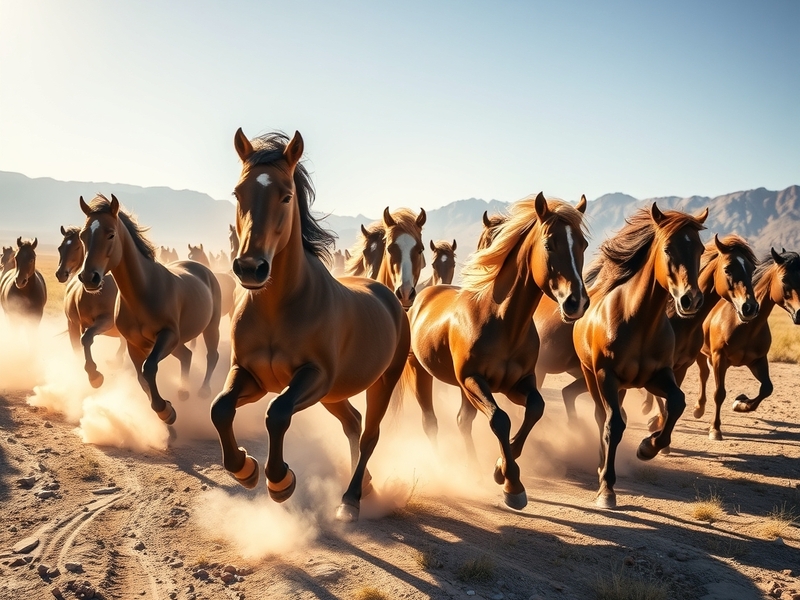
For now, wild horses continue to gallop across the landscapes that have shaped them for centuries. Whether in the vast steppes of Mongolia or the remote islands of Canada, they remain symbols of resilience and wildness. Their fate is a reminder that conservation is not just about saving species—it’s about preserving the spirit of freedom that they represent.
As we move forward, the challenge will be to balance human needs with ecological integrity. That means listening to science, respecting cultural traditions, and making room for these magnificent animals to thrive. The wild horse is more than a symbol; it’s a living testament to the power of adaptation and the enduring bond between humans and animals.