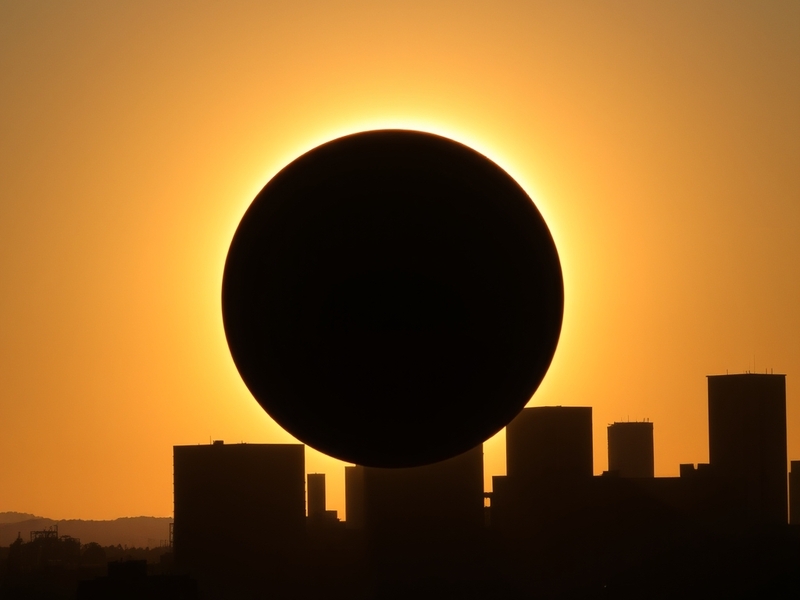
The solar eclipse of October 14, 2023, drew millions of eyes to the skies as the moon passed between Earth and the sun, casting a dramatic shadow across the Americas. Unlike total eclipses, this annular event—often called the “ring of fire”—left a blazing ring visible around the moon’s silhouette. Skywatchers from Oregon to Texas, and across Central and South America, positioned themselves at prime viewing spots, hoping to capture the celestial spectacle before clouds or weather interfered. For many, it wasn’t just an astronomical event; it was a communal experience, uniting strangers under the shared wonder of the cosmos.
What Made This Eclipse Different
Annular eclipses occur when the moon is too far from Earth to completely cover the sun, creating the iconic “ring of fire” effect. The October 2023 eclipse was particularly notable because its path of annularity stretched over 12 million kilometers, making it one of the longest visible from land in recent years. Cities like Albuquerque, New Mexico, and Corpus Christi, Texas, fell directly in the path, offering residents and visitors a front-row seat. Unlike total eclipses, which plunge areas into temporary darkness, annular eclipses maintain bright daylight—albeit with a striking visual distortion.
Scientists emphasized the rarity of this alignment. The moon’s elliptical orbit means its distance from Earth varies, and only when it’s near its farthest point (apogee) can an annular eclipse occur. This eclipse also coincided with a period of heightened solar activity, adding another layer of interest for researchers studying the sun’s corona and magnetic fields. Amateur astronomers brought specialized filters and telescopes, while families gathered with eclipse glasses and pinhole projectors, blending science with tradition.
The Best Viewing Spots and How to Prepare
Choosing the right location was crucial for eclipse chasers. National parks like Crater Lake in Oregon and Big Bend in Texas offered unobstructed views and minimal light pollution. However, accessibility became a challenge as crowds overwhelmed smaller towns along the path. In some areas, local authorities set up viewing festivals with telescopes, live streams, and educational booths to manage the influx. The National Park Service even hosted ranger-led programs to explain the science behind the eclipse.
For those unable to travel, NASA and major observatories provided live broadcasts, allowing viewers worldwide to watch the event unfold. Social media platforms were flooded with photos and videos, showcasing everything from professional shots to children’s first glimpses through protective glasses. Eclipse-watching parties became a global phenomenon, with communities sharing the experience in real time.
If you’re planning to catch the next eclipse, preparation is key. Always use ISO-certified eclipse glasses to protect your eyes, and never look directly at the sun without proper filtration. For photographers, using a solar filter on your camera lens is essential to avoid damaging your equipment. Check local weather forecasts weeks in advance, as cloud cover can easily obscure the view. And don’t forget to arrive early—popular spots fill up fast.
Cultural and Scientific Impact
Eclipses have long held cultural significance, often interpreted as omens or divine messages in ancient civilizations. The annular eclipse of 2023 sparked a renewed interest in these historical connections. Indigenous communities in the Americas shared traditional stories about solar eclipses, blending astronomy with heritage. Meanwhile, modern scientists seized the opportunity to study the sun’s outer atmosphere, or corona, which is typically obscured during total eclipses. NASA deployed high-altitude balloons and aircraft equipped with instruments to capture data during the event.
The eclipse also highlighted the growing intersection of science and public engagement. Citizen science projects invited volunteers to record temperature changes, animal behavior, and even cloud patterns during the eclipse. These efforts not only advanced research but also fostered a deeper appreciation for the natural world. Schools incorporated the eclipse into lesson plans, turning a rare event into a teachable moment for students of all ages.
Economically, the eclipse provided a boost to local businesses in viewing areas. Hotels, restaurants, and shops reported record sales as visitors spent days (and sometimes weeks) in towns along the path. However, the influx also strained infrastructure, prompting discussions about sustainable tourism for future celestial events. Some communities are now exploring ways to balance economic benefits with environmental and social impacts.
What’s Next for Eclipse Chasers
The next major solar eclipse visible from the United States will be a total eclipse on April 8, 2024, stretching from Texas to Maine. Unlike the annular event, this will plunge areas into temporary darkness, offering a dramatically different experience. Cities like Dallas, Indianapolis, and Buffalo are already preparing for an influx of visitors, with hotels and event spaces booking up months in advance. For those who missed the “ring of fire,” this total eclipse presents another chance to witness one of nature’s most awe-inspiring spectacles.
Beyond 2024, the next annular eclipse visible from the U.S. won’t occur until 2039, making the October 2023 event a must-see for many. Whether you’re a seasoned astronomer or a casual observer, eclipses offer a rare opportunity to connect with the cosmos. As technology advances, so too does our ability to study and share these events, ensuring that future generations will continue to marvel at the wonders of the universe.
For more on celestial events and how to prepare for them, visit our Science category. If you’re interested in the intersection of science and culture, explore our Culture section for deeper insights into how communities engage with natural phenomena.