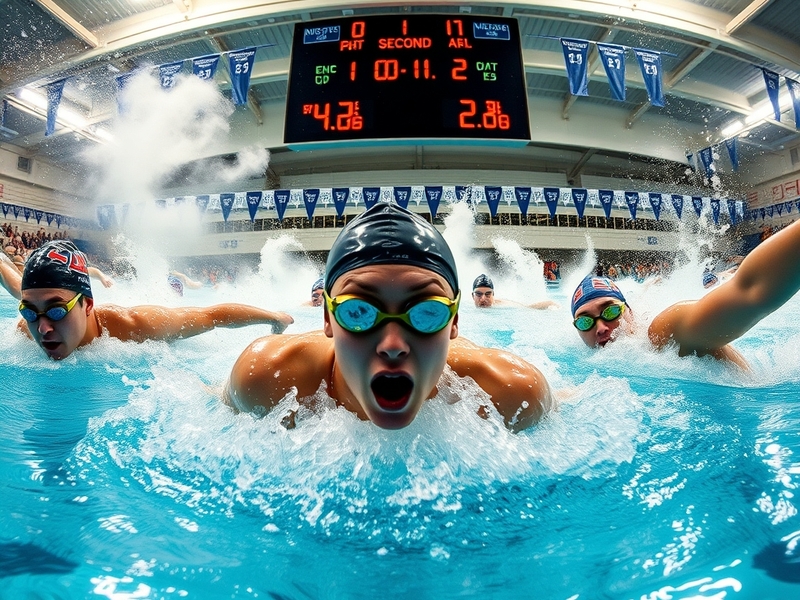
The Olympics are often remembered for their thrilling moments of human achievement, and swimming stands out as a sport where milliseconds separate triumph from disappointment. The 2024 Paris Games are no exception, with swimmers from around the world pushing the boundaries of speed and endurance in the iconic Paris La Défense Arena. These competitions are more than just races; they are a showcase of technological advancements, rigorous training, and the relentless pursuit of perfection.
How Olympic Swimming Competitions Work
Olympic swimming features a variety of events, each testing different aspects of a swimmer’s skill and stamina. Freestyle, backstroke, breaststroke, and butterfly races cover distances from 50 meters to 1,500 meters, while relays and medley events add team dynamics to the mix. The format typically includes heats, semifinals, and finals, with the fastest swimmers advancing through each stage.
The scoring system is straightforward: the first to touch the wall wins. However, the precision of timing systems—capable of measuring to the hundredth of a second—ensures fairness and accuracy. Officials rely on touchpads and underwater cameras to verify results, minimizing human error in a sport where every fraction of a second counts.
- Freestyle: Swimmers can use any stroke, but nearly all opt for front crawl due to its efficiency.
- Backstroke: Competitors swim on their backs, relying on feel rather than sight to stay in lane.
- Breaststroke: The only stroke where swimmers must keep their shoulders parallel to the water, requiring precise timing and technique.
- Butterfly: Known for its demanding undulating motion, it’s often considered the most physically taxing stroke.
- Relays: Teams of four swimmers combine their efforts, with each leg passing the baton via a touchpad.
The inclusion of mixed-gender relays in recent Olympics has added another layer of strategy, blending individual talent with team coordination.
The Technology Behind the Lanes
Modern swimming competitions are as much about engineering as they are about athleticism. The pools used in major events, including Paris 2024, are designed to minimize turbulence and maximize speed. Features like wave-dampening gutters and adjustable bulkheads allow organizers to tailor the water conditions for record-breaking performances.
High-tech swimsuits, once a controversial innovation, have evolved into sleek, hydrodynamic suits that reduce drag. While regulations now limit their buoyancy, materials like polyurethane and nylon continue to shave precious milliseconds off times. Meanwhile, underwater cameras provide real-time feedback for coaches and officials, ensuring compliance with stroke regulations.
Timing technology has also advanced dramatically. Omega, the official timekeeper for the Olympics, employs high-resolution cameras and sensors to capture starts, turns, and finishes with unparalleled accuracy. These systems are crucial in resolving ties and verifying close finishes, where even a fingertip can decide a medal.
The Psychological Battle in the Water
Beyond physical prowess, swimming competitions are a test of mental resilience. Swimmers must manage pre-race nerves, maintain focus during high-pressure moments, and execute flawless turns and finishes. The isolation of the lane, where swimmers cannot see their competitors, amplifies the psychological challenge. Success often hinges on an athlete’s ability to block out distractions and trust their training.
Psychological strategies vary widely. Some athletes use visualization techniques, mentally rehearsing every stroke and turn. Others rely on breathing exercises or mantras to stay calm. The mental game is especially critical in relays, where a single mistake can cost an entire team.
Coaches play a pivotal role in this aspect of the sport. They must balance pushing athletes to their limits with ensuring they don’t succumb to burnout or self-doubt. The best coaches understand that peak performance requires both physical preparation and mental fortitude.
Why Swimming Captivates Global Audiences
Swimming’s appeal lies in its simplicity and universality. Unlike sports that require complex equipment or expansive fields, swimming is accessible to people of all ages and backgrounds. This accessibility has helped it become one of the most-watched Olympic events, drawing millions of viewers worldwide.
The drama of swimming competitions is another key draw. A single race can feature rivalries that span years, with athletes trading victories and setting new records. The unpredictability of the sport—where underdogs occasionally topple favorites—keeps fans on the edge of their seats.
Swimming also serves as a platform for cultural exchange. Athletes from diverse nations compete side by side, showcasing the global nature of the sport. Moments of sportsmanship, such as rivals congratulating each other after a race, highlight the camaraderie that defines Olympic values.
As the 2024 Paris Games unfold, swimming remains a cornerstone of the Olympic experience. It combines raw athleticism with cutting-edge technology, mental grit with physical endurance, and tradition with innovation. For fans and athletes alike, the pool is more than a venue—it’s a stage where legends are made and history is written.