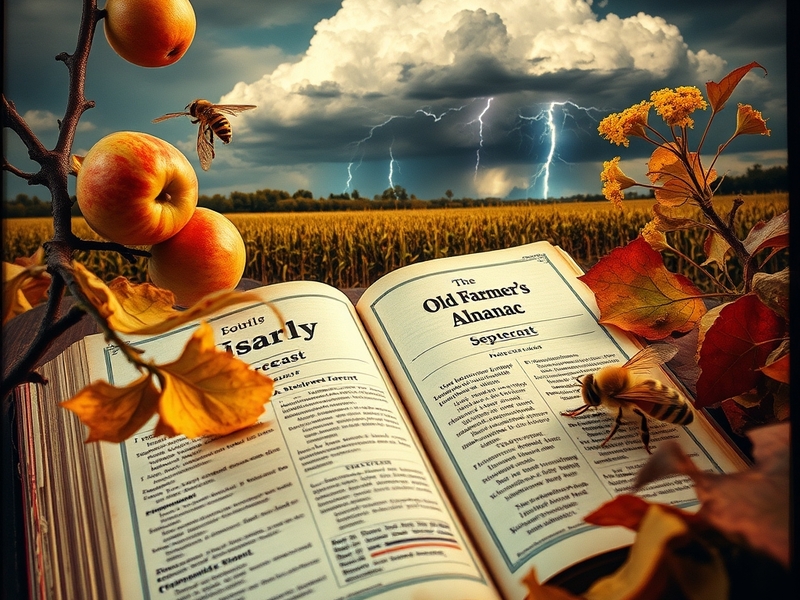
The Old Farmer’s Almanac Returns with September Weather Predictions
The Old Farmer’s Almanac has long been a trusted guide for gardeners, farmers, and weather watchers across North America. As summer winds down, its September forecasts offer more than just a glimpse at what’s to come—they provide a cultural touchstone that connects generations. This year’s predictions arrive at a time when climate unpredictability makes reliable forecasts more valuable than ever. Whether you’re planning a harvest or scheduling a weekend getaway, understanding the Almanac’s insights can help you prepare for the changing seasons.
How the Almanac Crafts Its September Forecasts
The Old Farmer’s Almanac relies on a proprietary formula developed in 1792 by its first editor, Robert B. Thomas. This method blends solar science, climatology, and meteorology, with a dash of historical weather patterns. Unlike modern meteorological models that prioritize short-term accuracy, the Almanac takes a long view—focusing on trends over decades rather than day-to-day fluctuations. For September, this approach suggests a month of contrasts: warm days in the North, lingering humidity in the South, and early hints of autumn’s crisp arrival in the Midwest.
The Almanac’s predictions are divided into regional forecasts, each offering granular details. For example, the Northeast may see above-average rainfall, which could delay harvests for apple and pumpkin growers. Meanwhile, the Southwest is expected to remain dry, a pattern that aligns with prolonged drought concerns in states like Arizona and New Mexico. These regional distinctions highlight why the Almanac remains relevant in an era of hyper-local weather apps—its broader perspective accounts for patterns that smaller models might miss.
Global Echoes: How Other Cultures Predict September Weather
While the Old Farmer’s Almanac is a distinctly American institution, cultures worldwide have their own traditions for forecasting seasonal shifts. In Japan, the kō (二十四節気), or 24 solar terms, mark transitions like Hakuro (白露), the start of dew in early September. This period signals cooler mornings and the first hints of autumn foliage in regions like Hokkaido and Kyoto. Similarly, in rural India, farmers observe the behavior of ants and the flowering of certain trees to predict monsoon patterns, a practice tied to the ancient Vrikshayurveda texts.
Europe also has deep-rooted methods. In Ireland, the Wet Moon—a lunar phase in late summer—was traditionally believed to bring rain if visible early in the month. Scottish crofters once relied on the thickness of sheep’s wool to gauge winter’s severity, a practice that indirectly informed early September preparations. These global traditions underscore a universal human need: to find order in nature’s chaos. The Old Farmer’s Almanac, with its blend of science and folklore, taps into this same impulse, offering a bridge between empirical data and lived experience.
September Weather Predictions: What to Expect in 2024
The 2024 September forecast from the Old Farmer’s Almanac points to a month of dynamic shifts. In the Northeast, expect temperatures to hover around 5–10°F above normal, with frequent thunderstorms that could disrupt outdoor plans. Gardeners in New England should prepare for early leaf drop in maples and oaks, a sign of the dry conditions predicted for the region. Meanwhile, the Southeast will likely contend with lingering humidity and occasional tropical moisture, heightening concerns about flooding in low-lying areas.
The Midwest is poised for a classic September—cool nights and warm afternoons, ideal for harvest festivals and county fairs. However, farmers in the Corn Belt may face challenges from uneven rainfall, which could affect soybean and corn maturation. Out West, the Pacific Northwest is predicted to see near-normal temperatures, but the Almanac warns of an early start to the rainy season, which could impact wildfire recovery efforts. These regional breakdowns reveal a pattern: while no single event defines September, the month’s variability demands preparation.
For those tracking long-term trends, the Almanac’s predictions align with broader climate models that suggest increasing volatility. The National Oceanic and Atmospheric Administration (NOAA) has noted a rise in “weather whiplash”—sudden shifts between extreme conditions—making forecasts like these all the more critical. Whether you’re a gardener, traveler, or simply someone who enjoys the rhythm of the seasons, the Almanac’s September outlook provides a roadmap for navigating the month ahead.
Preparing for September: Tips from Farmers and Forecasters
Armed with the Almanac’s predictions, how can you best prepare for September’s weather? Farmers recommend several strategies to mitigate risks. For those in the Northeast, installing drainage systems or raised beds can help manage excess rainfall. In the South, where humidity lingers, investing in moisture-wicking fabrics for outdoor workers can prevent heat-related illnesses. Gardeners across the country should consider planting cover crops like clover or rye to protect soil from erosion during storms.
Outdoor enthusiasts can use the Almanac’s insights to plan activities. Hikers in the Rockies, for instance, should pack layers for chilly mornings and potential afternoon thunderstorms. Fishermen in the Great Lakes may find early September ideal for walleye and perch, but should be prepared for sudden wind shifts. Even urban dwellers can benefit from the Almanac’s advice—homeowners in flood-prone areas might want to check their sump pumps before the month’s end.
For a deeper dive into seasonal transitions, the Almanac’s Education section offers historical context and scientific explanations. Readers interested in sustainable farming practices can explore related articles in the Food category, where experts discuss how to adapt to changing weather patterns.
The Old Farmer’s Almanac’s September predictions are more than just a weather report—they’re a reminder of humanity’s enduring relationship with the natural world. In an age of instant forecasts and digital alerts, the Almanac’s blend of science and tradition offers a slower, more reflective way to engage with the changing seasons. Whether you’re a farmer checking the sky for rain clouds or a city dweller noticing the first crisp breeze, these predictions invite you to pause and consider the rhythms that have guided life for centuries.