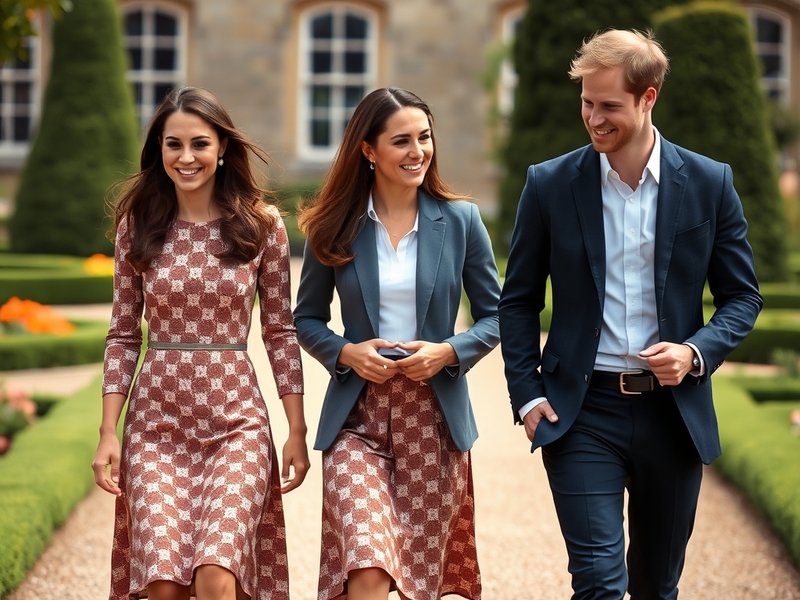
For decades, the British royal family has captivated global audiences, but few relationships within the monarchy have drawn as much scrutiny—or as much public fascination—as the complex dynamic between Kate Middleton, Prince William, and Prince Harry. Their bonds have evolved from close-knit friendships to strained family ties, marked by shared histories, personal tragedies, and very public fractures. Understanding their relationship requires examining not just their individual journeys, but how duty, media pressure, and personal choices have reshaped their connections over time.
The early years: From friendship to royal duty
Kate Middleton first met Prince William while studying at the University of St Andrews in 2001. What began as a friendship between fellow students soon blossomed into a romance that would redefine modern royalty. Unlike previous royal relationships, which often involved carefully orchestrated meetings, William and Kate’s bond developed organically, earning them widespread admiration. Their engagement in 2010 and marriage in 2011 marked a turning point for the monarchy, symbolizing a shift toward relatability and transparency.
Prince Harry, William’s younger brother, was already well-established in the public eye by the time he and Kate became close. The three shared a close-knit circle, often spending holidays and vacations together. Harry, in particular, was known for his playful personality, and his friendship with Kate played a role in smoothing tensions between him and William during their youth. Their bond was further cemented by shared grief after the death of their mother, Princess Diana, in 1997—a loss that would leave an indelible mark on all three of their lives.
Rifts and reconciliation: The fractures in the royal family
The first major strain in the relationship between Kate, William, and Harry became apparent in early 2020 when Harry and his wife, Meghan Markle, announced their decision to step back as senior royals. The move, dubbed “Megxit,” sent shockwaves through the monarchy and raised questions about loyalty, duty, and the pressures of royal life. While William and Kate remained publicly supportive, reports later emerged suggesting tensions behind the scenes, particularly regarding Harry and Meghan’s decision to exit the royal fold.
In interviews and through their memoir, Spare, Harry has been vocal about feeling isolated within the royal family, including strained relationships with his brother and sister-in-law. William, in turn, has reportedly expressed frustration over Harry and Meghan’s decision to speak publicly about their grievances, which they did in a 2021 interview with Oprah Winfrey. The fallout extended beyond personal disagreements, with the media amplifying divisions and framing the situation as a full-blown royal feud.
Despite these tensions, there have been moments of reconciliation. In 2022, William and Kate attended Harry and Meghan’s wedding to Prince Harry’s longtime friend, actress Meghan Markle, though reports suggest the event was tense. More recently, there have been signs of cautious rapprochement, with family gatherings for holidays and significant life events, including the christening of Harry and Meghan’s second child in 2024. Whether these efforts will fully mend the rift remains uncertain, but the desire for familial connection persists beneath the surface.
The role of duty and the monarchy’s evolving expectations
The pressures of royal life have played a significant role in shaping the relationships between Kate, William, and Harry. As the future king, William has faced immense expectations to uphold tradition while adapting to the demands of a modern monarchy. His marriage to Kate, a commoner who has since become one of the most recognizable figures in the royal family, has been a stabilizing force. Kate’s poise, dedication to charitable work, and role as a mother to their three children have earned her widespread respect, even as she navigates the challenges of royal life.
For Harry, the struggle has been one of identity. As the younger son, he has historically occupied a less defined role within the monarchy, leading to frustrations about his lack of purpose. His decision to leave royal duties and pursue independent ventures, including media projects and activism, reflects a desire to carve out his own path. However, his public critiques of the monarchy—including his father, King Charles III—have further strained his relationships with William and Kate, who remain committed to their roles.
The contrast between William and Harry’s approaches to royal duty highlights a generational divide. While William has embraced his responsibilities, Harry’s actions suggest a rejection of the traditional constraints that come with being a royal. This divergence has not only affected their personal relationship but has also sparked debates about the future of the monarchy in an era where transparency and authenticity are increasingly valued by the public.
Media scrutiny and public perception
Media coverage has played a pivotal role in shaping the narrative around Kate, William, and Harry’s relationships. Tabloids and royal commentators have often framed their interactions through a sensational lens, portraying them as either a tightly knit family or a fractured one on the brink of collapse. The intense scrutiny has undoubtedly taken a toll, particularly on Kate and William, who have had to balance their personal lives with the demands of their public roles.
The media’s role in amplifying divisions was evident in the aftermath of Harry and Meghan’s 2020 interview with Oprah Winfrey, where they discussed feelings of racism within the royal family and the isolating nature of royal life. While some outlets framed the interview as a betrayal, others highlighted the systemic issues it exposed, including the lack of support for Harry and Meghan’s mental health struggles. For Kate and William, the interview was a personal affront, further straining an already delicate relationship.
Public perception of the trio remains divided. While many sympathize with Harry’s desire for autonomy, others view his actions as disloyal, particularly given the sacrifices William and Kate have made to uphold their duties. The royal family’s carefully curated image has been disrupted by these very public fractures, leaving many to question whether the monarchy can survive in its current form without addressing the underlying tensions.
The future of their relationships
The trajectory of Kate, William, and Harry’s relationships hinges on several key factors, including the evolving expectations of the monarchy and the individuals’ personal growth. As William ascends to the throne, his ability to reconcile his duties with his personal relationships will be crucial. Kate, too, faces the challenge of maintaining her public image while supporting her husband during a time of significant change.
For Harry, the path forward is less clear. His decision to step back from royal duties and focus on his family and independent projects has given him a sense of freedom, but it has also distanced him from the institution that shaped his identity. Whether he and William can rebuild their relationship remains an open question, though there have been glimmers of hope in recent years. Family gatherings and private conversations suggest that, despite their differences, the bond they share as brothers—and as members of the royal family—is not entirely broken.
Ultimately, the story of Kate, William, and Harry is one of duty, loyalty, and the complexities of family in the public eye. Their relationships reflect broader themes of tradition versus modernity, individuality versus obligation, and the enduring allure—and challenges—of royal life. As the monarchy continues to evolve, so too will the dynamics between these three central figures, leaving the world to watch and speculate about what comes next.