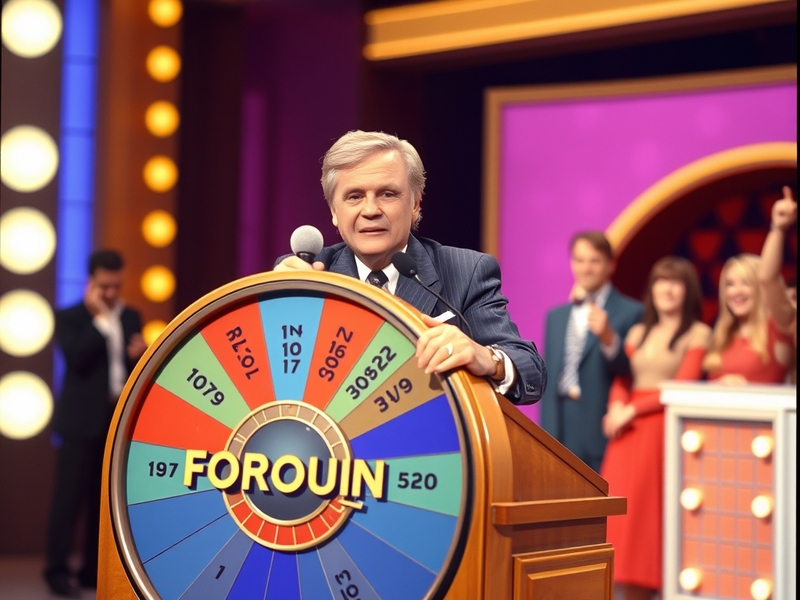
The voice of Wheel of Fortune is as iconic as the show itself. For decades, Pat Sajak has guided contestants and viewers through the highs and lows of spinning for cash, prizes, and a shot at the ultimate jackpot. His dry wit and steady delivery have made him a fixture in American living rooms, but the role of the show’s announcer extends far beyond just reading clues. These voices shape the rhythm of the game, influence how players react, and even reflect broader cultural shifts in television and entertainment.
The evolution of the Wheel’s voice
The original Wheel of Fortune premiered in 1975, but it wasn’t until 1983—when Pat Sajak took over—that the show truly found its voice. Sajak, a former weatherman and late-night talk show host, brought a calm authority that contrasted with the game’s high-energy moments. His tone suggested that, no matter how wild the board got, everything would be okay. This reassurance became part of the show’s appeal, especially during the syndicated version’s rise in the mid-1980s.
Chuck Woolery, Sajak’s predecessor, had a more enthusiastic style that fit the show’s early days. Woolery’s energetic delivery matched the playful aesthetic of the 1970s set and the simpler prize structures. But as Wheel expanded into syndication and global markets, Sajak’s approach—measured, professional, and subtly humorous—proved more adaptable. His ability to pivot between suspense and levity helped the show transition from daytime curiosity to prime-time staple.
Internationally, the role of the announcer has taken on different flavors. In the UK, Wheel of Fortune ran from 1988 to 2001 with Michael Aspel at the helm. Aspel’s voice carried a stately British charm, befitting the show’s adaptation to ITV’s schedule. Meanwhile, in Australia, John Burgess became synonymous with the game during its 1980s–90s run, blending warmth with a competitive edge that mirrored the nation’s love for quiz shows.
Why the announcer’s voice matters
The announcer in Wheel of Fortune isn’t just a narrator—they’re a psychological anchor. When a contestant hesitates before spinning, the announcer’s calm, rhythmic delivery creates a sense of anticipation. When a big prize is at stake, their tone shifts slightly, building tension without overpowering the moment. This control over pacing is what makes the show feel both familiar and fresh, even after thousands of episodes.
Research into game show psychology suggests that the announcer’s voice influences player confidence. A 2018 study published in the Journal of Gambling Studies found that players respond more positively to calm, consistent voices during high-pressure moments. Sajak’s style—deliberate, clear, and unhurried—aligns perfectly with this. He doesn’t rush contestants. He lets them think. That trust in the contestant’s agency is rare in modern TV, where hosts often dominate the screen.
Culturally, the announcer’s role reflects broader trends in media. In the 1980s, game shows relied on authoritative figures to legitimize their appeal. By the 2000s, as reality TV rose, hosts became more performative. Sajak’s longevity is partly due to his refusal to conform to that shift. He remains a steady presence, a reminder of a time when TV felt like a shared experience rather than a spectacle.
Behind the voice: The making of a Wheel announcer
Becoming the voice of Wheel of Fortune isn’t just about having a good radio voice—it’s about instinct. The ideal candidate blends clarity with personality, someone who can read a simple phrase like “‘E’ is the most common letter in English” without sounding robotic. Sajak’s background in broadcasting helped, but his real talent was in making the mundane feel intentional.
According to former Wheel producers, the audition process for an announcer involves reading a mix of game clues, sponsor messages, and even a few jokes. The goal isn’t to impress with vocal range but to demonstrate control over tone and pacing. A good announcer can make a $500 prize feel like a life-changing moment—simply by how they say the words.
Interestingly, the role has also evolved with technology. Early Wheel broadcasts were live or recorded in single takes. Today, most episodes are edited, allowing for slight adjustments in timing or emphasis. Yet Sajak’s delivery remains largely unchanged. He doesn’t need autotune or dramatic edits because his voice carries its own authenticity.
Rumors have swirled for years about Sajak’s retirement, but as of 2024, he continues to host. His contract reportedly includes provisions for a co-host or successor to be trained in case of a transition. This reflects a larger shift in the industry: the Wheel brand is now bigger than any single voice. It’s a testament to the show’s adaptability in an era where audiences expect continuity but also crave fresh energy.
A global cast of voices
Wheel of Fortune isn’t just an American phenomenon. The show has been adapted in over 60 countries, each with its own announcer personality. These international versions reveal how cultural attitudes toward luck, competition, and entertainment shape the role.
- Germany: Glücksrad featured Werner Schulze-Erdel, whose deep, authoritative voice gave the show a distinctly Teutonic gravitas. His delivery mirrored Germany’s preference for structured, rules-based entertainment.
- France: Tournez Manège relied on Christian Quidet, whose playful tone balanced the show’s whimsical set design and lighthearted prizes.
- Japan: Fūun! Takeshi no Chōsenjō (a different format inspired by Wheel) used multiple announcers depending on the segment, reflecting Japan’s love for variety and energetic hosting styles.
These adaptations show that while the core mechanics of Wheel of Fortune remain consistent, the announcer’s role adapts to local tastes. In countries where competition shows emphasize camaraderie, announcers lean into warmth. In places where precision matters, they adopt a more formal tone. This flexibility is why the show has endured across generations and borders.
The announcer’s voice may seem like a small detail in the grand scheme of Wheel of Fortune, but it’s a thread that connects the show’s past to its present. From Chuck Woolery’s exuberance to Pat Sajak’s steady guidance, these voices have shaped how millions experience the thrill of spinning a wheel. They remind us that behind every game show lies a careful balance of trust, timing, and tone—and sometimes, the quietest voices leave the loudest impressions.