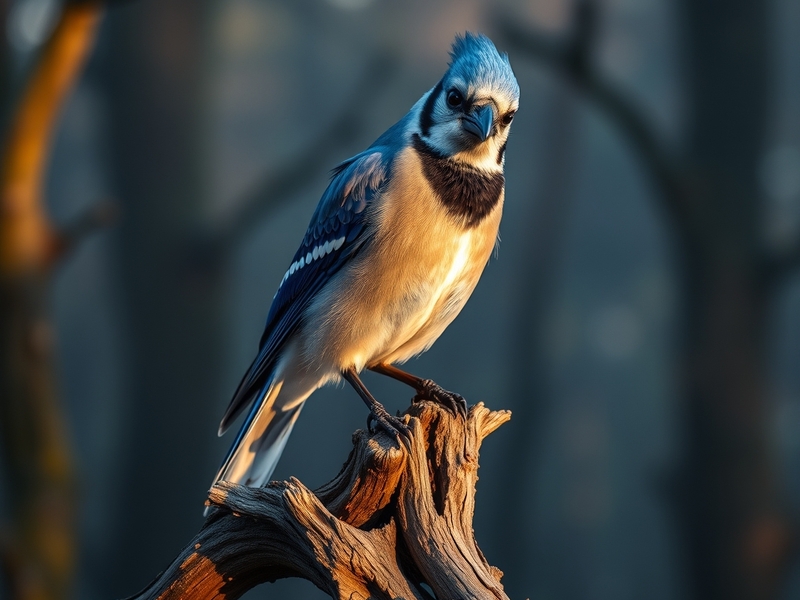
The blue jay has long been more than just a striking bird in North American backyards. Across cultures and continents, this bold, crested corvid has been woven into folklore as a messenger, a trickster, and even a guardian. From Indigenous teachings to modern conservation efforts, the blue jay’s role transcends biology. It serves as a symbol of protection, adaptability, and communication—qualities that resonate far beyond its natural habitat.
The Blue Jay in Indigenous Traditions: Messenger and Mentor
In many Native American traditions, the blue jay is not merely a creature of the forest but a teacher and a guide. The Anishinaabe people, for instance, view the blue jay as a communicator between the human world and the spirit realm. Its loud, piercing calls are interpreted as messages from ancestors or spirits attempting to convey important wisdom. The bird’s striking blue feathers, shimmering in sunlight, are often associated with the sky and the divine.
The Iroquois Confederacy tells a story of the blue jay as a clever figure who outwits larger, more powerful animals. In one legend, the blue jay tricks a bear into giving up its food by using wit and misdirection—qualities that resonate with the bird’s real-life behavior. This narrative underscores the blue jay’s role as a guardian of knowledge, one that protects communities by sharing critical survival strategies through oral tradition.
In the Pacific Northwest, Coast Salish cultures often depict the blue jay in totem poles and woven blankets, not as a primary figure but as a supporting presence. Its recurring appearance in art signals its role as an observer and a protector, watching over the land and its people. The bird’s adaptability—thriving in forests, suburbs, and even urban parks—mirrors the resilience of Indigenous communities navigating colonial pressures and environmental change.
Global Guardians: The Blue Jay’s Symbolic Reach
While the blue jay is indigenous to North America, its symbolic power has crossed oceans. In European folklore, birds with blue plumage often carry omens of both good and ill fortune. The blue jay’s European counterparts, like the azure kingfisher or the blue tit, share similar traits—loud calls, bold colors, and a tendency to announce their presence. These parallels suggest a universal human fascination with birds that stand out and communicate clearly.
In Japan, the color blue is associated with protection and fidelity. While the blue jay itself isn’t native to Japan, its vivid blue feathers evoke the sacred ibis or the azure-winged magpie, both of which appear in folklore as guardians of temples and sacred spaces. The concept of a “blue guardian” resonates in Shinto traditions, where natural elements like birds and trees are believed to house kami, or spirits, that watch over communities.
In Celtic mythology, blue is the color of the Otherworld, a realm inhabited by spirits and deities. Birds like the blue jay, with their piercing calls and vivid hues, are seen as bridges between worlds. Their presence in stories often signals an impending revelation or a warning. This theme echoes in modern literature and media, where blue-feathered birds frequently appear as omens or protectors—think of the ravens in Norse myth or the phoenix in global legends.
Ecological Guardians: How Blue Jays Shape Their Ecosystems
Beyond symbolism, the blue jay plays a tangible role in its environment. As an omnivore, it disperses seeds through its diet of acorns, nuts, and berries, contributing to forest regeneration. Its habit of caching food—burying seeds for later use—helps plant new trees and shrubs, particularly in areas where oak and hickory forests are dominant. In this way, the blue jay acts as a guardian of biodiversity, ensuring the health of its ecosystem.
Blue jays are also vocal sentinels. Their loud, repetitive calls serve as alarms for other birds, warning of predators like hawks or cats. This behavior turns the blue jay into an unintentional guardian of smaller songbirds, which rely on its vigilance to survive. In suburban and urban areas, where natural habitats are fragmented, the blue jay’s presence can indicate a relatively balanced ecosystem.
However, the blue jay’s adaptability comes with challenges. In some regions, its aggressive behavior during nesting season can displace smaller bird species. Conservationists monitor these dynamics closely, especially as climate change alters forest composition and food availability. Programs like wildlife corridor restoration aim to support blue jays and other species by preserving diverse habitats where they can thrive without overshadowing ecological balance.
Modern Symbolism: The Blue Jay as a Cultural Icon
In contemporary culture, the blue jay has shed its mythological robes to become a symbol of resilience and individuality. Sports teams, from high school squads to professional leagues like the Toronto Blue Jays in Major League Baseball, adopt the bird as a mascot, embodying teamwork and tenacity. The team’s name itself reflects a broader trend: using nature as a metaphor for strength and unity.
In literature and film, the blue jay often appears as a character that challenges the status quo. In The Blue Jay’s Dance, author Louise Erdrich uses the bird as a recurring motif to explore themes of communication and survival in Native American communities. Meanwhile, in animated films like Rio, blue-feathered birds take center stage, their vibrant colors and bold personalities capturing audiences’ imaginations worldwide.
The bird’s image has also been embraced by environmental movements. Organizations like the Cornell Lab of Ornithology highlight the blue jay’s role in seed dispersal as part of broader efforts to promote native plant restoration. Social media campaigns, such as #BirdYourWorld, feature the blue jay as an ambassador for avian conservation, encouraging people to appreciate and protect local wildlife.
The blue jay’s journey from folklore guardian to ecological keystone and cultural icon reflects humanity’s evolving relationship with nature. It reminds us that guardians do not always wear armor or wield swords. Sometimes, they arrive in flurries of blue feathers, loud calls, and unwavering presence—reminding us to listen, adapt, and protect what matters.