From London Stages to Transylvanian Cult Fame: Tim Curry’s Rocky Horror Journey
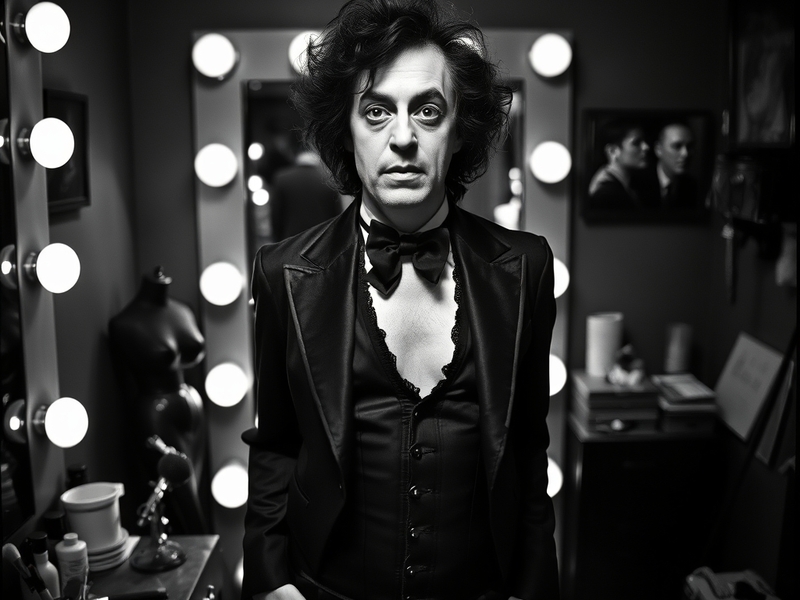
Tim Curry’s portrayal of Dr. Frank-N-Furter in The Rocky Horror Picture Show didn’t just launch a midnight movie phenomenon—it carved a permanent niche in global pop culture. The 1975 film, adapted from Richard O’Brien’s 1973 stage musical, transformed a low-budget cult favorite into a transatlantic institution. Curry’s performance, both seductive and sinister, became the heartbeat of the franchise, drawing generations of fans to shadow-cast screenings from Tokyo to Toronto. Decades later, his legacy endures not only as an actor but as a symbol of queer liberation and theatrical excess.
Curry’s casting was far from accidental. Born in 1946 in Grappenhall, England, he trained at the prestigious Bristol Old Vic Theatre School, honing a voice capable of shifting between operatic grandeur and campy swagger. His early stage work in London’s West End, including roles in Hair and The Rocky Horror Show (the original stage production), showcased a rare ability to blend menace with magnetism. When the film adaptation arrived, Curry brought Frank-N-Furter to life with a performance that felt both timeless and transgressive—a villain who was also a seducer, a scientist who was also a star.
The Global Rise of a Midnight Movie Icon
The film’s initial release was a commercial disappointment, but its fate changed when audiences in New York’s Waverly Theater began showing up in costume, shouting back at the screen. This grassroots movement spread across the United States and eventually worldwide, turning The Rocky Horror Picture Show into one of the longest-running theatrical experiences in cinema history. Curry’s Frank-N-Furter became the centerpiece of this phenomenon—a character so vivid that fans still dress as him at conventions and cosplay events from Berlin to Buenos Aires.
The film’s international appeal lies in its universal themes wrapped in outrageous spectacle. Frank-N-Furter is a creature of contradictions: a mad scientist, a gender-fluid provocateur, a hedonist who lures the innocent into his world of chaos. Curry’s performance transcended language barriers, allowing the character to resonate in cultures where queer narratives were often marginalized. In Japan, for example, the film’s embrace of androgyny and nonconformity found a receptive audience in the 1980s and 1990s, aligning with the rise of okama (queer) representation in media. Similarly, in Latin America, the film’s defiance of gender norms struck a chord during periods of political repression, offering a subversive escape.
The shadow-cast tradition—where audience members perform alongside the film—has become a global ritual. In cities like Sydney, Mexico City, and Prague, Curry’s lines are still echoed back at the screen, proving that Frank-N-Furter’s influence is as alive today as it was in 1975. This participatory culture speaks to the film’s unique ability to foster community, a phenomenon Curry himself acknowledged in rare interviews. “It’s not about the film anymore,” he once reflected. “It’s about the people who come together because of it.”
Beyond Frank: Curry’s Diverse Career and Artistic Range
While Curry’s role in The Rocky Horror Picture Show remains his most iconic, his career spans theater, film, television, and voice work, showcasing a versatility that few actors can match. After the film’s cult success, he balanced mainstream projects with more experimental roles, proving that his talent wasn’t confined to one character or genre.
In the 1980s and 1990s, Curry became a familiar face in family-friendly productions, most notably as the voice of Nigel Incognito in the animated series DuckTales (1987). His ability to switch from sinister to silly demonstrated his range, while his stage work continued to impress. He earned a Tony Award nomination for his role in the 1988 Broadway revival of Me and My Girl, a performance that highlighted his musical theater chops. Meanwhile, his film roles included everything from the sinister Lord of Darkness in Legend (1985) to the whimsical voice of Long John Silver in Treasure Planet (2002).
Curry’s work in television also reflected his global reach. He appeared in British series like Doctor Who and American productions such as Tales from the Crypt, often playing characters that were as enigmatic as they were entertaining. His voice, with its distinctive timbre and playful cadence, made him a sought-after narrator and voice actor. Even in voice-only roles, Curry’s presence was unmistakable—a testament to his ability to command attention without ever being physically on screen.
Despite his success in other areas, Curry never fully escaped the shadow of Frank-N-Furter. In interviews, he often downplayed the idea that the role defined him, though he acknowledged its cultural impact. “People don’t remember me for my other work,” he admitted in a 2001 interview. “But that’s okay. Frank is part of who I am, even if I’m more than just that.” His willingness to embrace the character’s legacy while pursuing diverse projects speaks to his professional integrity and artistic curiosity.
Legacy and Influence: Curry’s Impact on Queer Culture and Theater
Curry’s portrayal of Frank-N-Furter arrived at a pivotal moment in LGBTQ+ history. The 1970s were a time of both repression and radical change, with queer liberation movements gaining momentum in the West. Frank-N-Furter, with his unapologetic hedonism and fluid identity, became a symbol of defiance. The character’s famous line, “Don’t dream it, be it,” resonated deeply in communities fighting for visibility and acceptance.
The film’s influence extended beyond its immediate cultural impact. It inspired countless artists, from drag performers to musicians, who saw in Frank-N-Furter a template for blending glamour with rebellion. In the 1980s and 1990s, drag queens in cities like San Francisco and London incorporated elements of the character into their performances, further cementing Curry’s place in queer history. Even today, Frank-N-Furter remains a touchstone for discussions about gender, identity, and self-expression.
Curry’s work also left an indelible mark on theater. The Rocky Horror Show itself became a staple of regional and amateur productions worldwide, often serving as a rite of passage for young performers. In countries where LGBTQ+ representation was limited, the musical offered a rare space for queer storytelling. Curry’s original stage performance set a benchmark for future actors taking on the role, each bringing their own interpretation while paying homage to his iconic portrayal.
The global theater community has continued to celebrate Curry’s contributions. In 2018, a new production of The Rocky Horror Show in the UK featured a rotating cast of actors playing Frank-N-Furter, each bringing a fresh perspective. Yet, Curry’s influence was acknowledged in every performance, a reminder of how one role can shape an artistic legacy. His work in theater, film, and voice acting has cemented him as a bridge between high art and popular culture, a performer who could command the stage of the Royal Shakespeare Company one year and the screen of a midnight movie the next.
Why Tim Curry’s Frank-N-Furter Still Matters Today
In an era where representation and inclusivity are central to cultural conversations, Frank-N-Furter remains as relevant as ever. The character’s fluid identity and unapologetic individuality challenge traditional norms, making him a figure of continued fascination. For many young queer people, discovering The Rocky Horror Picture Show is a formative experience—one that introduces them to a world where difference is celebrated rather than suppressed.
The film’s global fanbase is a testament to its enduring appeal. In 2023, a new wave of interest in Curry’s work emerged when clips of his performances went viral on social media platforms like TikTok. Younger audiences, unfamiliar with his earlier work, rediscovered his talent through archival footage and memes. This resurgence highlights how cultural artifacts can transcend generations, finding new life in the digital age.
Curry’s contribution to entertainment is a reminder of the power of performance to challenge, entertain, and unite. Whether through his iconic role in The Rocky Horror Picture Show or his diverse body of work, he has left an indelible mark on global culture. His legacy is not just that of an actor who played a memorable character, but of an artist who helped redefine what it means to be a performer in a world that often demands conformity.
As fans continue to gather for midnight screenings, cosplay conventions, and theatrical revivals, Curry’s Frank-N-Furter remains a beacon of creativity and defiance. His performance was more than a role—it was a cultural moment, one that continues to inspire and provoke. In the words of the character himself: “I’m just a sweet transvestite from Transsexual, Transylvania.” And in Curry’s hands, that sweetness became something far more complex, enduring, and transformative.