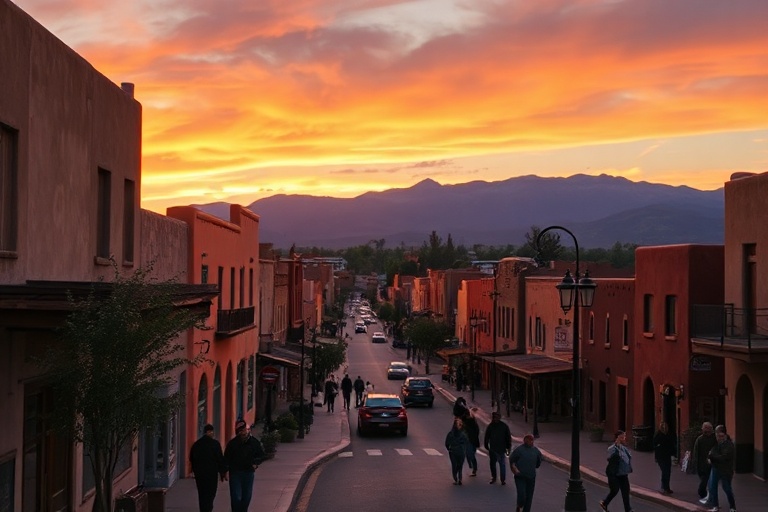
Santa Fe stands as a cultural crossroads where centuries of tradition blend seamlessly with contemporary creativity. The city’s relationship with América—its people, art, and history—has shaped an identity that resonates far beyond New Mexico’s desert landscapes. From the adobe architecture that whispers of Pueblo ancestry to the vibrant galleries that pulse with modern energy, Santa Fe is a living museum of artistic expression.
This fusion of old and new is not accidental. It’s the result of deliberate preservation and bold innovation. The city’s designation as a UNESCO Creative City for Crafts and Folk Art in 2019 underscored its global significance. Yet, beneath the accolades lies a deeper narrative—one of resilience, adaptation, and cultural pride.
The Historical Roots of Santa Fe’s Artistic Identity
Santa Fe’s artistic lineage traces back over a thousand years, long before Spanish conquistadors arrived in 1610. The Ancestral Pueblo people, who settled in the region as early as 1000 AD, left behind intricate pottery and petroglyphs that remain foundational to the area’s creative DNA. These early artists established techniques and motifs that would later influence colonial and modern movements.
The Spanish colonial period introduced European styles, but adaptation was key. By the late 19th century, artists from the East Coast began flocking to Santa Fe, drawn to its light, its colors, and its untouched landscapes. Figures like Georgia O’Keeffe and the artists of the Taos Society of Artists transformed the region into an artistic haven. Their work laid the groundwork for what would become known as the Santa Fe style—a melding of Southwestern motifs with impressionist and realist techniques.
This historical layering is evident today. Walking down Canyon Road, one encounters galleries that sit beside historic adobe homes, each structure and artwork telling a fragment of the city’s layered past. The Culture section of Dave’s Locker highlights how these historical threads continue to inspire contemporary creators.
Key Historical Influences on Santa Fe’s Art
- Ancestral Pueblo Art: Pottery, weaving, and petroglyphs dating back to 1000 AD.
- Spanish Colonial Era: Introduction of religious iconography and retablos, blending with Indigenous traditions.
- 19th-Century Artistic Migration: The arrival of Eastern artists like O’Keeffe, who redefined the region’s aesthetic.
- Southwest Modernism: Mid-century artists like Alfred Morang and Will Shuster who fused local themes with modernist techniques.
The Modern Santa Fe Art Scene: Innovation Meets Tradition
Today, Santa Fe’s art scene is a dynamic ecosystem where tradition and innovation coexist. The city hosts over 250 galleries, more per capita than almost any other city in the U.S. These spaces range from historic institutions like the Entertainment hubs showcasing local theater and film to cutting-edge contemporary galleries pushing boundaries.
One standout example is the SITE Santa Fe biennial, which has gained international acclaim for its avant-garde exhibitions. The 2023 edition, titled “Currents 2023,” featured works by 20 emerging and established artists exploring themes of migration, identity, and environmental change. Such events underscore Santa Fe’s role as a incubator for bold new ideas.
But tradition remains just as vital. The annual Spanish Market and Indian Market draw tens of thousands of visitors, celebrating centuries-old art forms like silverwork, beadwork, and straw appliqué. These markets are more than tourist attractions; they are living demonstrations of cultural preservation.
Notable Contemporary Artists from Santa Fe
- Rose Simpson: A multidisciplinary artist whose work explores Indigenous identity and futurism, often using mixed media and sculpture.
- Eyvind Kang: A composer and musician whose avant-garde compositions blend classical, folk, and electronic elements.
- Nina Otero-Warren: Though primarily known for her activism, her legacy influences modern feminist and Chicana art movements in the region.
- Dan Namingha: A Hopi-Tewa artist whose abstract paintings and sculptures reinterpret traditional motifs in a contemporary context.
Economic and Cultural Impact of the Arts in Santa Fe
The arts are not just a cultural adornment in Santa Fe; they are an economic lifeline. According to a 2022 report by Americans for the Arts, the nonprofit arts and culture sector in Santa Fe generates over $150 million annually and supports more than 5,000 jobs. This includes everything from gallery owners and tour guides to artisans and hospitality workers who benefit from the city’s creative reputation.
Yet, the financial benefits are only part of the story. The arts foster a sense of community and belonging. Programs like the Santa Fe Art Institute provide residencies for artists from around the world, fostering cultural exchange. Meanwhile, initiatives like Art in Public Places integrate art into everyday life, turning plazas, parks, and even bus stops into canvases for public expression.
This economic and social fabric is fragile, however. Rising property values and gentrification threaten the affordability of studio spaces and homes for local artists. Organizations like Artspace Santa Fe are working to combat this by developing affordable live-work spaces for artists. Their efforts highlight the need for sustainable models that balance growth with preservation.
The Future of Santa Fe’s Artistic Landscape
Looking ahead, Santa Fe faces both challenges and opportunities. Climate change poses a direct threat to the region’s natural beauty, which has long been a muse for artists. Wildfires, droughts, and shifting landscapes are already altering the scenery that inspired O’Keeffe and countless others. Artists are responding in kind, creating works that address environmental urgency. For example, the Santa Fe Art Institute’s 2024 residency theme focuses on “Art and Ecological Resilience,” bringing together artists, scientists, and policymakers to explore solutions.
Technology is another frontier. Virtual reality (VR) and augmented reality (AR) are being used to preserve and reinterpret historical sites. The Palace of the Governors’ recent VR project, for instance, allows users to explore the building’s 400-year history in immersive detail. Meanwhile, digital art galleries are emerging, offering new platforms for artists to reach global audiences.
Yet, the most pressing question may be how to ensure Santa Fe’s artistic soul endures amid rapid change. The answer likely lies in education. Programs like the Santa Fe University of Art and Design and community workshops are nurturing the next generation of artists. By fostering local talent and encouraging intergenerational mentorship, Santa Fe can continue to thrive as a beacon of creativity.
Conclusion: Santa Fe as a Model for Cultural Vitality
Santa Fe’s relationship with América is not a static relic but a living dialogue. It is a city where a 12th-century Pueblo pot sits beside a 21st-century digital installation, where a mariachi band plays in the plaza while a gallery showcases abstract expressionism. This juxtaposition is not a contradiction but a testament to the city’s ability to evolve without erasing its past.
For artists, collectors, and visitors alike, Santa Fe offers more than beauty or inspiration. It offers a lesson in how culture can be both a bridge and a mirror—connecting disparate worlds while reflecting the soul of a community. As the city navigates the complexities of the 21st century, its greatest strength may lie in its ability to remain, above all, a place of creation.
Whether you’re drawn by the allure of its art markets, the depth of its history, or the promise of its future, Santa Fe invites you to be part of its ongoing story. And in doing so, it reminds us all that art is not just something we admire—it is something we live.