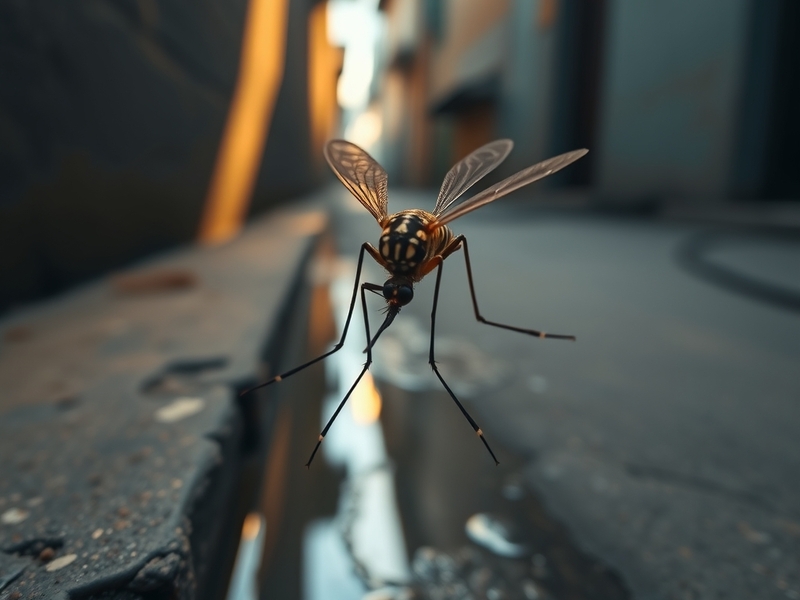
The Aedes aegypti mosquito has become one of the most feared vectors in public health, largely due to its role as the primary transmitter of the Zika virus. Unlike many other mosquitoes, this species thrives in urban environments, breeding in stagnant water found in discarded tires, flower pots, and even bottle caps. Its daytime biting habits—peaking during dawn and dusk—make it particularly difficult to avoid, especially in densely populated tropical and subtropical regions.
How the Zika Virus Spreads Through Mosquito Bites
When an Aedes aegypti mosquito feeds on the blood of an infected person, it ingests the virus along with the blood meal. The virus then replicates within the mosquito’s gut before migrating to its salivary glands. After an incubation period of roughly 10 to 14 days, the mosquito becomes capable of transmitting the virus to the next human it bites. This biological process highlights why controlling mosquito populations remains the most effective strategy for curbing Zika outbreaks.
The virus itself presents unique challenges. Many infected individuals—approximately 80 percent—exhibit no symptoms at all, making silent transmission a persistent concern. For those who do develop symptoms, they typically include mild fever, rash, conjunctivitis, and joint pain, which usually resolve within a week. However, the real danger lies in complications such as microcephaly in newborns when pregnant women are infected, and Guillain-Barré syndrome in adults, both of which have devastating long-term consequences.
Geographic Hotspots and the Expanding Threat
Zika was first identified in Uganda in 1947, but it remained relatively obscure until a major outbreak in Micronesia in 2007. The situation escalated dramatically in 2015 and 2016, when Brazil experienced an unprecedented surge in microcephaly cases linked to Zika infections. This outbreak triggered a World Health Organization (WHO) declaration of a Public Health Emergency of International Concern in February 2016, underscoring the virus’s potential for rapid global spread.
Today, Zika transmission has been reported in over 80 countries and territories, with the Caribbean, Central America, South America, and parts of the southern United States—particularly Florida and Texas—remaining high-risk areas. Climate change is further complicating containment efforts. Rising global temperatures and increased rainfall create ideal breeding conditions for Aedes aegypti, effectively expanding the mosquito’s habitat into previously unaffected regions such as the southern United States and southern Europe.
Travel patterns also play a significant role in the virus’s spread. Infected individuals can unknowingly carry the virus across borders, introducing it to new areas where Aedes aegypti populations are already established. This dynamic has turned Zika into a transnational challenge, requiring coordinated international responses rather than isolated local interventions.
Effective Prevention and Control Strategies
Combating Zika requires a multi-faceted approach that balances immediate action with long-term prevention. Below are key strategies currently being employed to reduce transmission:
- Vector Control: Eliminating mosquito breeding sites through environmental management, such as removing standing water and applying larvicides, remains a cornerstone of prevention. In some regions, genetically modified mosquitoes—like those developed by Oxitec—are being released to reduce wild Aedes aegypti populations.
- Public Awareness Campaigns: Educating communities about the risks of Zika and promoting the use of insect repellent, long-sleeved clothing, and mosquito nets—especially for pregnant women—has proven effective in high-risk areas.
- Surveillance and Rapid Response: Enhanced monitoring of mosquito populations and early detection of Zika cases allow health authorities to implement targeted interventions before outbreaks escalate. This includes using drones to identify potential breeding sites in hard-to-reach areas.
- Vaccine Development: While no licensed Zika vaccine exists yet, several candidates are in advanced clinical trials. The most promising, developed by the National Institutes of Health, has shown strong efficacy in animal models and is progressing toward human trials.
- Community Engagement: Local participation is critical. Community-led clean-up efforts, such as the “Clean City, Healthy City” initiative in Brazil, have demonstrated how collective action can significantly reduce mosquito populations and disease transmission.
Despite these efforts, challenges persist. In many low-income countries, limited resources hinder the implementation of large-scale vector control programs. Additionally, public skepticism toward genetically modified organisms and insecticides can undermine control measures. Addressing these barriers requires not only scientific innovation but also robust public health infrastructure and international cooperation.
Broader Implications: A Warning for Future Pandemics
The Zika epidemic serves as a stark reminder of how quickly a relatively obscure virus can become a global health crisis. It highlights the interconnectedness of human health, environmental factors, and socioeconomic conditions. The rapid spread of Zika was not solely a biological phenomenon; it was also a consequence of urbanization, climate change, and globalization—trends that are unlikely to reverse anytime soon.
Moreover, Zika has exposed vulnerabilities in global health systems. During the 2016 outbreak, delays in vaccine development and inconsistent international responses revealed gaps in pandemic preparedness. This has prompted calls for stronger coordination among countries, increased funding for research, and investment in early warning systems capable of detecting emerging threats before they escalate.
The virus has also reshaped public health policies in unexpected ways. For instance, several countries issued travel advisories for pregnant women visiting Zika-affected regions, and some airlines began offering refunds or rebooking options in response to growing concerns. These measures, while controversial, reflect the broader societal impact of a mosquito-borne disease.
Looking Ahead: Can We Stop the Next Zika?
The future of Zika control depends on our ability to adapt to a changing world. Scientists are exploring innovative solutions, such as Wolbachia-infected mosquitoes, which reduce the ability of Aedes aegypti to transmit viruses like Zika and dengue. Early field trials in countries like Brazil and Indonesia have shown promising results, offering a potential model for sustainable vector control.
However, long-term success will require more than just technological fixes. It demands a commitment to addressing the root causes of mosquito proliferation—poor sanitation, inadequate waste management, and climate change. Governments, communities, and international organizations must work together to create environments where mosquitoes cannot thrive.
For now, the threat of Zika remains, particularly in tropical and subtropical regions. But the lessons learned from past outbreaks have equipped us with better tools and strategies to respond. The question is not whether another Zika-like epidemic will occur, but how prepared we will be when it does.