Understanding Mexico Independence Day
Mexico Independence Day, celebrated on September 16, marks the beginning of the country’s fight for independence from Spanish rule. The day is significant not only for its historical context but also for its cultural implications. It commemorates the moment when Miguel Hidalgo, a parish priest, issued the famous “Grito de Dolores,” calling for the end of Spanish colonialism in 1810. This pivotal event symbolizes the struggle for freedom and national identity.
Historical Context
The roots of Mexico’s independence can be traced back to the early 19th century when the country was under Spanish colonial rule. Discontent brewed among various social classes due to issues like taxation, land ownership, and social inequality. The influences of the Enlightenment and other revolutionary movements in Europe and the Americas inspired many Mexicans to seek change.
The “Grito de Dolores” on September 16, 1810, was more than just a call to arms; it was a rallying cry that united diverse factions within Mexican society. Hidalgo’s speech urged people to fight for their rights and freedoms, igniting a movement that would last for over a decade. The struggle was not easy, but it eventually led to Mexico’s official independence on September 27, 1821.
Celebrations and Traditions
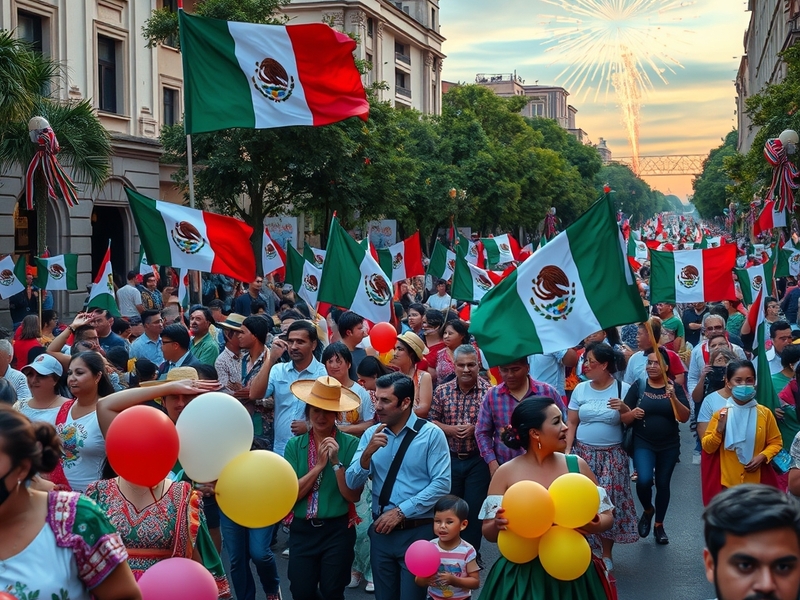
Mexico Independence Day is celebrated with fervor across the nation and among Mexicans living abroad. The festivities begin on the night of September 15 with the “Grito de Dolores” reenactment. The President of Mexico traditionally rings the bell of the National Palace in Mexico City and recites Hidalgo’s words, followed by fireworks and a festive atmosphere.
During the day, parades featuring colorful floats, traditional costumes, and folk dances take place in cities and towns throughout Mexico. Food plays a central role in the celebrations, with dishes such as chiles en nogada, tamales, and pozole being served. The vibrant atmosphere is a reflection of national pride and unity.
- Grito de Dolores: The reenactment of Miguel Hidalgo’s call for independence.
- Parades: Colorful displays of culture and tradition across the country.
- Traditional Foods: Special dishes that highlight Mexican culinary heritage.
- Fireworks: A spectacular display marking the festive occasion.
The Broader Implications
Mexico Independence Day serves as a reminder of the ongoing struggles for freedom and justice. It highlights the importance of national identity and the need for unity among diverse groups within the country. The celebration fosters a sense of belonging and pride, which is particularly significant in times of social and political turmoil.
Furthermore, the holiday has implications beyond Mexico’s borders. It resonates with other nations that have fought for independence and self-determination. The principles of liberty and equality are universal, and Mexico’s journey toward independence can inspire movements worldwide. This day is not just a commemoration; it is a call to reflect on the values of freedom and democracy.
Conclusion
Mexico Independence Day is a profound reminder of the country’s rich history and the sacrifices made for freedom. Celebrated with passion and pride, it encapsulates the spirit of a nation that has overcome adversity. As Mexicans gather to honor their past, they also look forward to a future built on the principles of justice and equality. This day is more than a historical event; it is a celebration of identity, culture, and the enduring quest for freedom.