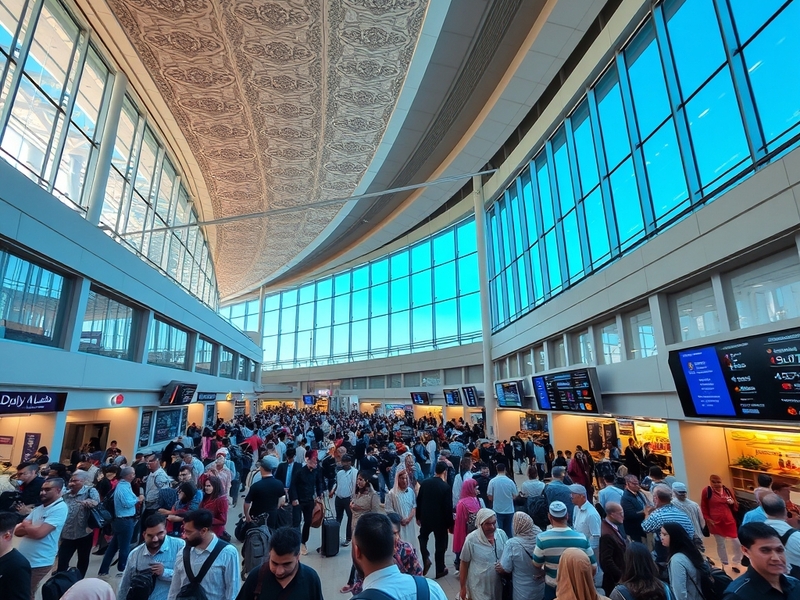
Overview of Riyadh Airport
King Khalid International Airport (RUH), located 35 kilometers north of Riyadh, is the primary gateway to Saudi Arabia’s capital. Opened in 1983, it has since evolved into a major hub for travelers from around the globe. The airport is named after the late King Khalid bin Abdulaziz Al Saud, who ruled from 1975 until his death in 1982. With its state-of-the-art facilities and strategic location, Riyadh Airport plays a crucial role in connecting the Middle East to various international destinations.
Facilities and Services
Riyadh Airport boasts a variety of facilities designed to enhance the passenger experience. Travelers can find numerous amenities throughout the terminals, including:
- Duty-free shops offering a wide range of products
- Restaurants and cafes featuring local and international cuisine
- Lounges for business and first-class passengers
- Car rental services for convenient transportation
- Free Wi-Fi access throughout the airport
In addition to these amenities, the airport has implemented various health and safety measures, especially following the global pandemic. Enhanced cleaning protocols and social distancing guidelines are in place to ensure the safety of all travelers.
Airline Operations and Destinations
Riyadh Airport serves as a hub for several prominent airlines, including Saudi Arabian Airlines (Saudia), which operates numerous domestic and international flights. The airport connects Riyadh to major cities across the globe, such as:
- London
- New York
- Dubai
- Cairo
- Beijing
With its strategic location, the airport is crucial for both business and leisure travelers. It facilitates trade and tourism, contributing significantly to the local economy. The airport’s expansion plans aim to increase its capacity, accommodating the rising number of passengers each year.
Cultural Significance and Future Developments
Riyadh Airport is not just a transit point; it symbolizes the rapid modernization of Saudi Arabia. As the country diversifies its economy and promotes tourism, the airport plays a pivotal role in welcoming visitors from various cultures. The Kingdom has been investing heavily in its infrastructure to support its Vision 2030 initiative, which aims to enhance the quality of life for residents and visitors alike.
Future developments at the airport include the expansion of terminal facilities and improvements in transportation links to the city center. These enhancements are expected to streamline the passenger experience further, making travel to and from Riyadh more convenient.
In conclusion, King Khalid International Airport stands as a testament to Saudi Arabia’s commitment to modernization and global connectivity. With its extensive facilities, strategic airline operations, and ongoing development projects, the airport is set to play an even more significant role in the region’s aviation landscape. For those interested in traveling to Saudi Arabia, Riyadh Airport serves as an essential gateway.