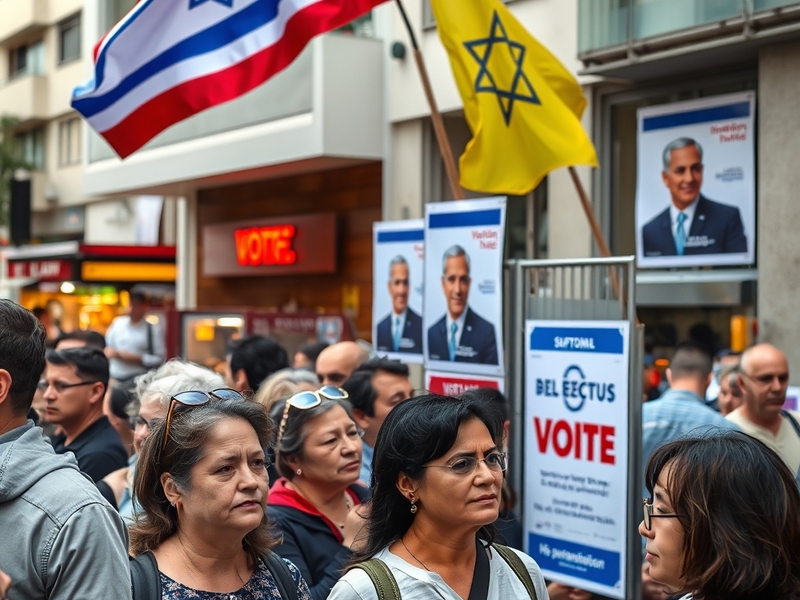
Understanding the Israeli Elections: A Focus on Netanyahu
The Israeli elections have long been a focal point of political discourse, not only within the country but also on a global scale. With Benjamin Netanyahu at the center of this political landscape, his leadership has sparked various opinions and analyses. Netanyahu, who has served multiple terms as Prime Minister, remains a dominant figure in Israeli politics, and his recent campaigns have drawn significant international attention.
Netanyahu’s Political Journey
Benjamin Netanyahu’s political career spans several decades, marked by his tenure as Prime Minister and various positions in the Israeli government. Initially elected in 1996, he has returned to power multiple times, showcasing a resilience that many political analysts find intriguing. His leadership style is characterized by a strong stance on security and a focus on economic growth.
Netanyahu’s ability to navigate complex political landscapes has led to his repeated electoral success. However, his time in office has not been without controversy. Issues such as corruption allegations, economic disparity, and tensions with Palestinian territories have frequently surfaced during his campaigns. These factors contribute to the polarized opinions surrounding his leadership.
Key Issues in the Recent Elections
The latest elections have brought several critical issues to the forefront, shaping the voting behaviors of Israeli citizens. Among them are:
- Security Concerns: The ongoing conflict with Hamas and concerns over Iran’s nuclear ambitions remain central to Netanyahu’s platform.
- Economic Policies: Voters are keenly aware of the economic challenges facing Israel, including housing prices and inflation.
- Corruption Allegations: Netanyahu’s ongoing legal battles over corruption charges have raised questions about his integrity and governance.
- Relations with Palestinians: The approach to peace negotiations and settlements is a divisive issue that affects many voters.
Each of these issues plays a significant role in shaping public opinion and party alliances. Netanyahu’s strategies often involve leveraging his experience in security matters to appeal to a sense of nationalism and stability among voters.
International Reactions and Implications
The global response to Netanyahu’s leadership and the Israeli elections is varied. Allies and adversaries alike closely monitor the outcomes, as they have significant implications for international relations.
Countries like the United States have traditionally been strong supporters of Israel, but political shifts can alter this dynamic. Netanyahu’s hardline policies may create friction with more progressive elements in U.S. politics, especially regarding Palestinian rights and peace initiatives. Conversely, his administration has maintained strong ties with other nations, such as India and some Gulf states, indicating a complex web of international relations.
Netanyahu’s approach to diplomacy often emphasizes security over cooperation, which resonates with certain factions but alienates others. The challenge lies in balancing these competing interests while maintaining a stable political environment within Israel.
The Future of Israeli Politics
As Netanyahu continues to lead, the future of Israeli politics remains uncertain. His ability to unite various factions under his leadership will be tested in the coming years. Additionally, the rise of opposition parties and new political movements could reshape the landscape.
Voter turnout and engagement are crucial in determining the direction of Israeli democracy. Many young voters, who are increasingly disillusioned with traditional politics, are seeking alternatives that address their concerns. This shift could lead to a more diverse political environment, challenging Netanyahu’s long-standing dominance.
In conclusion, the Israeli elections and Netanyahu’s role within them serve as a microcosm of broader geopolitical trends. As the political landscape evolves, it will be essential to monitor how these changes affect not only Israel but also its relationships with the rest of the world. For more insights on global politics, you can explore our Politics section.