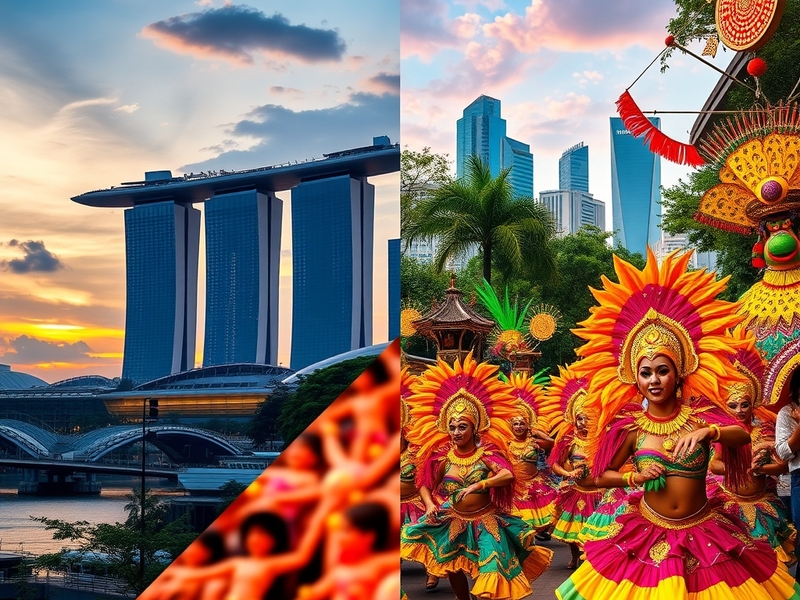
Overview: Singapore and Brazil
Singapore and Brazil, two nations located on opposite sides of the globe, offer fascinating contrasts in culture, economy, and lifestyle. While Singapore is a small island city-state known for its rapid economic development and stringent laws, Brazil is the largest country in South America, famous for its vibrant culture and diverse landscapes. Understanding the differences and similarities between these two nations can provide insights into their respective roles on the global stage.
Economic Landscape
Singapore has established itself as a global financial hub with a strong emphasis on technology and innovation. Its economy is characterized by high GDP per capita, advanced infrastructure, and a favorable business environment. In contrast, Brazil, with its vast natural resources and agricultural output, has a mixed economy that faces challenges such as income inequality and political instability.
Here are some key economic indicators:
- GDP per capita: Singapore ranks among the highest in the world, while Brazil’s GDP per capita is significantly lower.
- Major Industries: Singapore focuses on finance, technology, and pharmaceuticals, whereas Brazil is known for agriculture, mining, and energy.
- Foreign Investment: Singapore attracts substantial foreign investment, while Brazil’s investment climate is more volatile.
The differences in economic structure and performance highlight the unique challenges and opportunities each country faces.
Cultural Distinctions
Culturally, Singapore is a melting pot of ethnicities, with a majority Chinese population, alongside Malays, Indians, and expatriates from around the world. This diversity is reflected in its festivals, cuisine, and languages, creating a unique cultural tapestry. Brazil, on the other hand, boasts a rich cultural heritage influenced by Indigenous, African, and European traditions. Its famous Carnival festival, samba music, and culinary delights like feijoada showcase this vibrant cultural mix.
Some notable cultural aspects include:
- Festivals: Singapore celebrates events like Chinese New Year and Hari Raya, while Brazil is famous for its Carnival.
- Cuisine: Singaporean food is a blend of flavors from various cultures, whereas Brazilian cuisine is hearty, with a focus on meat and tropical ingredients.
- Languages: Singapore recognizes English, Mandarin, Malay, and Tamil, while Portuguese is the official language of Brazil.
These cultural distinctions not only enrich the identities of each nation but also influence their global interactions.
Social Structure and Quality of Life
Singapore consistently ranks high in quality of life indices. Its efficient public services, low crime rate, and excellent healthcare system contribute to a high standard of living. Education is highly valued, with a rigorous system that emphasizes both academic and vocational training.
Conversely, Brazil faces significant social challenges. While it has a rich cultural life, there are stark disparities in wealth and access to services. Education and healthcare are often inconsistent, leading to varying quality of life across different regions. Urban areas like São Paulo and Rio de Janeiro showcase wealth and opportunity, while rural regions struggle with poverty.
Key points regarding social structure include:
- Healthcare: Singapore has a robust healthcare system, whereas Brazil’s system is under strain, affecting accessibility.
- Education: Singapore is known for its high educational standards, while Brazil grapples with educational inequality.
- Safety: Singapore is one of the safest cities globally, while Brazil faces challenges with crime in certain areas.
Conclusion
In summary, Singapore and Brazil present a study in contrasts. Singapore’s efficient governance and economic prowess stand in stark contrast to Brazil’s rich cultural heritage and social challenges. Each country offers unique insights into how geography, history, and policy shape societies. As globalization continues to influence nations, the distinct paths of Singapore and Brazil highlight the diversity of human experience and the various ways nations can thrive.
For more analysis on global cultures, visit our Culture section or explore economic insights in our Business category.