
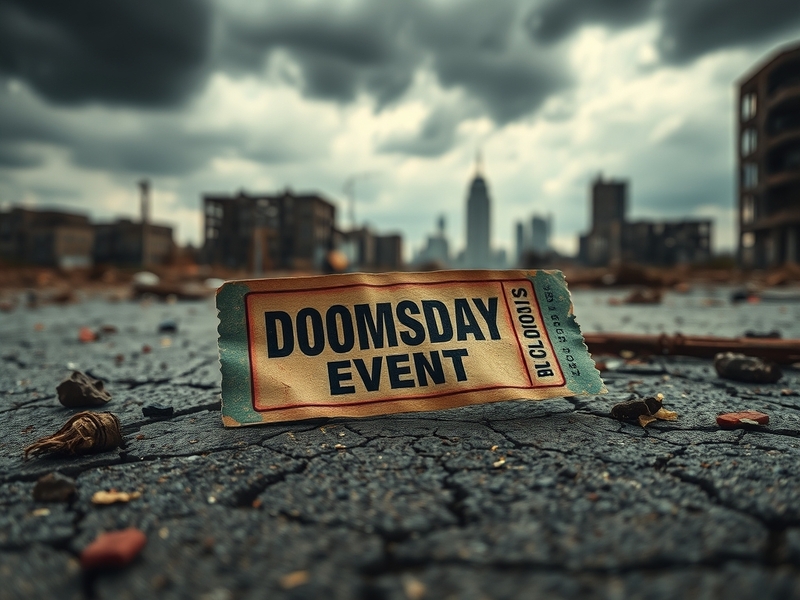
Understanding Doomsday Tickets
Doomsday tickets have emerged as a unique trend, capturing the imagination of many individuals who are fascinated by the concept of apocalypse scenarios. These tickets, often linked to events or experiences themed around the end of the world, offer a mix of entertainment and existential contemplation. They can range from immersive experiences to themed merchandise, creating a niche market that appeals to various demographics.
The Appeal of Doomsday Scenarios
The allure of doomsday tickets lies in their ability to tap into deep-seated fears and curiosities about the future. Many people are drawn to the idea of preparing for catastrophic events, whether real or fictional. This fascination can be attributed to several factors:
- Entertainment Value: Many events offer thrilling experiences that make attendees feel alive.
- Community Engagement: Fans of apocalyptic themes often come together, creating a sense of belonging.
- Exploration of Human Nature: These scenarios prompt reflection on how individuals might react in extreme situations.
As a result, doomsday-themed events often sell out, with participants eager to engage in activities that challenge their perceptions of reality.
Types of Doomsday Experiences
Doomsday tickets can encompass a variety of experiences, each offering something unique to participants. Here are some popular types:
- Escape Rooms: These often feature scenarios where players must find a way to survive an apocalyptic event.
- Survival Workshops: These teach skills that might be useful in a crisis, from foraging to self-defense.
- Themed Parties and Festivals: Events that celebrate dystopian themes through costumes, music, and art.
- Virtual Reality Experiences: Immersive VR games that simulate survival in a post-apocalyptic world.
Each of these experiences caters to different interests, from thrill-seekers to those looking for educational opportunities. This diversity broadens the appeal of doomsday tickets beyond just entertainment.
The Economic Impact of Doomsday Tickets
The rise of doomsday tickets has also generated economic opportunities. Event organizers and local businesses have tapped into this trend, creating new revenue streams. The economic impact can be observed in various ways:
- Increased Tourism: Locations that host doomsday-themed events often see an influx of visitors.
- Local Business Growth: Restaurants, hotels, and shops can benefit from increased foot traffic during events.
- Job Creation: New jobs are generated in event planning, security, and hospitality sectors.
As the market for doomsday experiences expands, it is important for organizers to consider sustainability and ethical implications, ensuring that they do not exploit fears for profit.
Conclusion
Doomsday tickets represent a fascinating intersection of entertainment, community, and economic opportunity. By appealing to our fears and curiosities, they create unique experiences that resonate with a wide audience. As this trend continues to grow, it will be essential to maintain a balance between engaging content and responsible marketing practices. The future of doomsday tickets may evolve, but their core appeal will likely remain rooted in our collective fascination with survival and the unknown.