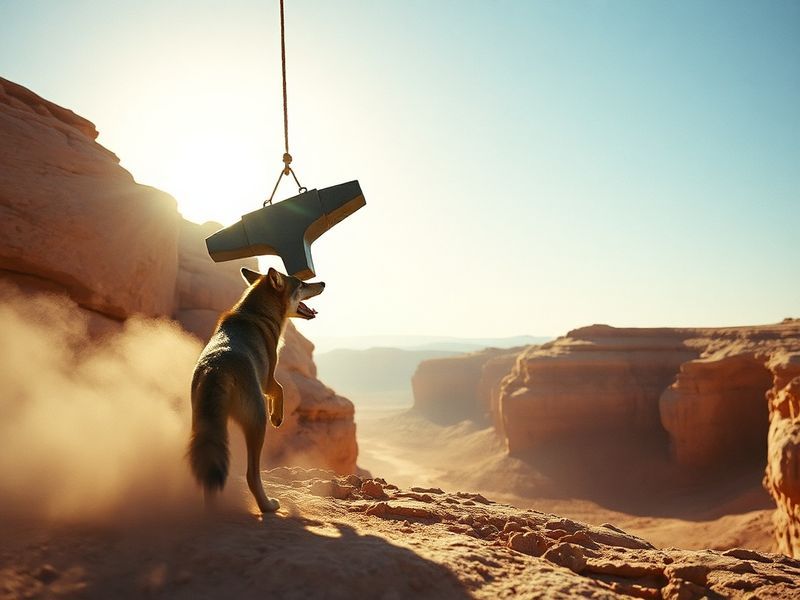
The case of Wile E. Coyote vs. Acme Corporation has long transcended its origins as a fictional legal dispute to become a symbol of corporate accountability—or the lack thereof—in popular culture. While the original Looney Tunes shorts never explicitly framed it as a courtroom drama, the idea of a relentless coyote seeking justice against a company that repeatedly sells him defective products has resonated across generations. It’s a narrative that blends absurdity with a critique of consumer rights, all under the guise of slapstick comedy.
But what if this fictional feud had real-world implications? The question isn’t just a whimsical thought experiment. It touches on broader themes of corporate negligence, the ethics of product design, and even the way legal systems—fictional or not—handle disputes between individuals and powerful entities. To understand its cultural weight, we need to look beyond the cartoon chaos and examine how this premise reflects real consumer frustrations.
The Origins of a Cartoon Legal Saga
The story begins in the mid-20th century, when Warner Bros. animators crafted a series of shorts featuring Wile E. Coyote, a predator doomed to perpetual failure thanks to the Acme Corporation’s shoddy merchandise. From rocket-powered roller skates that explode prematurely to anvils that crush their user mid-fall, Acme’s products are notoriously unreliable. Yet the coyote, driven by an insatiable hunger for the Road Runner, persists in purchasing them, often with disastrous results.
What makes this dynamic so compelling is the power imbalance. Acme, as a faceless corporation, represents unchecked capitalism. Its products are sold with no regard for safety or functionality, yet the coyote—despite his clear suffering—is denied any recourse. The absurdity of the situation mirrors real-world consumer experiences, where individuals often feel powerless against large corporations. This theme has struck a chord globally, where similar frustrations with corporate accountability have fueled movements for stronger consumer protection laws.
A Global Lens: Consumer Rights in Different Legal Systems
The fictional Coyote vs. Acme dispute highlights universal frustrations with corporate negligence, but the legal frameworks for addressing such issues vary widely around the world. In the United States, the Consumer Product Safety Commission (CPSC) oversees product recalls and safety standards, though critics argue enforcement is often too lenient. Meanwhile, the European Union’s General Product Safety Directive places stricter obligations on manufacturers, requiring them to ensure products are safe before they reach consumers.
In Japan, consumer rights are protected under the Consumer Contract Act, which allows individuals to void contracts made under duress or deception—a provision that could theoretically apply to Acme’s predatory sales tactics. Contrast this with countries where consumer protection laws are weaker or poorly enforced, and the Coyote’s plight feels even more relatable. In these regions, defective products often go unchallenged, leaving consumers with little recourse beyond resignation.
This global disparity underscores a key irony in the Coyote’s story: his fictional struggles reflect very real challenges faced by consumers worldwide. Whether it’s faulty electronics in India, contaminated food in Mexico, or unsafe vehicles in Brazil, the theme of corporate indifference transcends borders—and cultures.
Could This Case Ever Exist in Reality?
While the Coyote vs. Acme case is a product of fiction, the legal principles it loosely invokes are very real. Product liability law, for instance, holds manufacturers accountable for harm caused by defective products. In the U.S., the doctrine of strict liability means a company can be sued even if it wasn’t negligent, as long as the product was unreasonably dangerous. If Acme were a real company, it would likely face countless lawsuits from disgruntled customers—like the coyote.
However, the Coyote’s case would face significant hurdles. For one, his repeated voluntary purchases of Acme’s products could be seen as contributory negligence, undermining his claims. Courts might also question his capacity to understand the risks, given his obsessive pursuit of the Road Runner. Nevertheless, the absurdity of his situation raises a serious question: How many real-life consumers have been similarly exploited by companies that prioritize profit over safety?
The Role of Satire in Exposing Corporate Malfeasance
Satire has long been a tool for critiquing corporate power, and the Coyote vs. Acme narrative fits squarely within this tradition. Works like Robocop, The Simpsons, and Brazil use exaggeration to expose the dangers of unchecked capitalism. The Coyote’s story, though comedic, serves a similar purpose—highlighting the absurd lengths to which corporations will go to exploit consumers.
This kind of satire is particularly effective because it’s accessible. Unlike dense legal jargon or economic theory, the Coyote’s misadventures are immediately understandable. They distill complex issues into simple, visual terms: a coyote flattened by an anvil becomes a metaphor for the crushing weight of corporate indifference. Globally, satire has played a crucial role in shaping public opinion on corporate accountability, from India’s Jaane Bhi Do Yaaro to Nigeria’s Osuofia in London.
The Coyote’s Legacy: A Symbol of Persistent Struggle
Decades after his debut, Wile E. Coyote remains a cultural icon, his image emblazoned on memes, merchandise, and even legal scholarship. His fictional battle against Acme has inspired real-world discussions about corporate ethics, consumer rights, and the power of satire to effect change. In an era where viral videos of product failures and corporate scandals dominate the internet, the Coyote’s story feels more relevant than ever.
Yet the Coyote’s enduring appeal isn’t just about his struggle—it’s about his resilience. Despite countless failures, he never gives up. This tenacity resonates with audiences who see their own struggles reflected in his perseverance. It’s a reminder that even in the face of overwhelming odds, fighting back—whether in a courtroom or a cartoon—matters.
The Future of Corporate Accountability
As technology advances and global markets become more interconnected, the issues raised by the Coyote vs. Acme narrative will only grow more pressing. From social media algorithms that exploit user data to fast-fashion brands that prioritize profit over labor conditions, the power imbalance between corporations and individuals persists. The question is whether the lessons of satire and consumer advocacy can translate into meaningful change.
One potential path forward is the rise of collective action. Social media has given consumers a platform to voice their grievances and organize, as seen in movements like #MeToo and climate activism. If the Coyote’s story were set in today’s world, his lawsuit might go viral before ever reaching a courtroom. Hashtags, online petitions, and viral videos could amplify his case, forcing Acme—or any real-world equivalent—to take notice.
Another avenue is the growing demand for corporate transparency. Consumers are increasingly prioritizing ethical brands, and regulatory bodies are under pressure to enforce stricter standards. The Coyote’s fictional plight could serve as a cautionary tale, urging companies to prioritize safety and integrity over short-term profits.
Conclusion: Why the Coyote Still Matters
The case of Wile E. Coyote vs. Acme Corporation may never be adjudicated in a real courtroom, but its legacy endures in courtrooms of public opinion. It’s a story that blends humor with hard truths about corporate power, consumer rights, and the absurdity of unchecked capitalism. Globally, it resonates with audiences who see their own struggles reflected in the coyote’s endless pursuit of justice.
In the end, the Coyote’s story is a reminder that laughter and critique can go hand in hand. It challenges us to question the systems that govern our lives, even when those systems are dressed in the guise of cartoonish incompetence. Whether through satire, activism, or legal reform, the fight for accountability continues—and the Coyote, in all his flawed glory, remains a symbol of that fight.