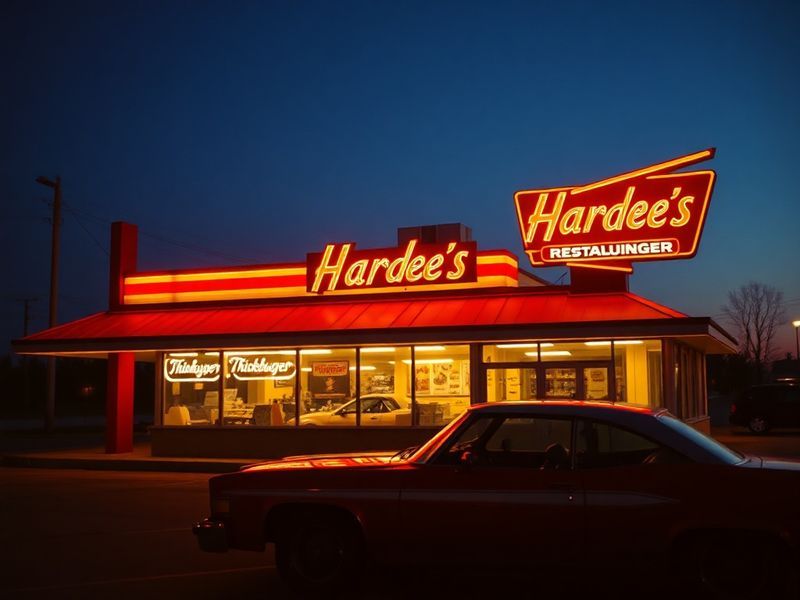
In the crowded landscape of American fast food, few chains have left as indelible a mark as Hardee’s. Founded in 1960 by Wilber Hardee in Rocky Mount, North Carolina, the restaurant began as a single drive-in before evolving into a fast-food empire. Today, Hardee’s operates over 1,800 locations across the United States and internationally, serving as a cultural touchstone in countries where American fast food has taken root.
What sets Hardee’s apart from its competitors is its commitment to hearty, no-frills American comfort food. While McDonald’s and Burger King often prioritize speed and consistency, Hardee’s has carved a niche by embracing indulgence—think thick-cut bacon, hand-pressed burgers, and biscuits that rival homemade recipes. This approach has earned it a loyal following, particularly among those who crave the nostalgic flavors of mid-century America.
The Rise of a Fast-Food Legend
Hardee’s growth in the 1960s and 1970s mirrored the expansion of American fast food itself. The chain’s early success can be attributed to its focus on quality ingredients and a menu that stood out in an era dominated by frozen patties and assembly-line cooking. By 1962, just two years after its founding, Hardee’s had 100 locations. The momentum continued, and by the late 1970s, it had become one of the largest burger chains in the country.
One of Hardee’s most defining moments came in 1973 with the introduction of the biscuit breakfast sandwich. This innovation not only diversified the menu but also positioned Hardee’s as a competitor to McDonald’s dominance in the breakfast market. The biscuit, with its flaky layers and buttery taste, became a staple that set Hardee’s apart. Even today, the biscuit remains a signature item, a testament to the chain’s ability to blend tradition with modern convenience.
Hardee’s also played a role in the evolution of fast-food marketing. In the 1980s, the chain launched its famous “Starving Students” campaign, a humorous take on affordability that resonated with college crowds. This strategy highlighted Hardee’s as a budget-friendly option without compromising on portion sizes—a balance that continues to attract customers today.
Hardee’s Menu: A Celebration of Indulgence
At its core, Hardee’s menu is a celebration of indulgence. While it offers the standard fast-food fare—burgers, fries, and soft drinks—its real appeal lies in its premium offerings. The Thickburger line, introduced in the early 2000s, features burgers with hand-formed patties, melted cheese, and a variety of toppings, all stacked on a toasted bun. These burgers are designed to be satiating, appealing to customers who prioritize flavor over speed.
Breakfast remains another cornerstone of Hardee’s menu. Beyond the biscuit, the chain offers breakfast burritos, pancakes, and sausage gravy—a Southern staple that has found fans far beyond its original market. The Starbucks-influenced coffee drinks and frappes further cement Hardee’s as a destination for morning meals.
In recent years, Hardee’s has also embraced broader trends in fast food, such as plant-based options. The chain introduced the Beyond Famous Star Burger, a plant-based patty that caters to vegetarian and flexitarian diets. This move reflects Hardee’s ability to adapt while staying true to its roots.
Signature Items That Define the Brand
- The Hardee’s Thickburger: A hand-pressed burger with a thick patty, melted cheese, and a variety of toppings, served on a toasted bun.
- Biscuits: Flaky, buttery biscuits that are a breakfast staple and a hallmark of Hardee’s menu.
- The Frisco Burger: A double-patty burger with Swiss cheese, mayonnaise, and applewood-smoked bacon, topped with grilled onions.
- Breakfast Burritos: A hearty combination of eggs, sausage, cheese, and other fillings, wrapped in a tortilla.
- Hand-Scooped Ice Cream: A nostalgic treat that harks back to the early days of the chain.
Hardee’s Global Expansion: A Taste of America Abroad
Hardee’s global presence is a testament to the universal appeal of American fast food. While it remains most popular in the United States, the chain has expanded into markets as diverse as China, Russia, and the Philippines. In some countries, Hardee’s has adapted its menu to suit local tastes, offering items like the Teriyaki Burger in Japan or the McAloo Tikki Burger in India (in partnership with McDonald’s).
In China, Hardee’s has positioned itself as a premium fast-food option, targeting urban consumers who associate American brands with quality and indulgence. The chain’s locations in major cities like Beijing and Shanghai feature modern interiors and a menu that blends Western and local flavors. This strategy has helped Hardee’s carve out a niche in a market dominated by local chains and KFC.
In Russia, Hardee’s has faced challenges, including economic fluctuations and competition from local fast-food chains. However, it has managed to maintain a presence by focusing on affordability and consistency. The chain’s ability to navigate these complexities highlights its resilience in an ever-changing global market.
Cultural Adaptations Around the World
- China: Hardee’s offers burgers with local ingredients like chicken floss and spicy sauces, catering to regional tastes.
- Philippines: The chain serves a version of the burger with pineapple and sweet chili sauce, reflecting local flavor preferences.
- United Arab Emirates: Hardee’s includes halal-certified options and Middle Eastern-inspired items like the Za’atar Fries.
- Germany: The menu features beer-infused burgers, appealing to local beer culture.
The Future of Hardee’s: Innovation and Tradition
As fast food continues to evolve, Hardee’s faces both opportunities and challenges. The rise of health-conscious consumers and the growing demand for plant-based options have pushed the chain to innovate. While it remains committed to its signature indulgent items, Hardee’s has also introduced salads, grilled chicken sandwiches, and lower-calorie menu options.
Technology is another area where Hardee’s is making strides. The chain has embraced digital ordering, mobile apps, and delivery services to meet the demands of modern consumers. These innovations ensure that Hardee’s remains accessible in an era where convenience is king.
However, the chain’s greatest strength may lie in its ability to balance innovation with tradition. Hardee’s has managed to stay relevant by staying true to its roots—offering hearty, satisfying meals that evoke nostalgia while adapting to contemporary tastes. Whether it’s through its iconic biscuits, its premium burgers, or its global expansions, Hardee’s continues to define what it means to be an American fast-food institution.
In an industry where trends come and go, Hardee’s enduring appeal lies in its simplicity. It’s a place where customers can indulge without apology, where a meal feels like a treat rather than a quick bite. As long as there’s a demand for comfort food, Hardee’s will likely remain a staple on the fast-food landscape.