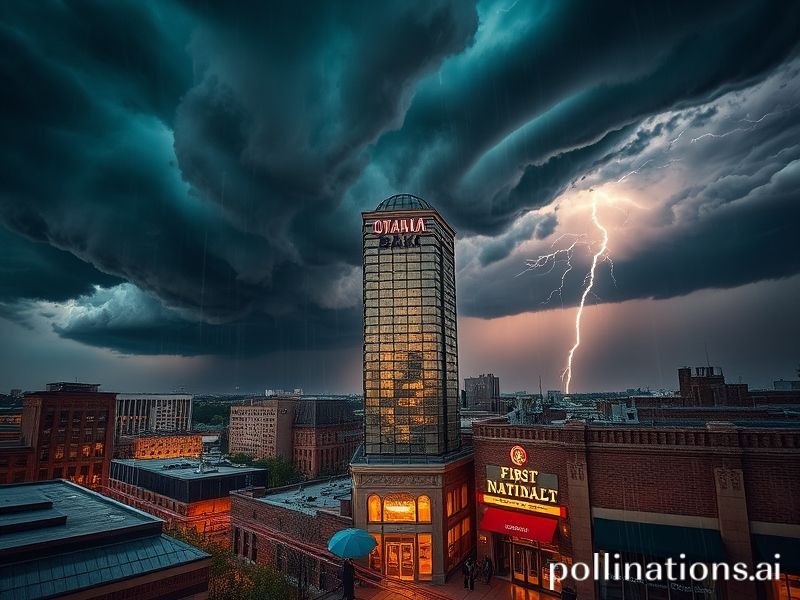
Omaha, Nebraska—population 486,051, or roughly the same number of people who will claim today to have “always loved” whatever K-pop band just broke Spotify—woke up yesterday to discover its weather behaving like a geopolitical superpower with abandonment issues. One moment, the city was basking in an unseasonable 21 °C (70 °F) springtime flirtation; the next, it was auditioning for a minor role in the Book of Revelation. Hail the size of misanthropic golf balls ricocheted off SUVs whose owners had, minutes earlier, been debating whether to switch to summer tires or keep hedging against late capitalism in the form of all-season radials. Somewhere in the metro, a Tesla owner Googled “are solar panels hail-proof” while his European cousin WhatsApped from Athens to ask if the Midwest had finally seceded from the troposphere.
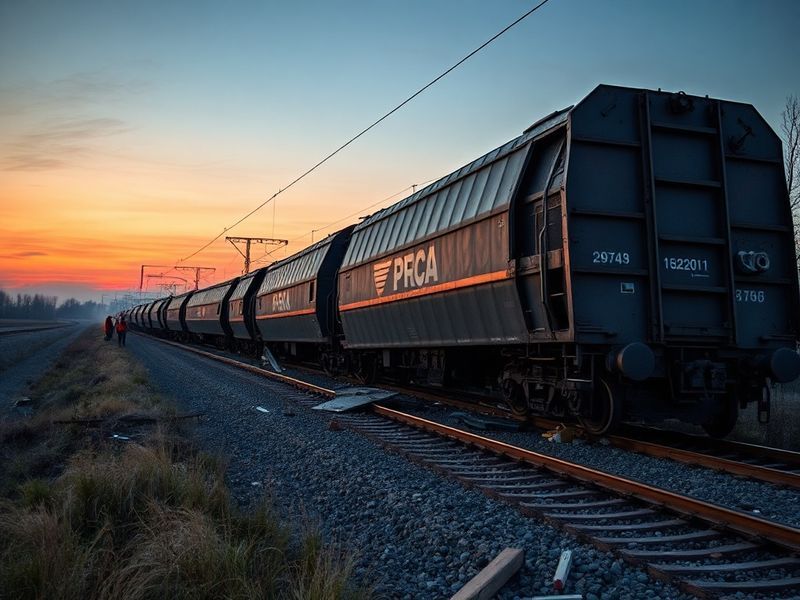
To the rest of the planet, Omaha’s Tuesday mood swing was filed under “local color,” somewhere between college baseball and Warren Buffett’s folksy annual letter. But that is precisely the mistake global strategists keep making: dismissing the heartland’s weather as flyover turbulence when, in fact, it is a leading indicator of how thoroughly the atmosphere has started trolling nation-states. Consider the supply chains: the same thunderstorm that dinged Nebraska corn futures also stalled a BNSF freight train carrying Ukrainian grain additives to a pet-food plant in Thailand, because nothing says twenty-first-century resilience like a dachshund in Bangkok waiting on weather in Omaha to decide whether it will eat this week.
Meanwhile, European energy ministers—still high on their own stash of net-zero press releases—watched the radar loop the way Kremlinologists once studied May Day parades. Why? Because every tornado warning across the Great Plains knocks 2 % off U.S. natural-gas storage, which in turn nudges Dutch TTF prices higher, which then convinces a German city council to postpone voting on heat-pump subsidies until “price stability returns.” Translation: a cloud sneezes in Nebraska, and a retiree in Stuttgart postpones dying comfortably this winter.
The Chinese meteorological service, never one to waste a teachable moment, issued a bulletin describing the Omaha supercell as “a textbook example of mid-latitude cyclogenesis under anthropogenic forcing,” which is Mandarin for “see, we told you so.” State media cut to footage of flooded subway stations in Zhengzhou last summer, making the point—subtly, of course—that the sky distributes chaos democratically even if the World Bank does not. Somewhere in the comments section, a nationalist keyboard warrior asked whether Omaha could be persuaded to join the Belt and Road Initiative if the U.S. ever puts it up for collateral on the national debt.
Back on the ground, locals coped with the sort of gallows humor that passes for coping everywhere now. A barista at a downtown café offered a “Tornado Alley Macchiato—comes with its own low-pressure system.” The local news anchor, trained in the sacred art of Midwestern understatement, announced, “We’re under a severe thunderstorm watch, so maybe don’t park your Subaru under the sycamore that already tried to assassinate it last May.” Insurance adjusters, the true storm chasers of late-stage capitalism, circled like polite vultures, clipboards ready to quantify the exact cash value of climate roulette.
By evening, the sky had exhausted itself and settled into a lurid pink sunset that Instagram influencers from Jakarta to Reykjavik would later filter into oblivion. The air smelled of wet asphalt and freshly sawn timber—the scent of infrastructure apologizing for its own fragility. In the quiet aftermath, one could almost hear the planet clearing its throat before the next dispatch from the Anthropocene.
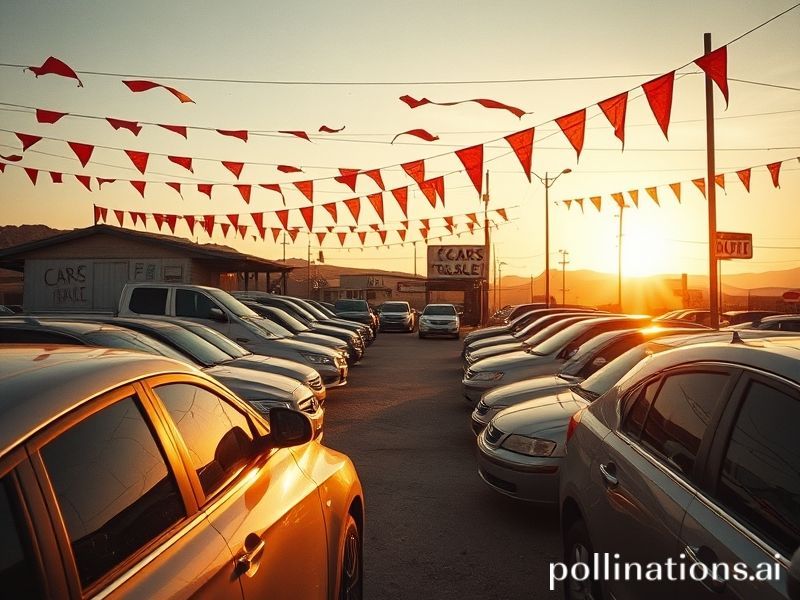
Conclusion: Omaha’s weather isn’t merely local headline fodder; it’s the small-town understudy that keeps outperforming the A-list climate disasters hogging the international stage. While diplomats haggle over carbon credits and carbon border tariffs and carbonated beverages at climate summits, the atmosphere keeps conducting its own foreign policy—bombing grain silos one day, bankrupting reinsurance giants the next. If you want to know how the world ends, don’t watch the Arctic ice shelf; watch a parking lot in Nebraska fill with dented Teslas and existential dread. Somewhere in the gathering dusk, a meteorologist updates the seven-day forecast and mutters, “Looks like a chance of late-imperial malaise by Thursday.” The forecast, alas, is always correct.