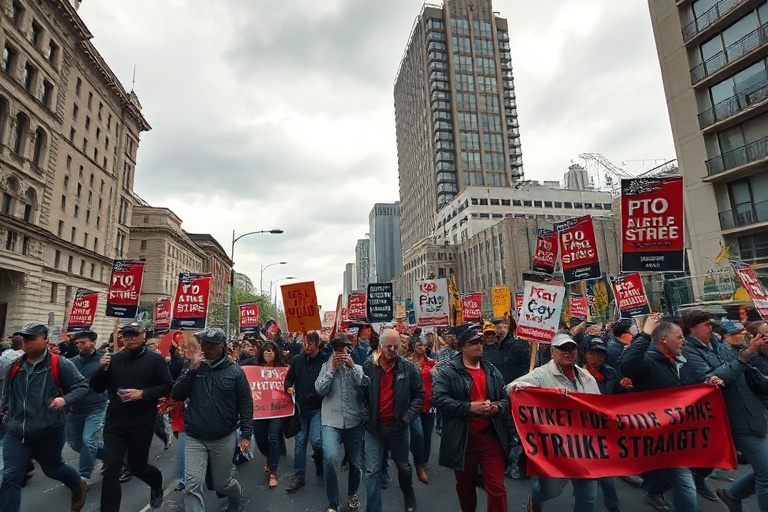
Manila, Philippines – At the precise moment delegates in Glasgow were pledging to phase out coal, the Philippines was quietly signing yet another 20-year sweetheart deal to import more of the black stuff. This, in a country already blessed with enough sunshine to tan the entire planet and enough wind to blow every politician’s promises into the South China Sea. But who needs irony when you have baseload power and 7,641 islands slowly learning to swim?
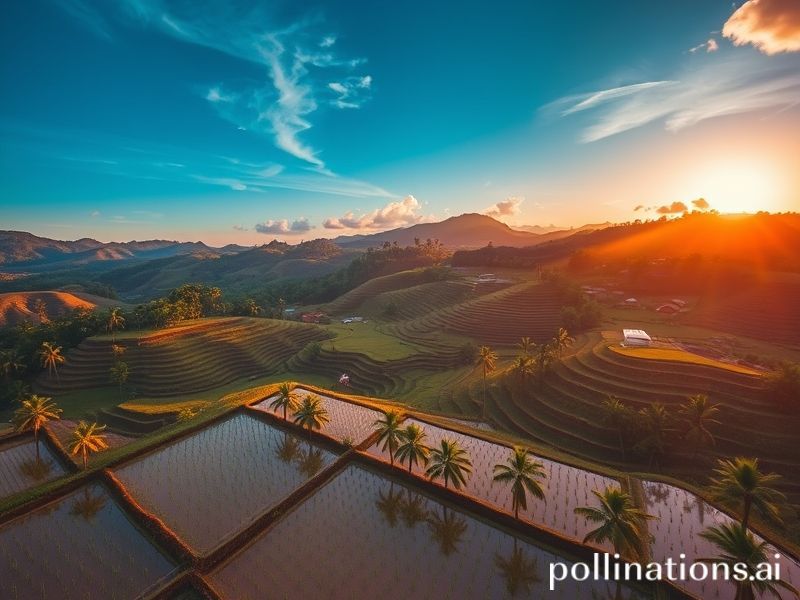
From the air, the archipelago still looks like a spilled handful of emeralds on blue velvet—until you zoom in and notice the emerald is mostly plastic. The Philippines has become the world’s most photogenic cautionary tale: a nation where every Instagram-perfect sunset competes with a garbage-choked river for attention. It’s capitalism’s favorite screensaver, now updated with floating face masks.
Globally, the country functions as a sort of geopolitical Rorschach test. Washington sees a lynchpin in its “Free and Open Indo-Pacific” PowerPoint slide. Beijing sees a menu. Tokyo sees a labor pool that sings karaoke better than its own. Meanwhile, the 110 million Filipinos themselves see an endless queue—at the airport. Roughly ten percent of the population is abroad at any given moment, turning the national economy into the world’s most efficient remittance machine: human hearts in, hard currency out. Italy’s elderly get their caregivers, Dubai gets its mall janitors, London gets its nurses, and Manila gets just enough euros, dirhams, and pounds to keep the lights flickering for one more billing cycle.
The pandemic only accelerated the logic. When cruise ships became floating petri dishes, guess who staffed the floating ICUs? Filipinos. When Britain needed ventilators cranked, who answered the call? Same faces that had lulled British babies to sleep 30 years earlier. The world has discovered the miracle of on-demand compassion, conveniently time-zoned and fluent in apology.
Back home, President Ferdinand “Bongbong” Marcos Jr.—son of the kleptocrat whose Guinness World Record for plunder still stands—has reinvented himself as a TikTok-friendly technocrat. He’s promising “Build Better More,” a slogan that sounds like it was crowdsourced from a drunk autocomplete. The international press politely calls it “infrastructure ambition,” while creditors in Beijing and Tokyo quietly pencil in collateral: ports, airports, perhaps a nice naval base or two. Nothing says sovereignty like a mortgage in three currencies.
Still, the Philippines remains the world’s laboratory for whatever comes after hope. When Facebook offered “Free Basics,” the country became Zuckerberg’s petri dish for digital feudalism. When crypto bros needed a sandbox with weak consumer protections, Manila said “Welcome, sir!” with a smile perfected in call centers. The result is a population that can recite every K-drama plot yet still believes a 300% APR loan app is “financial inclusion.”
Climate-wise, the nation is the planet’s designated canary. Typhoon season now starts before the previous one ends, and insurance adjusters have run out of superlatives. Each new megastorm is dutifully labeled “once in a generation,” prompting a generation that’s barely old enough to vote to wonder which generation they’re supposed to be. The rest of us watch the satellite loops like binge-worthy disaster porn, grateful that our own coastlines are merely receding.
And yet, against all odds, the Philippines endures—part Silicon Valley side hustle, part biblical parable, part karaoke bar that refuses last call. The jeepney still runs, patched together with spare parts and metaphysical optimism. The adobo still simmers, seasoned with enough bay leaf to mask the faint taste of impending doom. Somewhere in a Hong Kong high-rise, a domestic helper livestreams her day off, collecting hearts from strangers while her own children grow up via video call. The global economy keeps spinning, lubricated by equal parts coconut oil and resignation.
In the end, the Philippines is less a country than a subscription service the world forgot it signed up for: renewable sorrow, unlimited bandwidth, same-day delivery of empathy. Auto-renewal is enabled, of course. Cancellation requires a 30-day notice and a moral reckoning nobody has time for between Zoom meetings.