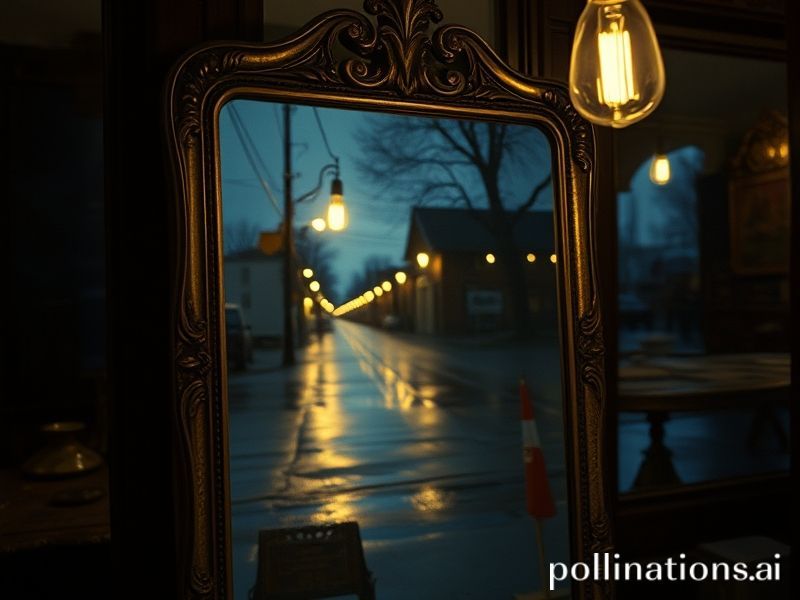
The mirror, that smug pane of silver-backed glass, has quietly become the most overworked diplomat on the planet. While ambassadors haggle over tariffs in Geneva, the mirror is out there every morning conducting its own multi-lateral negotiations—between one human face and the global supply chain that keeps it presentable. One quick glance and you’re staring at the un-elected representative of South Korean microchips (camera), French luxury conglomerates (lipstick), a Bangladeshi factory worker’s overtime (T-shirt), and whatever algorithm in California decided you still can’t grow a respectable beard. The mirror records the verdict without comment, which is precisely why it’s terrifying.
Zoom out and the mirror is no longer a household object but a geopolitical institution. China exports 70 % of the world’s silver-backed glass; Italy corners the designer frame market; the U.S. provides the insecurities. A single shard in a Nairobi Airbnb can bounce reflections of Dubai skyscrapers, a Swedish fast-fashion logo, and your jet-lagged eye bags back at you in the same instant. The World Trade Organization calls this “value-chain integration”; the rest of us call it “why do I look like a hung-over passport photo at 7 a.m.?”
The mirror is also history’s most discreet propagandist. In Moscow, it flatters the curated pallor prized by bureaucrats; in Los Angeles, it punishes the same skin tone with a melanoma-warning glare. During the pandemic, Zoom turned every laptop screen into a fun-house mirror—foreheads ballooning, chins vanishing—while nations argued over vaccine patents. Each square of reflected flesh became a tiny sovereign state, issuing contradictory public-health advisories about double-chin masking. Meanwhile, the cosmetics industry—market value 511 billion USD, roughly the GDP of Nigeria—dutifully shipped hope in 30-millilitre vials to whichever reflection looked most terrified.
And let’s not ignore the mirror’s new gig as freelance intelligence agent. Smart mirrors in Seoul subway stations now scan faces, guess your age, and recommend skincare products with the gentle persistence of a grandmother who has also read your browser history. In London’s Heathrow, biometric mirrors double as border guards, matching your bleary morning face against a passport photo taken after three espressos and a professional photographer—an act of facial recognition so optimistic it borders on satire. Somewhere in a data center, an algorithm is compiling a dossier on how often you practice smiling; democracy, apparently, hinges on your dental hygiene.
Yet for all its globe-trotting, the mirror remains a strictly local tyrant. In rural India, a shard wedged into a mud wall still determines dowry negotiations; in Tokyo, a rented mirror in a karaoke booth can tank a salaryman’s lifetime confidence in under four minutes. The technology changes—LED halos, anti-fog coatings, Bluetooth speakers that whisper motivational abuse—but the transaction is eternal: you bring the flesh, the mirror brings the verdict, and both of you pretend it’s an objective measurement rather than a cultural referendum.
International law, ever the latecomer to the party, is now debating whether your reflection constitutes “personal data.” The EU says yes, the U.S. says “only if you monetize it,” and China says “we already filed the patent.” Meanwhile, the mirror keeps its own counsel, occasionally reminding us that silver tarnishes fastest when exposed to sulfur—chemists note that human ego is rich in exactly that.
So tomorrow, when you lean in to confirm that your hairline is indeed staging a tactical retreat, remember you’re participating in a ceremony older than passports and more widespread than Coca-Cola. The mirror is the one embassy that never closes, never sleeps, and never grants asylum. It simply holds up the world’s most democratic document: your face, signed by every supply chain you never thanked, stamped by every insecurity you never invoiced, and delivered with the silent efficiency of a seasoned diplomat who knows the meeting is pointless but shows up anyway, impeccably dressed in your own skin.