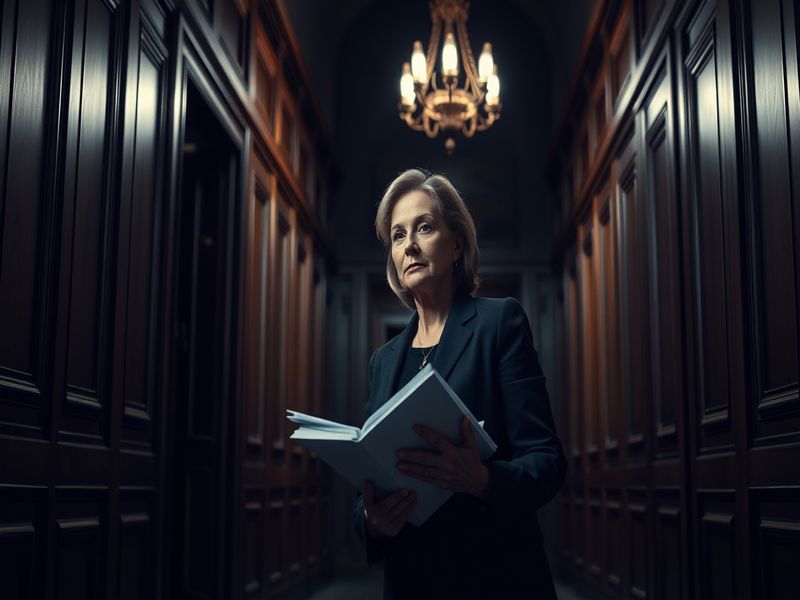
The position of Shadow Justice Secretary in the United Kingdom represents more than just a political title. It embodies a critical mechanism of opposition oversight, policy scrutiny, and democratic accountability within the British parliamentary system. Unlike elected officials, shadow cabinet members serve as the unofficial counterparts to government ministers, tasked with challenging, refining, and preparing alternative governance approaches.
This role traces its origins to the early 20th century, evolving alongside the development of modern parliamentary opposition. While not constitutionally mandated, the Shadow Justice Secretary has become a cornerstone of British political culture, reflecting the nation’s enduring tradition of adversarial politics and institutional vigilance.
The Function and Authority of the Shadow Justice Secretary
The primary responsibility of the Shadow Justice Secretary is to scrutinize the actions and policies of the serving Justice Secretary. This involves rigorous parliamentary questioning, policy analysis, and public advocacy for alternative legal and judicial approaches. The role demands a deep understanding of constitutional law, human rights, and criminal justice reform.
In practice, the Shadow Justice Secretary leads the opposition’s response to major legislative proposals, such as reform of the court system or changes to sentencing guidelines. They often coordinate with other shadow ministers, legal experts, and advocacy groups to build comprehensive policy alternatives. This function is particularly vital during periods of government reform, when the justice system undergoes significant transformation.
Historically, shadow cabinet positions have served as launching pads for future prime ministers and senior government leaders. The scrutiny and leadership experience gained in these roles often translate into executive capability, making the position both influential and career-defining.
A Global Perspective: Shadow Ministers in Comparative Politics
The concept of shadow cabinets is not unique to the UK. Several parliamentary democracies have adopted similar structures to institutionalize opposition engagement. Canada, Australia, and New Zealand maintain shadow cabinets, each tailored to their respective political cultures and constitutional frameworks.
In Germany, the parliamentary opposition operates through working groups known as Arbeitsgruppen, which mirror government ministries. These groups provide structured policy alternatives and hold the government accountable through detailed legislative proposals and public debate. The German model emphasizes technical expertise and coalition-building, reflecting the country’s multi-party system.
In the United States, the absence of a formal shadow cabinet reflects its presidential system, where opposition parties focus on electoral challenges rather than parliamentary oversight. However, think tanks and policy institutes often perform analogous functions, developing alternative justice policies and influencing public discourse.
Across these systems, the shadow justice role adapts to local legal traditions. In jurisdictions with common law systems like the UK and Canada, shadow ministers focus on judicial interpretation and statutory reform. In civil law countries such as France and Japan, the emphasis shifts toward administrative efficiency and regulatory compliance.
Key Characteristics of Shadow Justice Secretaries Globally
- Policy Development: Shadow ministers draft alternative legislation and policy proposals.
- Public Engagement: They lead media campaigns and public consultations to build support for their agenda.
- Parliamentary Scrutiny: They question government actions during legislative sessions and committee meetings.
- Coalition Building: They negotiate with allied parties, advocacy groups, and independent experts to strengthen their position.
The Cultural Weight of the Role in British Society
The Shadow Justice Secretary occupies a unique space in British cultural imagination. The role is often portrayed in media as a guardian of civil liberties, particularly during periods of government overreach or controversial legislation. This perception is reinforced by historical moments when shadow ministers challenged authoritarian tendencies or defended marginalized communities.
Literature and film have occasionally dramatized this position, casting shadow officials as understated heroes navigating the corridors of power. While these portrayals are often fictionalized, they reflect a public expectation that opposition leaders will act as moral compasses within the political system.
Public trust in the role, however, fluctuates with political cycles. High-profile scandals, perceived ineffectiveness, or partisan gridlock can erode confidence. Conversely, periods of national crisis—such as terrorist attacks or constitutional controversies—often elevate the profile and credibility of shadow ministers.
The Future of the Shadow Justice Secretary in a Changing Political Landscape
As British politics becomes increasingly polarized, the role of the Shadow Justice Secretary faces new challenges and opportunities. Social media has transformed how opposition leaders communicate, enabling direct engagement with constituents and rapid response to government actions. This digital shift demands agility, transparency, and a nuanced understanding of online discourse.
Environmental justice has also emerged as a critical area of focus. Shadow ministers are increasingly called upon to address the intersection of climate policy and legal frameworks, particularly in cases involving corporate accountability or indigenous land rights.
The rise of devolution within the UK—with Scotland, Wales, and Northern Ireland developing distinct legal systems—adds another layer of complexity. Shadow Justice Secretaries must now navigate not only Westminster politics but also the evolving relationships between national and regional governments.
Looking ahead, the role may expand to include greater emphasis on digital rights, data protection, and artificial intelligence governance. As technology reshapes the justice system, the need for informed, proactive opposition leadership becomes ever more pressing.
What Lies Ahead for Opposition Justice Leadership
- Technology Integration: Developing policies for AI in courts, digital evidence standards, and online dispute resolution.
- Devolution Management: Coordinating responses to legal divergence across the UK’s nations.
- Public Trust Initiatives: Designing mechanisms to increase transparency and accountability in legal reform.
- Cross-Party Collaboration: Building consensus on contentious issues such as sentencing reform or jury selection.
The Shadow Justice Secretary remains an essential, if often understated, pillar of British democracy. In an era of rapid change and heightened public scrutiny, this unelected yet influential role continues to shape the nation’s legal and political future.
As the justice system evolves, so too must the opposition’s capacity to challenge, refine, and reimagine it. The effectiveness of the Shadow Justice Secretary will ultimately determine how well the nation balances reform with tradition, innovation with accountability.
For more insights into British political institutions, visit our Politics section.
To explore global governance models, check our Analysis archive.