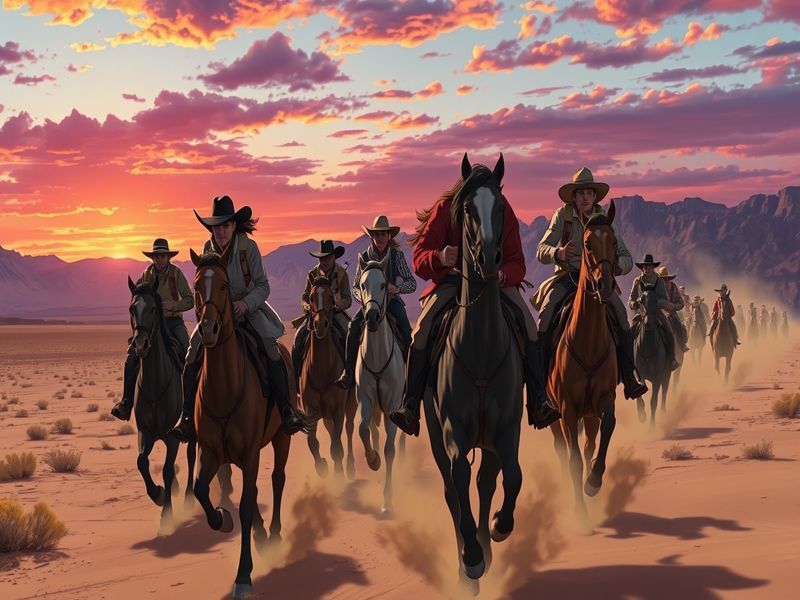
From Manga to Motion: The Evolution of Steel Ball Run
Steel Ball Run, a spin-off from Hirohiko Araki’s legendary JoJo’s Bizarre Adventure series, emerged as a pivotal moment in the franchise’s history. Initially serialized from 2004 to 2011 in Weekly Shonen Jump, the story’s Western setting—complete with cowboys, deserts, and high-stakes horse races—felt like a bold departure from the series’ earlier Japanese-centric narratives. Yet, despite its unconventional premise, Steel Ball Run quickly distinguished itself through its intricate storytelling and Araki’s signature artistic flair.
The manga’s global appeal became undeniable when it was announced that Entertainment giants would adapt it into an anime. Produced by David Production, the studio behind the well-received JoJo’s Bizarre Adventure adaptations, the anime promised to bring Araki’s vision to life with the same dynamic visuals and faithful adaptation style that fans had come to love. The decision to animate Steel Ball Run was met with anticipation, not just in Japan but across international fanbases eager for new content.
A Global Narrative: Blending Cultures Through Storytelling
Set in an alternate 1890 America, Steel Ball Run follows Johnny Joestar, a former jockey, and Gyro Zeppeli, an enigmatic Italian inventor, as they compete in a transcontinental horse race with a $50 million prize. The series stands out for its fusion of Western themes with Japanese storytelling techniques. Araki drew heavily from Western art, music, and history, creating a world that felt both familiar and fresh to global audiences.
This cultural crossover was no accident. Araki, known for his eclectic taste, incorporated references to everything from classical music to fine art, embedding them into the narrative and character designs. For instance, Gyro’s signature spin technique mirrors the motion of a revolver’s cylinder, a nod to both Western firearms and Araki’s love of kinetic energy. Such details resonated with international fans, many of whom appreciated the series’ depth beyond typical shonen battle tropes.
The anime adaptation amplified this global appeal by retaining Araki’s artwork and pacing. Unlike many anime that simplify complex narratives, Steel Ball Run’s anime version embraced the manga’s intricate plot twists and character development. This approach paid off, as the series attracted viewers from diverse backgrounds, from longtime JoJo enthusiasts to newcomers drawn by its Western aesthetic.
The Race That Defines a Generation
The centerpiece of Steel Ball Run is the race itself—a grueling 5,000-mile journey from San Diego to New York. Each competitor brings unique skills and motivations, creating a dynamic ensemble cast. The race is structured as a series of stages, with eliminations and alliances constantly shifting the landscape. This format allowed Araki to explore themes of perseverance, rivalry, and self-discovery in a way that felt fresh yet timeless.
The anime’s pacing mirrors the race’s intensity. Early episodes establish the rules and introduce key players, while later arcs escalate into high-stakes battles and emotional confrontations. The adaptation’s decision to split the story into two seasons ensured that viewers could fully immerse themselves in the journey without feeling rushed. This strategy paid dividends, as the anime’s viewership grew steadily, with fans praising its faithfulness to the source material.
Artistic Legacy: How Steel Ball Run Redefined JoJo
Steel Ball Run wasn’t just another JoJo arc—it was a turning point for the franchise. While earlier arcs like Phantom Blood and Battle Tendency relied heavily on Japanese folklore and history, Steel Ball Run embraced a more international perspective. This shift broadened the series’ appeal, attracting fans who might not have connected with the earlier, more culturally specific stories.
Araki’s artistic evolution during Steel Ball Run is evident in his character designs and action sequences. The series introduced Stand abilities, a staple of the JoJo universe, but with a twist: Stands in Steel Ball Run are tied to the characters’ physical prowess and mental states. This innovation added a layer of complexity to the battles, making them more than just flashy displays of power.
The anime’s animation style further elevated the source material. David Production’s team used vibrant colors, fluid motion, and dynamic camera angles to capture the energy of the race and the intensity of the battles. Scenes like Gyro’s “Ball Breaker” technique or the climactic confrontation with the series’ antagonist, Diego Brando, were rendered with a level of detail that felt both faithful to the manga and cinematic in scope.
Reception and Cultural Impact
Upon its release, Steel Ball Run was met with critical acclaim. Critics praised its ambition, storytelling, and visuals, with many considering it one of the strongest arcs in the JoJo series. The anime adaptation received similar accolades, with fans and reviewers alike highlighting its faithfulness to the source material and its ability to introduce new audiences to Araki’s work.
The series’ success also had a ripple effect on the broader anime and manga landscape. Steel Ball Run proved that a Western-themed story could thrive in a medium traditionally dominated by Japanese narratives. This opened doors for other creators to explore non-traditional settings and genres, further diversifying the industry.
Globally, Steel Ball Run resonated with fans for its universal themes of competition, friendship, and perseverance. The series’ Western setting offered a refreshing change of pace, while its core themes remained relatable to audiences worldwide. This blend of the familiar and the exotic helped Steel Ball Run stand out in a crowded market.
Why Steel Ball Run Matters in the Anime Landscape
Steel Ball Run’s significance extends beyond its entertainment value. It represents a cultural bridge, connecting Japanese manga traditions with Western influences. This fusion not only enriched the JoJo series but also demonstrated the potential of anime and manga to transcend cultural boundaries.
For new viewers, Steel Ball Run serves as an excellent entry point into the JoJo universe. Its standalone nature—unlike earlier arcs that relied on serialized storytelling—makes it accessible to those unfamiliar with the franchise. Meanwhile, longtime fans appreciated the series’ fresh take on familiar themes, from Stand abilities to Araki’s signature posing.
The anime’s success also underscored the importance of faithful adaptations. In an era where many anime take liberties with their source material, Steel Ball Run’s commitment to Araki’s vision set it apart. This approach not only satisfied existing fans but also earned the trust of newcomers, proving that a well-executed adaptation can honor the original while appealing to a broader audience.
The Future of Steel Ball Run and JoJo
With the first season of the Steel Ball Run anime complete, fans are left wondering what’s next. Araki has hinted at potential sequels, though nothing has been officially confirmed. Given the series’ popularity, a continuation seems likely, especially with the growing demand for high-quality anime adaptations.
For now, Steel Ball Run stands as a testament to the power of storytelling and cultural exchange. Its blend of Western and Japanese influences created a narrative that felt both fresh and timeless, appealing to audiences across the globe. Whether through the manga or the anime, Steel Ball Run’s legacy is secure as one of the most ambitious and innovative arcs in the JoJo series.
As the anime industry continues to evolve, Steel Ball Run serves as a reminder of the importance of creativity, faithfulness to source material, and the power of cross-cultural storytelling. For fans old and new, the journey of Johnny Joestar and Gyro Zeppeli remains a highlight of the Gaming and entertainment worlds.