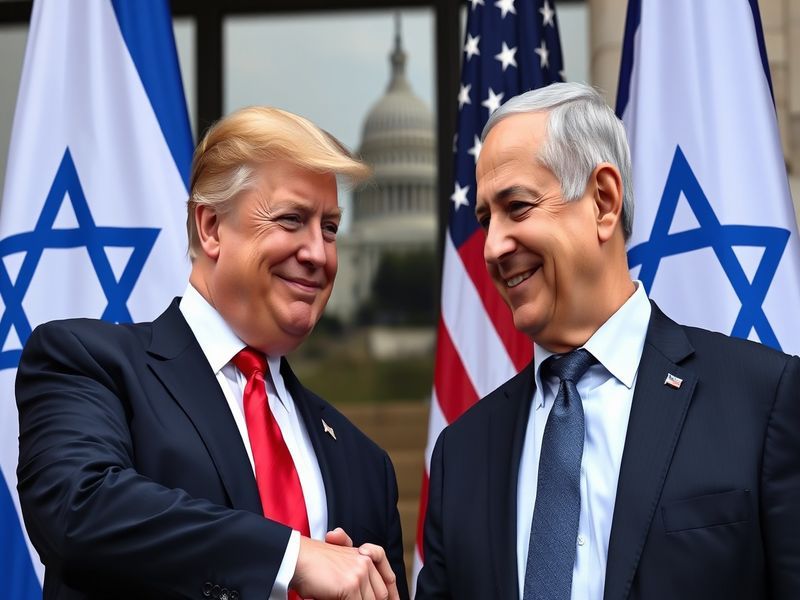
donald trump israel
During his single term in office, Donald Trump oversaw one of the most significant shifts in U.S. foreign policy toward Israel in decades. His administration’s approach was marked by bold diplomatic moves, controversial decisions, and a willingness to break from long-standing conventions. From recognizing Jerusalem as Israel’s capital to brokering the Abraham Accords, Trump’s policies reshaped the geopolitical landscape in the Middle East. Supporters praised his unwavering support for Israel, while critics argued that his actions undermined the prospects for a lasting peace.
Key Policies and Diplomatic Breakthroughs
The Trump administration’s Israel policy was defined by several high-profile initiatives. In December 2017, then-President Trump fulfilled a campaign promise by formally recognizing Jerusalem as the capital of Israel. This decision reversed decades of U.S. policy and moved the American embassy from Tel Aviv to Jerusalem in May 2018. The move was celebrated by many Israelis and pro-Israel groups but condemned by Palestinian leaders and much of the international community.
Another cornerstone of Trump’s approach was the Abraham Accords, a series of normalization agreements between Israel and several Arab states, including the United Arab Emirates, Bahrain, Sudan, and Morocco. These deals were brokered with minimal concessions from Israel on the Palestinian issue, a departure from traditional U.S. peacemaking efforts. The accords were hailed as historic by Trump and his allies, who credited his unorthodox diplomacy for bringing stability to the region.
The Recognition of Jerusalem as Israel’s Capital
The decision to recognize Jerusalem as Israel’s capital was one of the most contentious moves of Trump’s presidency. The city holds deep religious and symbolic significance for Jews, Muslims, and Christians alike. By acknowledging Jerusalem as Israel’s capital, Trump fulfilled a promise made during his 2016 campaign, fulfilling a key platform plank for evangelical Christians and pro-Israel voters. The move also aligned with the 1995 Jerusalem Embassy Act, which mandated the relocation of the U.S. embassy but had been repeatedly delayed by successive administrations.
The embassy’s relocation to Jerusalem was a symbolic victory for Israel, but it also sparked widespread protests in the West Bank and Gaza. Palestinian leaders severed ties with the U.S., accusing it of abandoning its role as an impartial mediator in the Israeli-Palestinian conflict. The United Nations and several European allies also criticized the move, calling it a violation of international law. Despite the backlash, Trump defended the decision, arguing that it was long overdue and reflected reality on the ground.
The Abraham Accords: A New Era of Middle East Diplomacy
The Abraham Accords were the most tangible achievement of Trump’s Middle East policy. The agreements normalized relations between Israel and several Arab states, marking the first such diplomatic breakthroughs since the 1994 Israel-Jordan peace treaty. The UAE and Bahrain became the first Gulf states to establish formal ties with Israel, followed by Sudan and Morocco. These deals were brokered with the help of Trump’s son-in-law and senior adviser, Jared Kushner, who led the White House’s Middle East peace efforts.
For Israel, the accords represented a strategic victory, as they expanded its diplomatic and economic ties with the broader Middle East. For the U.S., they were a diplomatic triumph, demonstrating that Trump’s “outside-the-box” approach could yield tangible results. However, critics argued that the accords sidelined the Palestinian issue, allowing Israel to normalize relations with Arab states without making concessions to the Palestinians. The Palestinian Authority condemned the agreements, calling them a betrayal of the Arab Peace Initiative, which had tied normalization to Israeli concessions on the Palestinian statehood.
Controversies and Criticisms
Despite the achievements, Trump’s Israel policy was not without controversy. His administration’s decision to cut off U.S. funding to the Palestinian Authority and the United Nations Relief and Works Agency (UNRWA) drew sharp criticism. The cuts, which totaled hundreds of millions of dollars, were framed as a response to Palestinian refusal to engage in peace talks. However, they also exacerbated humanitarian crises in the West Bank and Gaza, where UNRWA provides essential services to Palestinian refugees.
Trump’s approach to Israel was also marked by a close personal relationship with Israeli Prime Minister Benjamin Netanyahu. The two leaders shared a warm rapport, which translated into unprecedented levels of U.S. support for Israel. In 2019, Trump became the first sitting U.S. president to visit the Western Wall in Jerusalem, a symbolic gesture that further endeared him to Israel’s right-wing government. However, the close ties also raised concerns about conflicts of interest, particularly given Trump’s business interests in the region.
Settlement Expansion and Its Implications
Another contentious aspect of Trump’s Israel policy was his administration’s stance on Israeli settlements in the West Bank. Trump’s team largely avoided criticizing settlement expansion, a departure from previous U.S. administrations that had viewed settlements as obstacles to peace. In 2019, Secretary of State Mike Pompeo announced that the U.S. no longer considered settlements to be inconsistent with international law, a reversal of the long-standing U.S. position.
The move was welcomed by Israeli settlers and right-wing groups but condemned by Palestinian leaders and human rights organizations. Critics argued that it undermined the viability of a two-state solution, as settlements continued to expand in the West Bank. The Trump administration’s approach to settlements was part of a broader pattern of sidelining the Palestinian issue in favor of strengthening Israel’s position.
Legacy and Long-Term Impact
The long-term impact of Trump’s Israel policy remains a subject of debate. Supporters argue that his policies strengthened Israel’s security and expanded its diplomatic footprint in the Middle East. The Abraham Accords, in particular, have endured under the Biden administration, with several countries maintaining their normalization agreements with Israel. However, critics contend that Trump’s approach undermined the prospects for a lasting peace between Israelis and Palestinians, as it removed pressure on Israel to make concessions.
One of the most lasting legacies of Trump’s Israel policy may be the normalization of relations between Israel and Arab states. The Abraham Accords have created a new geopolitical dynamic in the Middle East, with Israel now enjoying formal ties with countries that had previously refused to recognize it. This shift could have significant implications for regional security and economic cooperation, particularly in areas like energy and technology.
The Future of U.S.-Israel Relations
Under the Biden administration, U.S.-Israel relations have remained strong, but the tone has shifted. President Biden has reaffirmed the U.S. commitment to Israel’s security but has also emphasized the need to revive the Palestinian-Israeli peace process. The Biden administration has restored U.S. funding to the Palestinian Authority and UNRWA, signaling a return to a more balanced approach to the Israeli-Palestinian conflict.
However, the Biden administration has also maintained some of Trump’s policies, such as the embassy in Jerusalem and the recognition of Israel’s sovereignty over the Golan Heights. The Abraham Accords have also continued to gain momentum, with additional countries exploring normalization agreements with Israel. The future of U.S.-Israel relations will likely depend on a combination of geopolitical realities and domestic political considerations in both countries.
Conclusion: A Polarizing Legacy
Donald Trump’s Israel policy was marked by bold moves and controversial decisions. From recognizing Jerusalem as Israel’s capital to brokering the Abraham Accords, his administration reshaped the U.S.-Israel relationship in ways that will be felt for years to come. Supporters credit him with strengthening Israel’s position and expanding its diplomatic reach, while critics argue that his policies undermined the prospects for peace and exacerbated humanitarian crises.
Regardless of one’s perspective, Trump’s approach to Israel was undeniably transformative. It reflected a willingness to challenge conventional wisdom and prioritize strategic interests over traditional diplomatic norms. As the Middle East continues to evolve, the long-term consequences of Trump’s policies will become clearer, but their impact on U.S.-Israel relations is already undeniable.
For further reading on U.S. foreign policy, explore our Politics section, where we analyze the latest developments in international relations. To understand the broader context of Middle East diplomacy, visit our Analysis page for expert insights.