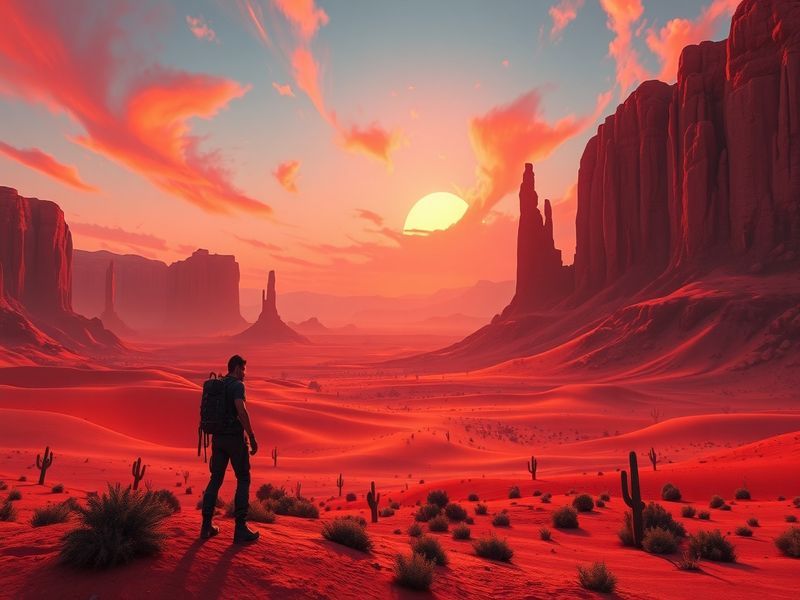
crimson desert gameplay
Crimson Desert: A Global Journey Through Open-World Mastery
The anticipation surrounding Crimson Desert was more than just hype—it was a cultural moment. Developed by Pearl Abyss, the studio behind the massively successful Black Desert Online, this action RPG has redefined what open-world gaming can be. Unlike traditional fantasy settings that rely on familiar tropes, Crimson Desert immerses players in a visually stunning, culturally rich world inspired by East Asian aesthetics, particularly the late Goryeo and early Joseon dynasties of Korea. The game’s blend of fluid combat, intricate storytelling, and breathtaking environments has captivated audiences worldwide, transcending language and regional barriers.
The game’s development spanned nearly a decade, with Pearl Abyss prioritizing a polished, cinematic experience over rushed content. This commitment to quality is evident in every aspect of Crimson Desert, from its handcrafted landscapes to its dynamic weather systems that change based on in-game seasons. Players traverse a land plagued by war, where factions vie for control and ancient mysteries lurk beneath the surface. The result is an experience that feels both epic in scale and deeply personal, as players shape the fate of its characters and world.
The Combat System: A Fusion of Tradition and Innovation
Crimson Desert’s combat is a standout feature, blending real-time action with strategic depth. Unlike many open-world RPGs that rely on tab-targeting or lock-on mechanics, this game emphasizes fluid, skill-based combat where positioning, timing, and weapon choice matter. Players can switch between melee, ranged, and magic attacks seamlessly, creating a combat system that rewards mastery and adaptability.
The game introduces a unique “Stance” system, allowing players to toggle between aggressive, defensive, and balanced combat styles mid-fight. This adds a layer of tactical depth, enabling players to counter enemy attacks or exploit openings with precision. Additionally, the “Life Tap” mechanic lets players sacrifice health for temporary power boosts, introducing risk-reward elements that keep battles unpredictable.
For those seeking a challenge, Crimson Desert offers high-difficulty modes and endgame content like dungeons and sieges. The game’s AI is notoriously punishing, with enemies adapting to player tactics over time—a feature that has drawn comparisons to hardcore titles like Dark Souls and Monster Hunter. Yet, it remains accessible to newcomers thanks to its forgiving checkpoint system and robust skill trees.
A World Alive: Exploration and Environmental Storytelling
One of the most impressive aspects of Crimson Desert is its world design. The continent of North Calpheon is a living, breathing entity, filled with diverse biomes ranging from dense forests to arid deserts and snow-capped mountains. Each region tells a story, whether through environmental clues, NPC dialogues, or hidden lore scrolls. The attention to detail is staggering—crumbling ruins hint at forgotten civilizations, while bustling cities teem with life and commerce.
Exploration is rewarded not just with loot but with narrative context. For example, uncovering the history of the “Red Nails” faction—a group of warriors bound by blood oaths—adds layers to the main story. This approach aligns with global trends in gaming, where environmental storytelling has become a hallmark of premium open-world titles like The Witcher 3 and Elden Ring.
The game’s dynamic events further enhance immersion. Unlike scripted quests, these encounters unfold organically based on player actions. A seemingly routine patrol could escalate into a full-scale battle, or a peaceful village might be raided by bandits, forcing players to make split-second decisions. This unpredictability fosters a sense of agency rarely seen in modern RPGs.
Cultural Influences and Global Appeal
Crimson Desert’s East Asian-inspired setting is a breath of fresh air in a genre dominated by Western and Japanese influences. Pearl Abyss drew from historical Korean dynasties, infusing the game with traditional architecture, clothing, and folklore. The result is a world that feels both exotic and familiar, appealing to a global audience without alienating players accustomed to more conventional fantasy settings.
The game’s cultural authenticity extends beyond aesthetics. Quests like “The Herbalist’s Daughter” explore themes of gender roles and societal expectations in pre-modern Korea, adding depth to its narrative. Even the game’s soundtrack, composed by industry veterans like Kim Jun-seong, blends traditional instruments like the gayageum and daegeum with modern orchestral arrangements, creating a soundscape that enhances emotional engagement.
This cultural fusion has resonated worldwide. Crimson Desert was a commercial success in South Korea, but its appeal quickly spread to North America, Europe, and Southeast Asia. Localization efforts ensured that translations were accurate and culturally sensitive, avoiding the pitfalls many Western games face when adapting to Asian markets. The game’s success underscores a growing trend: players crave diverse narratives that challenge their perspectives.
Challenges and Criticisms
Despite its strengths, Crimson Desert is not without flaws. Some players have criticized its level-scaling system, which can lead to underpowered enemies in late-game content. Others have pointed out that the open world, while vast, sometimes feels sparse in terms of interactive elements—fewer NPCs populate the world compared to contemporaries like Assassin’s Creed Valhalla.
Performance issues have also been a point of contention. While the game runs well on high-end PCs, console players have reported frame rate drops and long load times, particularly in crowded areas. Pearl Abyss has addressed these concerns with patches, but optimization remains an ongoing challenge for the studio.
Another debated aspect is the game’s monetization model. Crimson Desert features a free-to-play version with microtransactions for cosmetics and convenience items. While this approach is common in MMOs, some purists argue that it detracts from the single-player experience. However, the base game remains fully playable without spending money, which has helped it retain a loyal fanbase.
The Future of Crimson Desert and Open-World RPGs
Crimson Desert has set a new benchmark for open-world RPGs, proving that innovation and cultural authenticity can coexist. Its success has likely influenced other studios to explore non-Western settings and more dynamic combat systems. Pearl Abyss has already announced plans for expansions, including new regions and storylines that delve deeper into the game’s lore.
For players, Crimson Desert offers more than just entertainment—it’s a gateway to understanding a rich cultural heritage through interactive storytelling. As the gaming industry continues to globalize, titles like this one remind us of the medium’s power to bridge divides and foster cross-cultural appreciation.
The journey through North Calpheon is just beginning. Whether you’re a seasoned RPG veteran or a newcomer to the genre, Crimson Desert promises an experience that is as rewarding as it is unforgettable.
—