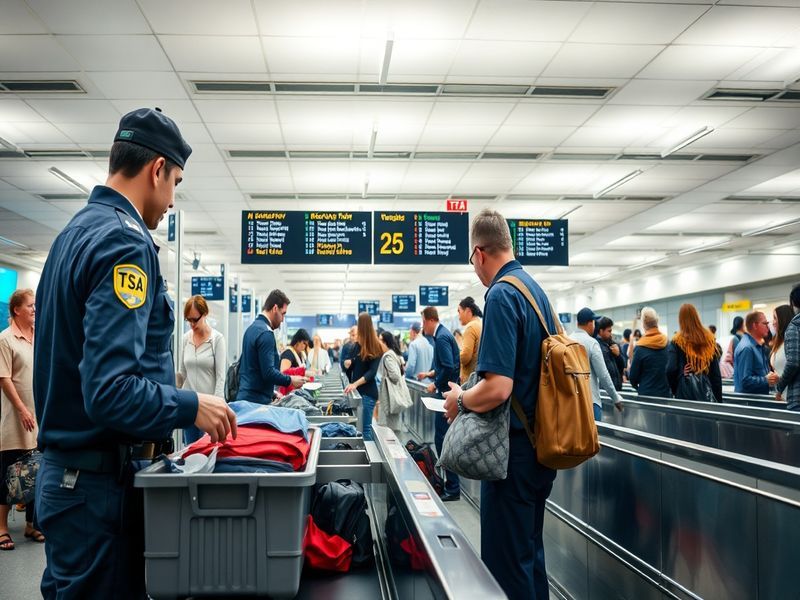
tsa airport security
TSA Airport Security: Balancing Safety and Passenger Experience Worldwide
The Transportation Security Administration (TSA) remains one of the most visible symbols of modern air travel. Since its establishment in 2001, the agency has evolved from a reactive force into a global model for aviation security. While its primary mission—to prevent threats from boarding aircraft—hasn’t changed, the methods, technologies, and cultural perceptions of TSA operations have shifted dramatically across continents.
Air travel is inherently transnational, yet security protocols are anything but uniform. The United States pioneered centralized screening with the creation of the TSA, but countries like Israel, the United Kingdom, and Japan have developed distinct approaches influenced by local threats, public attitudes, and technological capabilities. These differences reveal how security is not just a matter of policy, but also of culture, trust, and risk tolerance.
The Origins and Evolution of TSA Security Standards
The TSA was born out of necessity after the September 11 attacks exposed critical vulnerabilities in airport security. Before 2001, screening in the U.S. was handled by private contractors under minimal federal oversight. The Aviation and Transportation Security Act, signed in November 2001, federalized screening operations, creating a uniform standard across the country.
In its early years, the TSA focused on visible deterrence—long lines, pat-downs, and confiscations of liquids and sharp objects. These measures, though controversial, quickly became normalized in the American travel experience. Over time, the agency shifted toward risk-based screening, introducing programs like TSA PreCheck in 2011, which allows pre-approved travelers to move through expedited lanes with minimal screening.
Internationally, Australia, Canada, and the European Union followed suit, adopting layered security models that combine passenger profiling, behavioral analysis, and advanced imaging technology. The European Union Aviation Safety Agency (EASA) coordinates civil aviation security across 27 member states, emphasizing harmonization without sacrificing national discretion. This balance has proven essential in regions where historical tensions and diverse threat landscapes require nuanced approaches.
Cultural Differences in Airport Security: A Global Perspective
Security protocols reflect more than just policy—they mirror societal values and collective memory. In Israel, for instance, security begins long before passengers reach the terminal. Ben Gurion Airport employs an intelligence-driven model where travelers are interviewed by trained agents who assess behavioral cues, travel history, and personal background. This approach prioritizes prevention over detection, reflecting Israel’s experience with persistent security threats.
In contrast, European airports often emphasize privacy and proportionality. The use of full-body scanners has sparked legal challenges in countries like Germany and France, where data protection laws clash with security mandates. Travelers in Scandinavia may encounter minimal physical screening but strict biometric verification, reflecting high levels of public trust in government systems.
Asia presents another model. In Japan, airports like Narita and Haneda prioritize efficiency and courtesy. The TSA’s often criticized “enhanced pat-downs” are rare; instead, officers rely on metal detectors and bag inspections with a focus on politeness and minimal disruption. This reflects Japan’s broader cultural emphasis on social harmony and respect for personal space.
These differences reveal a fundamental truth: airport security is not a one-size-fits-all endeavor. What works in Los Angeles may not translate smoothly to London or Tel Aviv. The global challenge lies in balancing universal safety standards with local values—especially as air travel becomes more accessible to diverse populations.
Technology and Innovation in Modern TSA Operations
Technology has transformed TSA operations from manual checks to algorithm-driven risk assessment. The agency now uses advanced imaging technology (AIT) scanners that can detect concealed weapons or explosives without physical pat-downs. These systems have reduced wait times and improved throughput at major hubs like Atlanta and Chicago O’Hare.
Machine learning models analyze passenger data in real time, flagging individuals for secondary screening based on factors like travel frequency, payment method, and even social media activity. While efficient, this approach raises privacy concerns, particularly in countries with strong data protection laws.
Biometric integration is another frontier. TSA’s Digital Identity program, piloted at select airports, allows travelers to verify their identity using facial recognition or fingerprint scans, eliminating the need for boarding passes and IDs. Similar systems are being tested in Dubai and Singapore, where airports aim to become fully biometric by 2025.
Yet technology alone cannot solve security challenges. In 2015, a flaw in TSA-approved luggage locks exposed vulnerabilities, leading to a recall of millions of units. This incident underscored the need for continuous testing and adaptation—especially as threats evolve with new technologies like 3D-printed weapons and cyber threats to aviation systems.
The Human Factor: Training, Trust, and Public Perception
Behind every scanner, pat-down, and bag check is a trained professional making split-second decisions. TSA officers undergo rigorous training in threat recognition, de-escalation, and cultural sensitivity. Yet public perception often paints them as adversaries rather than protectors. Long wait times, inconsistent enforcement, and high-profile failures—like the 2015 undercover operation that exposed security gaps—have eroded public trust.
Globally, attitudes toward screeners vary widely. In the U.S., TSA officers are often seen as necessary but inefficient. In Israel, they are respected as frontline security experts. In Europe, they are viewed with skepticism due to privacy concerns. These perceptions influence compliance, morale, and even recruitment.
Cultural context plays a key role in training. In countries with strong customer service cultures, such as Japan and South Korea, screeners are trained to balance firmness with politeness. In contrast, Israeli officers receive extensive psychological training to handle high-stress scenarios, reflecting the nation’s ongoing security challenges.
Improving public trust requires transparency. The TSA has increased data sharing on wait times and launched mobile apps to help travelers plan their arrival times. Internationally, airports like Amsterdam’s Schiphol and Dubai International publish annual security reports, detailing incidents, screenings, and improvements.
Looking Ahead: The Future of Global Aviation Security
The future of TSA and global aviation security will be shaped by three key trends: artificial intelligence, biometrics, and public-private collaboration.
Artificial Intelligence: AI-powered systems will enable real-time threat detection by analyzing passenger behavior, luggage contents, and even gait patterns. These tools could reduce false positives and speed up screening, but they also demand robust oversight to prevent bias and abuse.
Biometrics: Facial recognition and fingerprint scans are poised to replace traditional boarding passes. Airports like Atlanta and Changi are already testing end-to-end biometric journeys, where travelers move from check-in to boarding without showing a physical document.
Public-Private Partnerships: The TSA increasingly works with airlines, tech firms, and international agencies to share data and best practices. Initiatives like the Global Aviation Security Plan aim to standardize protocols while allowing flexibility for local adaptation.
Yet challenges remain. Cybersecurity threats to biometric databases, ethical concerns over AI decision-making, and the global shortage of skilled screeners all demand attention. As air travel recovers post-pandemic, the pressure to innovate without compromising safety has never been greater.
The TSA’s journey from a reactive agency to a global leader in aviation security offers lessons for all nations. It demonstrates that effective security is not about the tools used, but the principles upheld: transparency, adaptability, and respect for human dignity. As technology advances and cultures evolve, the challenge will be to maintain these principles without sacrificing the efficiency that modern air travel demands.
Whether you’re flying from New York to Tokyo or London to Sydney, one thing is clear: behind every boarding gate, there’s a system of security designed not just to protect aircraft, but to uphold the trust of millions of travelers each day.