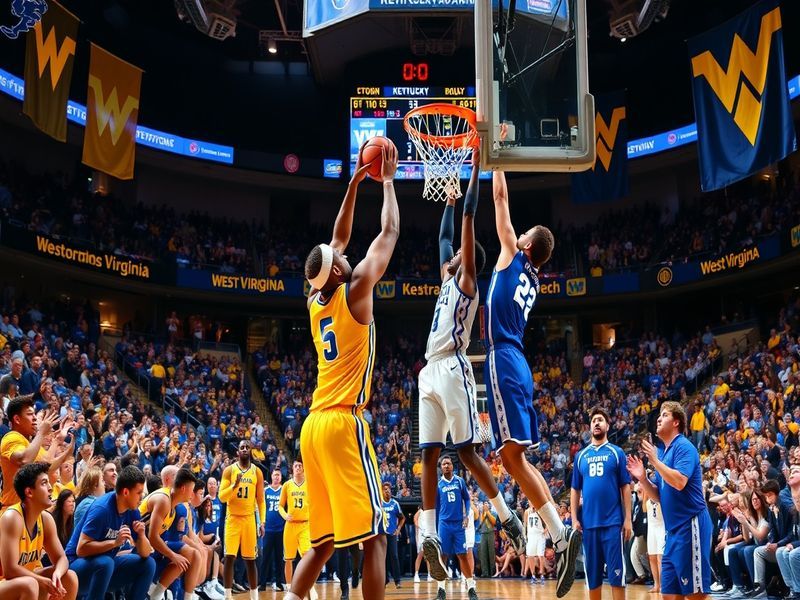
The clash between Kentucky and West Virginia on the basketball court is more than just a game. It’s a collision of cultures, histories, and identities that resonates far beyond the hardwood. These two teams, separated by the Appalachian Mountains yet bound by a shared regional pride, have crafted one of college basketball’s most compelling rivalries. The intensity of their matchups isn’t just about wins and losses; it’s about what each state represents in the broader American narrative.
Kentucky, with its bluegrass traditions and bourbon-soaked identity, contrasts sharply with West Virginia’s coal country grit and Appalachian resilience. When these teams meet, the court becomes a stage where two distinct ways of life collide. The rivalry is a microcosm of the tensions and connections between the South and Appalachia—regions often stereotyped but deeply proud of their heritage. These games don’t just test athleticism; they challenge perceptions and celebrate identities that are too often overlooked in national conversations.
The Historical Roots of a Fierce Rivalry
The Kentucky-West Virginia rivalry stretches back to 1938, when the two teams first faced off in a battle that set the tone for decades of competition. Since then, they’ve met sporadically, but when they do, the games carry an unmistakable weight. The rivalry isn’t as frequent as others in college sports, which only amplifies its significance when it does occur. Each matchup feels like a reunion of old friends—or perhaps old rivals—who know each other’s strengths and weaknesses intimately.
Historically, Kentucky has dominated the series, a reflection of the Wildcats’ sustained success under legendary coaches like Adolph Rupp and later, John Calipari. West Virginia, meanwhile, has carved out its own identity, particularly under coaches like Bob Huggins, who instilled a physical, unrelenting style of play. The contrast in their approaches mirrors the cultural differences between the two states. Kentucky’s basketball culture is polished, rooted in tradition, and often associated with blue-blood programs. West Virginia’s identity is grittier, forged in the coal mines and hollers of Appalachia, where basketball is as much about toughness as it is about skill.
This rivalry isn’t just about basketball. It’s about pride. For Kentuckians, basketball is a point of cultural pride, a way to showcase the state’s talent and tenacity. For West Virginians, it’s an opportunity to prove that their state—often overshadowed by its neighbors—can compete with the best. The rivalry is a reminder that sports can be a powerful tool for regional identity, even in an era where national narratives often overshadow local ones.
Cultural Clash: Two States, One Court
To understand the Kentucky-West Virginia rivalry, you have to look beyond the scoreboard. These states represent two sides of Appalachia and the South, each with its own story to tell. Kentucky is often associated with horse racing, bourbon, and a refined Southern charm. The state’s identity is tied to its rolling bluegrass fields and its role as a cultural crossroads between the Midwest and the Deep South. Basketball, for Kentuckians, is a way to showcase their state’s talent and hospitality.
West Virginia, on the other hand, is Appalachia in its purest form. The state’s identity is rooted in its coal mining history, its rugged terrain, and its resilient people. Basketball is a way for West Virginians to assert their place in the national conversation, proving that their state is more than just a stereotype of poverty or isolation. When these two teams meet, it’s not just a game—it’s a cultural exchange.
The rivalry also highlights the economic and social differences between the two states. Kentucky has a more diversified economy, with strong ties to agriculture, manufacturing, and bourbon production. West Virginia, meanwhile, has faced decades of economic decline due to the collapse of the coal industry. Basketball, for many in West Virginia, is a source of pride in a state that has often been overlooked by the rest of the country.
Yet, despite these differences, there’s a shared sense of pride in both states. Kentuckians and West Virginians alike take pride in their regional identities, and the rivalry on the court is a way to celebrate those identities. It’s a reminder that sports can be a unifying force, even in the face of regional divides.
Key Moments That Defined the Rivalry
While the Kentucky-West Virginia rivalry may not have the storied history of other college basketball matchups, it has produced its share of unforgettable moments. These games aren’t just about basketball; they’re about the stories that unfold on and off the court.
- 1957: The First Meeting – The rivalry officially began in 1938, but it wasn’t until 1957 that the two teams met in a postseason tournament. Kentucky won, setting the tone for future battles.
- 1998: The Final Four Clash – One of the most high-stakes meetings came in the 1998 NCAA Tournament, when Kentucky and West Virginia faced off in the Final Four. Kentucky won, but the game was a showcase of West Virginia’s toughness and determination.
- 2017: A Modern Showdown – In recent years, the rivalry has seen renewed interest, particularly in neutral-site games. The 2017 matchup in New York’s Madison Square Garden was a sellout, proving that the rivalry still holds weight even as conference realignments have shifted the landscape of college basketball.
These moments aren’t just about the scores; they’re about the narratives that emerge. Whether it’s a gritty West Virginia team outworking a polished Kentucky squad or a Wildcats team asserting its dominance, each game adds a new chapter to the rivalry’s story. These games are also a reminder of how college basketball can serve as a stage for regional pride, where the court becomes a battleground for something larger than the game itself.
Why This Rivalry Matters in the Broader Context
The Kentucky-West Virginia rivalry is a reminder that sports are more than just entertainment. They’re a reflection of the communities that support them, the histories that shape them, and the identities that define them. In an era where college sports are increasingly dominated by national narratives and corporate interests, this rivalry stands out as a celebration of regional pride.
For Kentuckians, basketball is a way to showcase the state’s talent and hospitality. For West Virginians, it’s a chance to assert their place in the national conversation. The rivalry is a reminder that sports can be a powerful tool for regional identity, even in an era where national narratives often overshadow local ones.
The Kentucky-West Virginia rivalry also highlights the role of sports in shaping cultural perceptions. In a country where Appalachia is often stereotyped as poor or backward, West Virginia’s basketball teams serve as ambassadors for the state’s resilience and pride. Meanwhile, Kentucky’s basketball culture is a point of pride for a state that has long been associated with tradition and excellence.
Ultimately, this rivalry is about more than just basketball. It’s about the people who support these teams, the communities they represent, and the stories they tell. When Kentucky and West Virginia meet on the court, it’s not just a game—it’s a celebration of two states that, despite their differences, share a deep love for the sport and a fierce pride in their identities.
As college basketball continues to evolve, the Kentucky-West Virginia rivalry remains a reminder of the power of sports to bring people together, even across regional divides. It’s a rivalry that transcends the court, a testament to the enduring importance of regional identity in American sports culture.