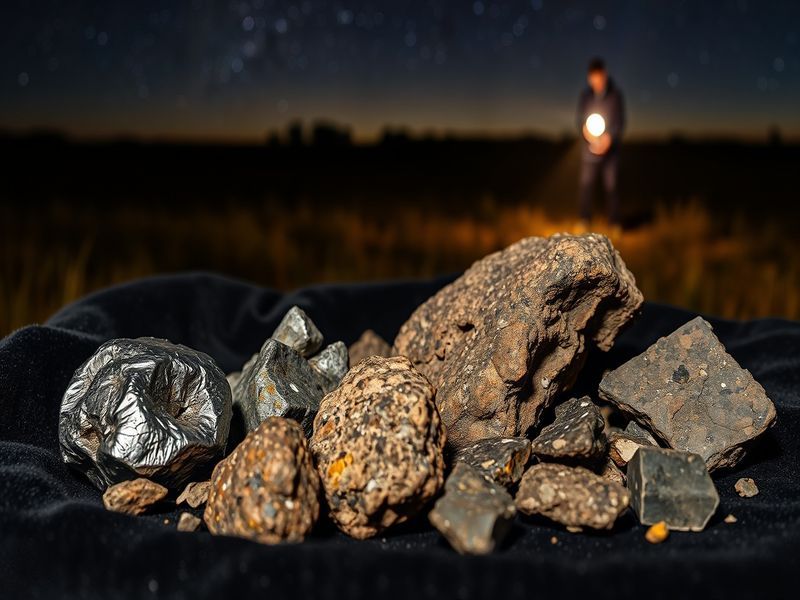
Exploring Meteorites: Types, Significance, and Collecting Tips
The Fascinating World of Meteorites
Meteorites are remnants of celestial bodies that have survived their passage through the Earth’s atmosphere. These fragments offer invaluable insights into the formation of our solar system and the processes that govern it. With a variety of types and origins, meteorites are not only scientific treasures but also objects of fascination for collectors and enthusiasts alike.
Types of Meteorites
Meteorites are classified into three main categories based on their composition. Understanding these types helps scientists decode their history and origin.
- Stony Meteorites: These are the most common type, making up about 94% of all meteorites. They primarily consist of silicate minerals and are further divided into chondrites and achondrites.
- Iron Meteorites: Composed mainly of iron and nickel, these meteorites are remnants of the cores of differentiated asteroids. They are known for their metallic luster and unique patterns.
- Stony-Iron Meteorites: A rare category that contains both metallic and silicate materials, stony-iron meteorites provide a glimpse into the complex processes that occur in the solar system.
Each type reveals different aspects of planetary formation and the conditions in space. For instance, chondrites, which have not undergone significant alteration, are thought to be some of the oldest materials in the solar system.
Significance of Meteorites in Science
Meteorites play a crucial role in advancing our understanding of planetary science. They serve as time capsules, preserving information from the early solar system. Here are some key areas where meteorites contribute significantly:
- Planetary Formation: Meteorites provide clues about the building blocks of planets and the processes that shaped them.
- Understanding Life’s Origins: Some meteorites contain organic compounds, which may offer insights into how life began on Earth.
- Cosmic Chemistry: Studying the isotopic compositions of meteorites helps scientists learn about the chemical processes that occurred in the early solar system.
Research on meteorites continues to unveil new information, driving exploration and encouraging missions to other celestial bodies. For more on the latest developments in space exploration, check out our Science section.
Meteorite Collecting: A Growing Hobby
The allure of meteorites extends beyond scientific interest. Collectors worldwide seek these celestial treasures for their beauty and rarity. Meteorite collecting requires a keen eye and often a significant investment. Here are some considerations for prospective collectors:
- Authenticity: Ensure that the meteorite is verified and comes with a certificate of authenticity. The market has seen its share of forgeries.
- Origin: Knowing where a meteorite comes from can enhance its value. Some regions are known for specific types of meteorites.
- Condition: The condition of a meteorite affects its value. Well-preserved specimens are typically more sought after.
Collectors often attend meteorite shows and auctions to acquire unique pieces. This community thrives on sharing knowledge and passion for these extraterrestrial objects. For more insights into collecting, visit our Culture category.
Conclusion
Meteorites are much more than mere rocks from space; they are windows into the universe’s past. Their study enhances our understanding of planetary formation, the origins of life, and the chemical evolution of our solar system. Whether through scientific research or personal collection, meteorites continue to inspire curiosity and wonder. As we learn more about these cosmic visitors, the mysteries of our universe gradually unfold, reminding us of our connection to the cosmos.