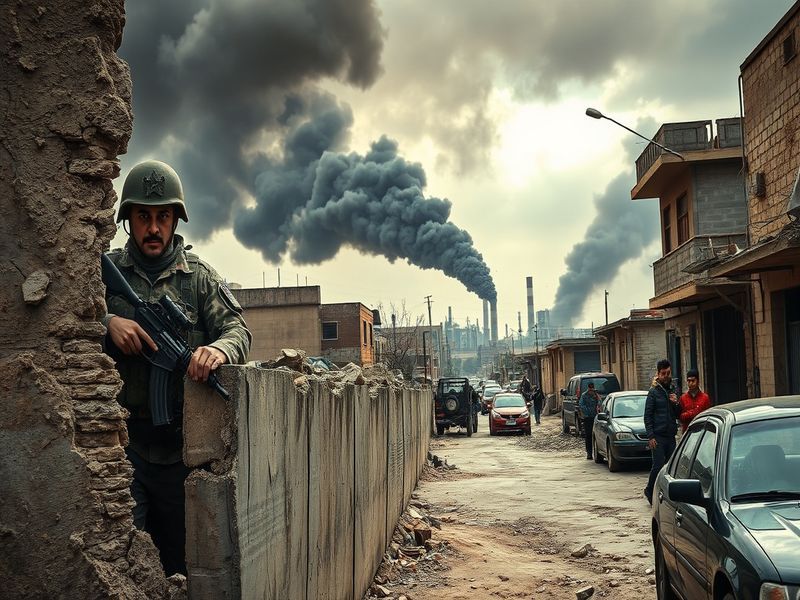
irán war
Iran’s Shadow War: How Tensions Play Out Beyond the Headlines
The conflict involving Iran has evolved far beyond traditional battlefield confrontations. It now unfolds through proxy battles, cyber warfare, and economic pressure—each dimension shaping global stability in ways that often escape mainstream attention. What began as a regional power struggle has expanded into a complex web of alliances, sanctions, and technological confrontation, pulling in nations from the Middle East to Southeast Asia.
Iran’s strategic approach has shifted over decades. After the Iran-Iraq War (1980–1988), which left hundreds of thousands dead and reshaped the country’s military doctrine, Tehran refocused on asymmetric warfare. Rather than seeking direct military parity with larger powers, Iran invested in proxy groups, missile development, and cyber capabilities. This strategy allowed it to project influence across Iraq, Syria, Lebanon, Yemen, and beyond without risking a full-scale war that could destabilize its regime.
The Proxy Network: Iran’s Long Reach Across the Middle East
Iran’s support for non-state actors has become a cornerstone of its foreign policy. Groups such as Hezbollah in Lebanon, the Houthis in Yemen, and various militias in Iraq and Syria receive funding, training, and weapons—often in violation of international law. These groups operate independently but align their actions with Tehran’s strategic goals, including countering U.S. influence and opposing Saudi Arabia and Israel.
In Yemen, the Houthi rebellion has turned into a prolonged humanitarian crisis, with Iran accused of supplying drones and ballistic missiles used in attacks against Saudi Arabia and international shipping lanes. Similarly, in Syria, Iran-backed forces have played a pivotal role in keeping President Bashar al-Assad in power, despite a decade of civil war. The presence of the Islamic Revolutionary Guard Corps (IRGC) in these conflicts underscores Iran’s willingness to project power far beyond its borders.
These proxy relationships are not static. They adapt to changing geopolitical conditions. For instance, as tensions between Iran and Israel escalated in early 2024, reports indicated increased coordination between Iranian-backed groups in Lebanon and Yemen, suggesting a more unified front against a common adversary. Such shifts illustrate how Iran’s regional influence is both resilient and fluid.
Cyber Warfare: The Invisible Battlefield
Beyond the physical battlefield, Iran has emerged as a significant player in cyber warfare. Its cyber units, often linked to the IRGC, have targeted governments, corporations, and critical infrastructure across the globe. In 2020, a cyberattack on Israel’s water system was attributed to Iranian hackers, raising alarms about potential disruptions to essential services. Similarly, U.S. officials have accused Iran of launching ransomware attacks on American hospitals and government agencies.
Iran’s cyber strategy reflects a broader trend in modern warfare: the use of digital tools to achieve strategic objectives without direct military confrontation. These operations serve multiple purposes. They can disrupt adversaries, gather intelligence, and even influence public opinion through disinformation campaigns. The 2022 protests in Iran, sparked by the death of Mahsa Amini, saw a surge in state-sponsored cyberattacks against Western media outlets and human rights organizations, highlighting the regime’s efforts to control the narrative both domestically and internationally.
The Economic Front: Sanctions and Survival
No discussion of Iran’s modern conflicts would be complete without addressing economic warfare. Since the U.S. withdrawal from the Joint Comprehensive Plan of Action (JCPOA) in 2018, Iran has faced crippling sanctions targeting its oil exports, banking sector, and military supply chains. These measures were designed to cripple the Iranian economy and force concessions on its nuclear program. Yet, Iran has shown remarkable resilience.
The government has turned to creative solutions to bypass sanctions, including barter agreements with countries like China and Russia, and the expansion of domestic industries such as pharmaceuticals and automotive production. The black market, often facilitated by smuggling networks across the Persian Gulf and Central Asia, has also played a crucial role in keeping the economy afloat. However, these workarounds come at a cost. Inflation has soared, and ordinary citizens bear the brunt of economic hardship, with shortages of food, medicine, and fuel becoming commonplace.
Despite these challenges, Iran’s leadership has demonstrated a willingness to endure economic pain in pursuit of strategic goals. The nuclear program, for instance, continues to advance, with uranium enrichment levels reaching new highs in 2023. This defiance has strained relations with European powers, which have struggled to balance sanctions enforcement with diplomatic engagement.
A Global Perspective: Iran’s Role Beyond the Middle East
Iran’s influence extends far beyond its immediate neighborhood. In Latin America, Hezbollah has established a presence in countries like Venezuela and Argentina, raising concerns about money laundering and terrorist financing. In Africa, Iran has cultivated ties with governments in Sudan and Zimbabwe, offering military support in exchange for access to resources and strategic ports.
Even in regions where Iran has limited physical presence, its ideological and cultural influence persists. The Islamic Republic has invested heavily in religious and educational institutions across the Muslim world, promoting its version of Shiite Islam as a counterbalance to Sunni-led powers like Saudi Arabia. These efforts have fostered a network of loyalists who view Iran not just as a nation-state, but as a revolutionary movement.
This global reach complicates efforts to contain Iran. Diplomatic isolation has only strengthened its resolve to pursue independent foreign policies. The country’s leadership has repeatedly stated its commitment to resisting what it calls “Western hegemony,” framing its actions as part of a broader struggle against imperialism. Such rhetoric resonates with audiences in the Global South, where skepticism of Western interventionism remains high.
What Comes Next?
The future of Iran’s conflicts remains uncertain. Diplomatic efforts to revive the JCPOA have stalled, and regional tensions show no signs of abating. The rise of new military technologies, such as hypersonic missiles and AI-driven warfare, presents further challenges for global stability. Meanwhile, Iran’s domestic situation remains volatile, with ongoing protests and economic instability threatening the regime’s legitimacy.
One thing is clear: the shadow war involving Iran will continue to shape international relations for years to come. Whether through proxy conflicts, cyber operations, or economic maneuvering, Iran has demonstrated an ability to adapt and persist. The international community faces a daunting task in navigating this complex landscape—balancing deterrence with diplomacy, and containment with engagement.
As the world watches, the question is not whether Iran will continue to play a disruptive role on the global stage, but how the rest of the world will respond. The answers will define the next chapter of 21st-century geopolitics.