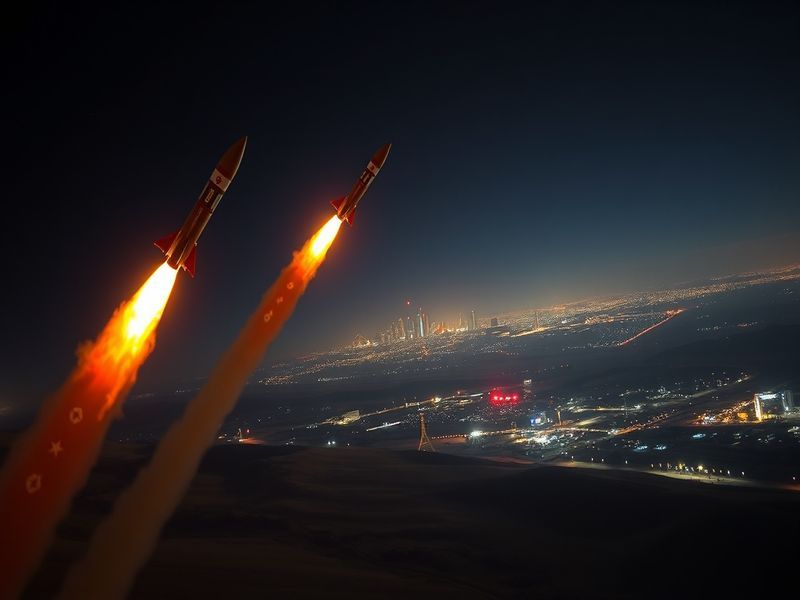
Iranian Missiles and Their Threat to Israel: A Global Perspective
Overview of Iranian Missile Capabilities
Iran has significantly advanced its missile technology over the past few decades. This progress has raised concerns among various nations, particularly Israel. The Iranian missile program is multifaceted, involving various types of missiles, including short-range, medium-range, and long-range ballistic missiles, as well as cruise missiles. The country’s ongoing development in this area is often viewed as a direct threat to regional stability.
The Threat to Israel
Israel perceives Iranian missile capabilities as a primary threat to its national security. The geopolitical tensions in the Middle East have intensified with Iran’s missile advancements. Israel is particularly alarmed by the possibility of these missiles being equipped with advanced warheads, including nuclear capabilities. The Iranian government has openly stated its intention to defend its sovereignty, which it perceives as being under threat from Israel and its allies.
Some of the key concerns for Israel include:
- Increased Range: Iranian missiles have been developed with extended ranges, allowing them to reach deeper into Israeli territory.
- Precision Strikes: Advances in guidance systems have improved the accuracy of Iranian missiles, making them more effective for targeted strikes.
- Proxy Forces: Iran has supplied missiles to proxy groups in the region, such as Hezbollah, which further complicates Israel’s security calculus.
Global Reactions and Implications
The international community is closely monitoring Iran’s missile developments. Various nations have expressed their concerns, with many calling for diplomatic solutions to curb Iran’s missile ambitions. The United States, in particular, has implemented sanctions aimed at restricting Iran’s missile program. These sanctions have been met with mixed responses from other countries, some of which maintain economic ties with Iran.
Key global reactions include:
- United States: The U.S. has taken a hardline stance, emphasizing the need for a comprehensive agreement that addresses Iran’s missile program.
- European Union: The EU has advocated for diplomatic negotiations while also expressing concerns over Iran’s missile tests.
- Russia and China: Both countries have shown support for Iran, often opposing sanctions and promoting economic cooperation.
This complex web of international relations has created a challenging environment for resolving tensions. Each country involved has its own interests, leading to a multifaceted conflict that requires careful navigation.
Conclusion
The issue of Iranian missiles and their implications for Israel is a multifaceted challenge that involves military, political, and diplomatic dimensions. As Iran continues to develop its missile capabilities, the potential for conflict remains high. Israel’s response, including its military preparedness and intelligence operations, will play a crucial role in shaping the future of this regional tension. Engaging in constructive dialogue and pursuing diplomatic avenues may provide some relief, although the path forward is fraught with complexities.
For those interested in broader geopolitical dynamics, exploring the Politics section on Dave’s Locker may provide additional insights into similar issues affecting global stability.