Clear Airport Is Changing How We Fly—Here’s What You Need to Know
The Rise of Biometric Security in Air Travel
Airports have long been synonymous with long lines, cramped waiting areas, and the tedious ritual of removing belts and shoes. But a quieter revolution has been unfolding—one that replaces friction with frictionless passage. Clear Airport, the flagship service of Clear, has quietly redefined how millions of travelers move through security.
The premise is simple: use biometric verification—primarily facial recognition and fingerprint scans—to confirm identity faster than traditional ID checks. Unlike metal detectors or X-ray machines, Clear’s lanes don’t just screen luggage and passengers; they verify who you are before you even reach the front of the line. This isn’t futuristic tech reserved for sci-fi films—it’s here, operational in over 60 U.S. airports, and growing.
What began as a niche perk for frequent flyers and Clear members has evolved into a cornerstone of modern airport operations. The service now handles millions of verifications monthly, not just at security checkpoints but at stadiums, entertainment venues, and even workplaces. Its expansion reflects a broader shift in how identity is managed in public spaces.
How Clear Airport Works: Behind the Technology
Clear Airport doesn’t replace the Transportation Security Administration (TSA). Instead, it complements it. Members enroll by presenting government-issued IDs, undergoing a brief background check, and then creating a biometric profile. This profile links their face and fingerprints to their identity, stored securely in Clear’s encrypted system.
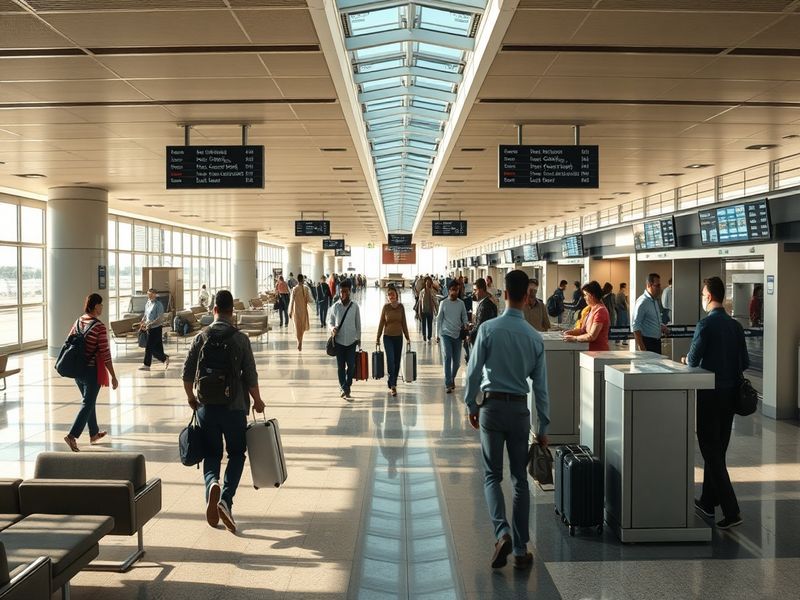
At the airport, Clear lanes look like express security channels. Instead of handing over a boarding pass and ID to an agent, travelers simply look into a camera or place a finger on a scanner. If the biometric data matches their profile, the lane opens—often in under 30 seconds. No boarding pass scanning. No fumbling for documents. Just a quick glance and a green light.
The technology relies on a combination of optical sensors, liveness detection, and AI-driven matching algorithms. These systems are designed to prevent spoofing—whether through photos, masks, or deepfake attempts. Clear claims a 99.9% accuracy rate in identity verification, a statistic that has helped earn trust from both travelers and regulators.
For airports, this means shorter queues, reduced staffing pressure, and happier passengers. For travelers, it means reclaiming time once lost to bureaucracy. In an era where time is currency, Clear Airport offers a rare commodity: predictability.
Beyond Airports: The Broader Reach of Biometric Identity
Clear’s influence extends far beyond airport tarmac. The company has expanded into sports arenas, including Yankee Stadium and SoFi Stadium, where members bypass ticket lines with a quick face scan. Corporate campuses, music festivals, and even hospitals have adopted similar systems to streamline access and reduce touchpoints—especially relevant since the COVID-19 pandemic.
This broader adoption signals a cultural shift. We are moving from a world where identity is verified by what you carry to one where identity is confirmed by who you are. Biometric systems reduce fraud, speed up processes, and—when implemented responsibly—can enhance privacy by eliminating the need to carry physical documents.
Yet, the rise of biometric identification raises important questions. Privacy advocates warn about data security, potential misuse, and the risk of creating a surveillance infrastructure. Who controls the data? How long is it stored? Can it be hacked? Clear states that biometric data never leaves its system and is not sold or shared. Still, the lack of federal regulation in the U.S. leaves room for concern.
Clear has addressed some of these concerns by participating in voluntary privacy frameworks and undergoing third-party audits. But as biometric systems become more embedded in daily life, the demand for stronger oversight will only grow.
The Future of Travel: Will Clear Airport Become the Standard?
The aviation industry is under immense pressure to modernize. Rising passenger volumes, labor shortages, and evolving security threats demand innovation. Clear Airport represents a viable solution—not a magic bullet, but a practical tool that delivers measurable results. Airports like Dallas/Fort Worth and Orlando International have reported up to 30% faster throughput in Clear lanes, translating to shorter wait times for all travelers, not just members.
But widespread adoption faces hurdles. Membership costs $189 per year—a barrier for many travelers. While Clear offers discounted or free memberships through partnerships with airlines and credit cards, the price point limits accessibility. Additionally, not all airports have Clear lanes, and availability is concentrated in major hubs.
Looking ahead, the future may lie in integration. Imagine a single biometric profile that works across airlines, airports, and even international borders. The U.S. Customs and Border Protection’s Trusted Traveler Programs (like Global Entry) already use biometrics. The next step could be a unified system—one where your face replaces your passport and boarding pass from curb to gate.
Clear is already testing such systems. In 2023, it launched Clear Ready, a platform that integrates with airline apps to allow biometric check-in. This could pave the way for fully contactless travel experiences.
Key Takeaways on Clear Airport and Biometric Travel
- Speed and Convenience: Clear Airport reduces security wait times by up to 80% for members, offering a tangible benefit in an industry plagued by delays.
- Security and Accuracy: Biometric verification reduces human error and fraud, providing a higher standard of identity confirmation than traditional ID checks.
- Expanding Ecosystem: Beyond airports, Clear’s technology is used in stadiums, workplaces, and events, signaling a shift toward biometric identity verification in public life.
- Privacy and Regulation: While Clear emphasizes data security, the lack of comprehensive U.S. biometric privacy laws creates uncertainty about long-term governance.
- Future Outlook: As airlines and airports prioritize digital transformation, biometric systems like Clear are likely to become standard—not optional—features in air travel.
Is Clear Airport Worth It? A Realistic Assessment
For frequent flyers who value time and comfort, Clear Airport is a game-changer. The annual fee is quickly offset by saved hours and reduced stress. For occasional travelers, the value proposition weakens. Unless you fly multiple times a year, the cost may not justify the benefit.
But even for infrequent flyers, Clear offers indirect advantages. By reducing congestion in regular security lanes, it helps everyone move faster. And with partnerships through airlines like Delta and United, members can sometimes access Clear benefits at a lower cost—or even for free.
Ultimately, Clear Airport isn’t just about skipping lines. It’s about reimagining the airport experience—one where the process adapts to the traveler, not the other way around. It’s a quiet revolution, but one with loud implications for the future of travel.
For more on how technology is reshaping travel, visit our Travel and Technology sections on Dave’s Locker.