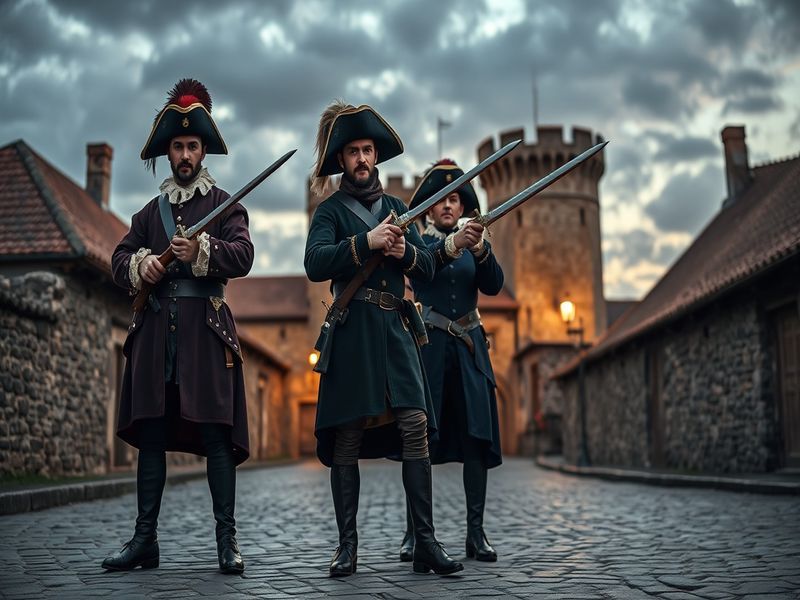
Exploring the Timeless Legacy of The Three Musketeers
The Timeless Tale of the Three Musketeers
“The Three Musketeers,” penned by Alexandre Dumas in 1844, remains a significant work in literary history. This novel tells the story of d’Artagnan, a young man eager to join the elite musketeers of the guard. His journey introduces him to Athos, Porthos, and Aramis, three seasoned musketeers who become his close companions. Their adventures are set against the backdrop of 17th-century France, filled with intrigue, romance, and battles.
Character Analysis
The characters in “The Three Musketeers” are richly developed, each embodying distinct traits that contribute to the narrative’s depth. Below is a brief overview of the main characters:
- d’Artagnan: The ambitious protagonist who seeks to prove his worth.
- Athos: The noble and brooding musketeer with a mysterious past.
- Porthos: The larger-than-life character known for his strength and love of luxury.
- Aramis: The charming and romantic musketeer with aspirations of becoming a priest.
These characters not only drive the plot but also represent various aspects of human nature. d’Artagnan’s youthful enthusiasm contrasts with Athos’s somber wisdom, while Porthos’s exuberance and Aramis’s romantic ideals add richness to their interactions. The dynamics among these four friends highlight themes of loyalty, honor, and friendship.
Thematic Elements
Dumas weaves several themes throughout the novel, making it a multifaceted read. One of the most prominent themes is the idea of camaraderie and loyalty. The motto “All for one and one for all” encapsulates the essence of their bond. This phrase signifies unity and shared purpose, illustrating how friendship can transcend individual desires.
Another significant theme is the struggle for power and justice. The musketeers often find themselves embroiled in political intrigues, battling against the corrupt Cardinal Richelieu and his machinations. This conflict reflects the broader societal issues of the time, where power dynamics were constantly in flux. The musketeers’ quest for justice serves as a commentary on the moral complexities of loyalty and duty.
Impact and Adaptations
The enduring popularity of “The Three Musketeers” has led to numerous adaptations across various media. From films to stage productions, the story continues to captivate audiences worldwide. Some notable adaptations include:
- 1921 Silent Film directed by Fred Niblo
- 1948 Film featuring Gene Kelly as d’Artagnan
- 1993 Disney adaptation starring Charlie Sheen and Kiefer Sutherland
- 2011 Film with a steampunk twist, directed by Paul W.S. Anderson
These adaptations often reinterpret the original narrative, introducing new elements while maintaining the core themes. The 1993 version, for example, added a comedic flair, appealing to a younger audience, while the 2011 film presented a more modern twist with spectacular visual effects. Each interpretation brings fresh life to the classic tale, showcasing its versatility and timeless appeal.
Conclusion
The legacy of “The Three Musketeers” endures for its rich characters, intricate themes, and the universal values of friendship and loyalty. Dumas’s ability to blend action, romance, and social commentary continues to resonate with readers and viewers alike. As new adaptations emerge, the core of the story remains intact, reminding us of the importance of camaraderie and the quest for justice in a complex world.
For those interested in exploring more about the literary impact of classic novels, visit our literature category. Additionally, for insights on adaptations and their cultural significance, check out our media category.