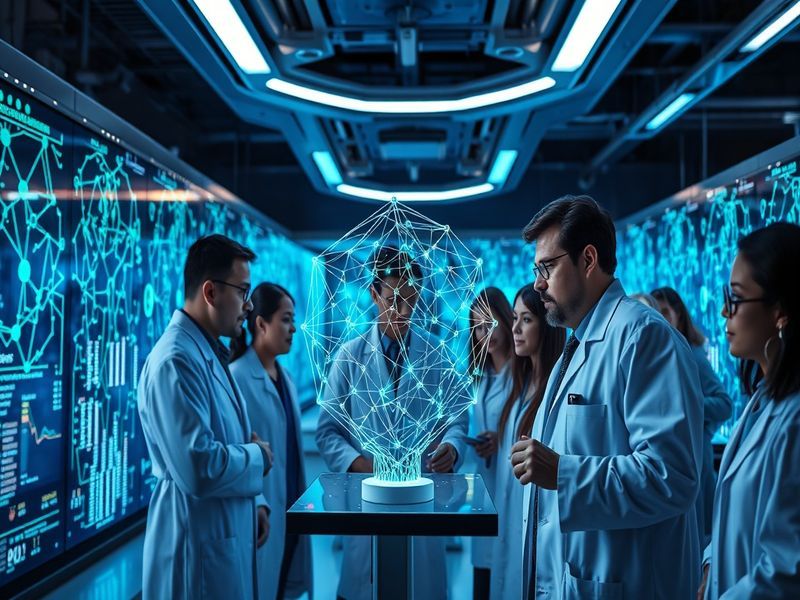
Exploring Deep Learning: Applications and Ethical Considerations
Understanding Deep Learning: A Global Perspective
Deep learning, a subset of artificial intelligence (AI) and machine learning, has transformed the way we analyze and interpret vast amounts of data. This technology utilizes neural networks to simulate human brain function, enabling machines to learn from experience and improve their performance over time. As industries worldwide adopt deep learning, its implications extend beyond technology, influencing various aspects of society and culture.
The Mechanisms Behind Deep Learning
At its core, deep learning operates on layers of algorithms known as neural networks. These networks consist of interconnected nodes that process information in a manner similar to the human brain. The architecture can be broadly categorized into three types:
- Convolutional Neural Networks (CNNs): Primarily used in image processing and computer vision.
- Recurrent Neural Networks (RNNs): Suitable for sequential data such as time series and natural language processing.
- Generative Adversarial Networks (GANs): Focused on generating new data instances that resemble existing data.
These networks require extensive datasets and significant computational power, often leveraging graphics processing units (GPUs) to accelerate training. As a result, the cost and complexity of implementing deep learning can be substantial, but the potential benefits are vast.
Global Applications of Deep Learning
Deep learning’s impact is felt across various sectors, from healthcare to finance, transportation to entertainment. Here are some notable applications:
- Healthcare: Deep learning algorithms analyze medical images, assist in diagnosis, and predict patient outcomes.
- Finance: In fraud detection, deep learning helps identify unusual patterns in transactions, thereby enhancing security.
- Transportation: Autonomous vehicles utilize deep learning for navigation and obstacle recognition, improving safety and efficiency.
- Entertainment: Streaming services use deep learning for personalized content recommendations, enhancing user experience.
These examples highlight the versatility of deep learning and its ability to address complex challenges, making it a valuable asset in modern society.
Cultural Context and Ethical Considerations
As deep learning continues to evolve, it raises important ethical considerations. Issues surrounding data privacy, algorithmic bias, and the potential for job displacement are at the forefront of discussions among technologists, policymakers, and ethicists. The global nature of deep learning technology means that its effects are not uniform; different cultures may respond to its challenges and opportunities in varied ways.
For instance, in countries with stringent data protection laws, such as the European Union, there is a greater emphasis on ensuring that AI systems comply with regulations. Meanwhile, in regions where data is less regulated, the rapid deployment of deep learning applications may raise concerns about privacy and consent. The disparity in regulatory approaches can lead to uneven advancements and expose vulnerabilities in different markets.
Moreover, as deep learning systems become more integrated into daily life, the need for transparency and accountability grows. Stakeholders must prioritize ethical frameworks to ensure that technology serves the greater good rather than exacerbating societal inequalities.
Conclusion
Deep learning represents a significant leap in technology, with the potential to revolutionize industries and improve lives across the globe. While the benefits are substantial, it is crucial to approach its development and implementation with a critical eye. Balancing innovation with ethical considerations will shape the future of deep learning, ensuring that it becomes a force for positive change in society. As we continue to explore its capabilities, the conversation around deep learning must remain inclusive and forward-thinking.
For those interested in the intersection of technology and culture, exploring further into other categories such as Technology or Culture can provide additional insights into how advancements like deep learning affect our world.