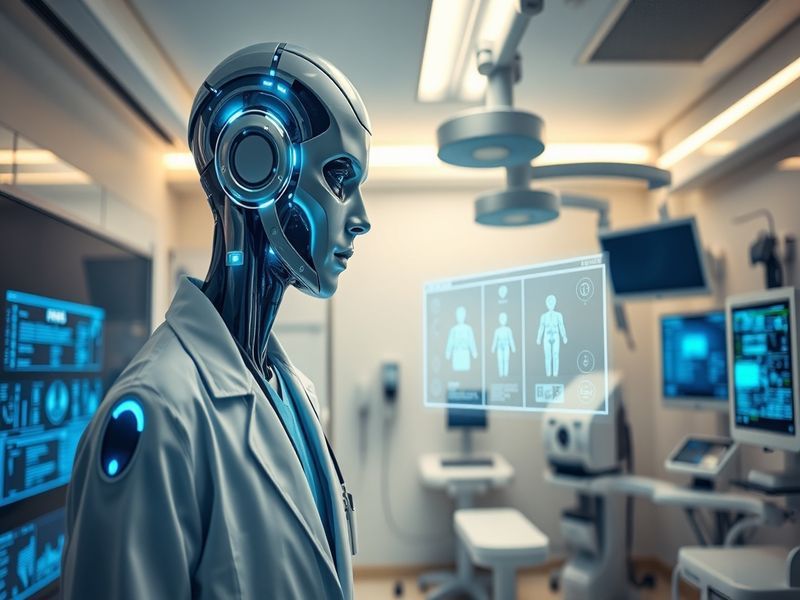
The AI Doc: Transforming Healthcare with Artificial Intelligence
The AI Doc: Revolutionizing Healthcare Delivery
The integration of artificial intelligence in healthcare is transforming how medical professionals diagnose and treat patients. The AI Doc represents a significant advancement in this field, employing algorithms and machine learning to enhance patient care. From predictive analytics to personalized treatment plans, the AI Doc is reshaping the healthcare landscape.
How AI is Enhancing Diagnostics
One of the most notable applications of AI in healthcare is its ability to assist in diagnostics. Traditionally, diagnosing a condition required extensive testing and sometimes invasive procedures. AI technologies can analyze vast amounts of medical data quickly and accurately, leading to faster and more reliable diagnoses.
For instance, AI systems can:
- Analyze medical imaging, such as X-rays and MRIs, to identify anomalies.
- Process genetic information to predict susceptibility to certain diseases.
- Utilize electronic health records (EHRs) to identify patterns in patient histories.
These capabilities not only improve accuracy but also reduce the workload on healthcare professionals, allowing them to focus on patient care rather than administrative tasks.
Personalized Medicine and Treatment Plans
The AI Doc is also paving the way for personalized medicine. By analyzing data from various sources, AI can tailor treatment plans to meet the specific needs of individual patients. This approach considers factors such as genetics, lifestyle, and environmental influences.
Some key advantages of personalized medicine include:
- Improved treatment efficacy through targeted therapies.
- Reduced side effects by avoiding ineffective medications.
- Enhanced patient engagement through customized care plans.
As AI continues to evolve, the potential for more precise and effective treatment options will only increase. Patients can expect to see a shift away from one-size-fits-all approaches to more nuanced care strategies.
Challenges and Ethical Considerations
Despite the many benefits, the implementation of AI in healthcare also raises significant challenges and ethical considerations. Issues such as data privacy, algorithmic bias, and the potential for over-reliance on technology must be addressed to ensure safe and equitable healthcare delivery.
Healthcare providers must navigate these complexities while maintaining trust with their patients. Key challenges include:
- Ensuring data security and patient confidentiality.
- Addressing bias in AI algorithms that may affect diagnosis or treatment.
- Maintaining a human touch in patient interactions amidst increasing automation.
Healthcare organizations must prioritize ethical standards and regulations to mitigate these risks. Balancing innovation with patient safety will be crucial as the AI Doc continues to evolve.
Conclusion: The Future of AI in Healthcare
The AI Doc signifies a transformative shift in how healthcare is delivered. With its ability to enhance diagnostics, personalize treatment, and streamline processes, AI is set to redefine patient care. However, as the technology advances, it is essential for healthcare professionals to address the ethical implications and challenges it presents.
Ultimately, the successful integration of AI in healthcare will rely on collaboration among technologists, medical professionals, and policymakers. As we move forward, embracing the potential of AI while ensuring ethical practices will be key to fostering a healthier future for all.
For more insights into the intersection of technology and healthcare, visit our Technology and Health sections.