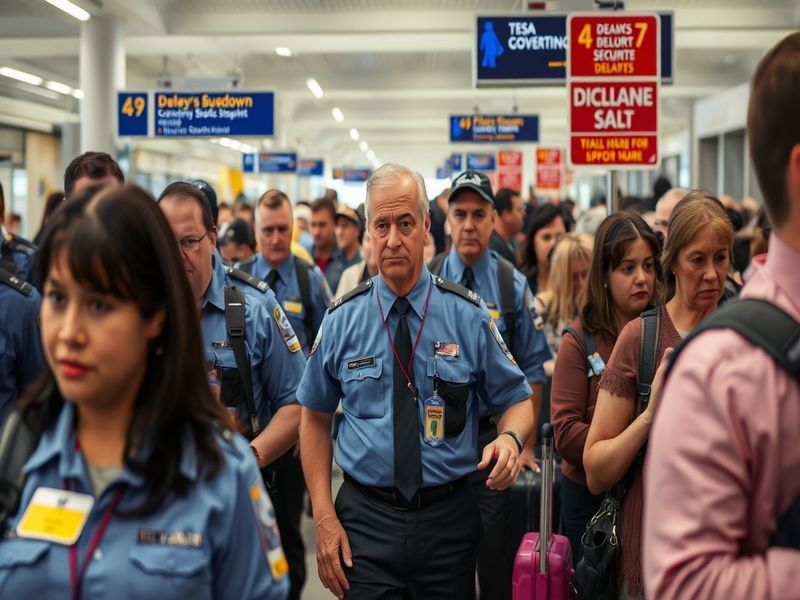
TSA Agents Struggle During Government Shutdowns: A Global View
“`html
TSA Agents and the Government Shutdown: A Global Perspective
The U.S. government shutdowns have become a recurring spectacle in American politics, leaving lasting impacts on federal employees and the public services they provide. Among the most visible consequences are the disruptions faced by Transportation Security Administration (TSA) agents, who continue working without pay during these standoffs. Their situation highlights broader issues of labor rights, public safety, and government accountability.
Beyond the United States, government shutdowns and their effects on essential services resonate globally. Other nations have grappled with similar crises, often revealing systemic vulnerabilities in public sector labor policies. By examining the TSA’s struggles during shutdowns, we can draw parallels to international challenges and underscore the importance of sustainable workforce management in public institutions.
The Immediate Impact on TSA Agents
When the U.S. government shuts down, TSA agents are classified as essential workers, meaning they must report to work despite not receiving paychecks. This policy ensures that airport security remains operational, but it places an undue burden on employees who are forced to work without financial compensation. Many TSA agents, already earning modest salaries, struggle to cover basic living expenses during these periods.
The financial strain is compounded by the emotional toll of working under high-stress conditions without pay. Agents report increased anxiety and frustration, as they feel undervalued by a system that prioritizes operational continuity over their well-being. Some have taken on second jobs or relied on community support to make ends meet, while others have left the agency altogether, exacerbating staffing shortages.
During the 2018-2019 shutdown, the longest in U.S. history at 35 days, TSA absenteeism rates surged. Reports indicated that nearly 10% of the workforce called in sick at some point, further straining an already overburdened system. The incident exposed the fragility of relying on unpaid labor to maintain critical infrastructure.
Broader Implications for Public Safety and Trust
The shutdowns don’t just affect TSA agents; they also erode public confidence in the government’s ability to manage essential services. Travelers often face longer wait times and heightened security measures during shutdowns, as understaffed TSA teams work to process passengers. These delays create ripple effects, disrupting travel plans and increasing costs for airlines and passengers alike.
Internationally, similar shutdowns have demonstrated how public sector labor disputes can undermine trust in government institutions. In 2016, Belgium experienced a six-month political impasse that led to temporary furloughs of public sector workers, including airport security personnel. The episode resulted in sporadic service disruptions and public frustration, mirroring the challenges faced in the U.S.
A comparison can also be drawn to Greece during its debt crisis, when public sector wages were slashed and layoffs became commonplace. While Greece’s situation was driven by economic collapse rather than a political standoff, the outcome was similar: a demoralized workforce struggling to maintain critical services. These examples underscore the need for policies that balance fiscal responsibility with the fair treatment of public employees.
Labor Rights and Political Accountability
The plight of TSA agents raises fundamental questions about labor rights in the public sector. Unlike private-sector employees, federal workers have limited recourse during shutdowns. They cannot unionize or strike to demand unpaid wages, leaving them with few options to advocate for fair treatment. This imbalance underscores the need for legislative reforms that protect essential workers during government standoffs.
Congress has occasionally passed backpay legislation to compensate federal employees retroactively, but this does little to address the immediate hardships they endure. Advocacy groups, such as the American Federation of Government Employees, have pushed for policies that would guarantee paychecks during shutdowns, but progress has been slow. The issue remains a contentious topic, with lawmakers divided along partisan lines.
Globally, labor movements have responded to similar crises by demanding stronger protections for public sector workers. In France, for example, unions have staged protests against government austerity measures that threaten job security and wages. These movements highlight a growing international trend: the push for policies that prioritize worker welfare, even in times of economic or political turmoil.
Lessons for the Future
The recurring nature of government shutdowns suggests that structural reforms are necessary to prevent future crises. One potential solution is the implementation of automatic continuing resolutions, which would fund government operations at current levels during budget negotiations. This approach would eliminate the need for shutdowns while allowing lawmakers time to reach a consensus.
For TSA agents specifically, the creation of a dedicated emergency fund could provide financial support during shutdowns. Such a fund could be financed through modest contributions from federal payrolls or allocated resources from other government agencies. This would ensure that essential workers are not left in financial limbo during political disputes.
Internationally, governments can learn from these experiences by adopting policies that prioritize stability and worker welfare. Countries like Canada and Germany have systems in place to prevent prolonged budget standoffs, reducing the risk of service disruptions. By studying these models, policymakers can develop solutions tailored to their own political and economic contexts.
Ultimately, the challenges faced by TSA agents during government shutdowns are a microcosm of broader systemic issues. They highlight the need for fair labor practices, transparent governance, and proactive policies that protect essential workers. As the U.S. and other nations navigate these challenges, the lessons learned from these crises could shape the future of public sector labor rights.
For those interested in exploring related topics, our News and Politics sections offer additional insights into government operations and labor policies.