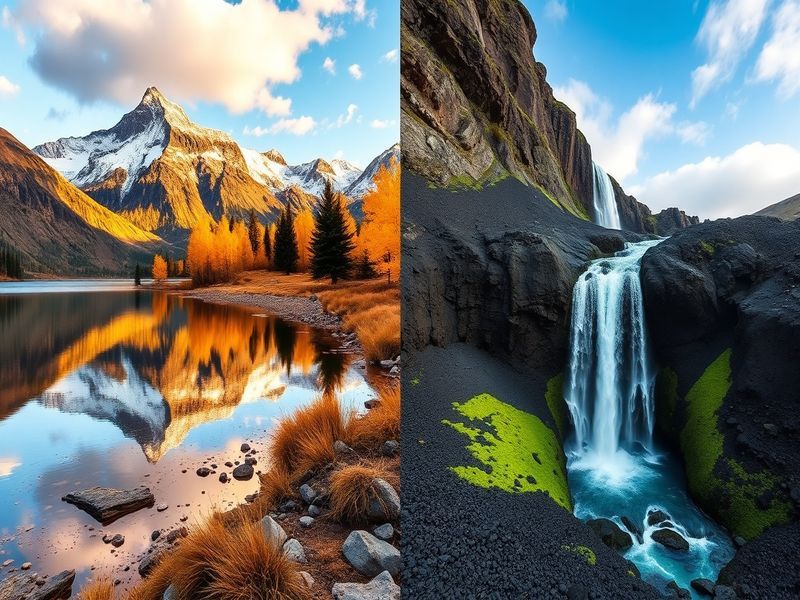
Canada vs Iceland: A Comparative Analysis of Two Unique Nations
Canada vs Iceland: A Comparative Analysis
When comparing Canada and Iceland, two nations known for their stunning landscapes and rich cultures, one might overlook the nuances that define each country. While Canada boasts vast expanses of forests, mountains, and lakes, Iceland presents a dramatic interplay of glaciers, volcanoes, and geothermal features. This article delves into the similarities and differences between the two, examining their geography, culture, economy, and environmental policies.
Geography and Climate
Canada is the second-largest country in the world by land area, stretching from the Atlantic to the Pacific and northward into the Arctic. It features diverse climates, from temperate coastal regions to frigid tundras. The geography includes vast forests, majestic mountain ranges, and numerous lakes. In contrast, Iceland, while much smaller, is characterized by its unique geological features shaped by volcanic activity and glacial formations. Its climate is classified as subarctic, with mild summers and harsh winters, influenced by the North Atlantic Ocean.
- Canada: Larger land area, diverse climates, rich natural resources.
- Iceland: Smaller land area, volcanic landscapes, geothermal energy sources.
Culture and Society
Canada prides itself on its multicultural identity, with a mosaic of ethnicities and languages. English and French are the official languages, reflecting the country’s colonial history. Canadian culture is marked by its love for sports, music, and arts, with festivals celebrating diversity throughout the year.
Iceland, on the other hand, has a more homogenous population, with a strong sense of national identity rooted in Norse traditions. The Icelandic language has remained relatively unchanged for centuries, preserving its unique heritage. The country is renowned for its literature, particularly the sagas, and a vibrant contemporary art scene.
Key Cultural Differences
- Language: Canada is bilingual, while Iceland primarily speaks Icelandic.
- Diversity: Canada has a multicultural society; Iceland is more homogenous.
- Traditions: Iceland celebrates Norse traditions, whereas Canada has a blend of Indigenous and colonial influences.
Economy and Innovation
Canada’s economy is one of the largest in the world, driven by natural resources, manufacturing, and services. It is rich in oil, gas, and minerals, making it a significant player in global commodity markets. In addition, Canada is known for its technological innovations, particularly in fields like artificial intelligence and clean energy.
Iceland’s economy, while smaller, has shown remarkable resilience, particularly in the wake of the 2008 financial crisis. The country has shifted towards sustainable practices, relying heavily on renewable energy sources, such as geothermal and hydropower. Tourism has also become a cornerstone of Iceland’s economy, attracting millions of visitors eager to experience its natural wonders.
Economic Highlights
- Canada: Strong reliance on natural resources, high-tech industries on the rise.
- Iceland: Focus on sustainability, booming tourism sector.
Environmental Policies and Sustainability
Both Canada and Iceland are committed to addressing climate change, though their approaches differ due to their unique circumstances. Canada has pledged to reduce greenhouse gas emissions and invest in clean technology. However, balancing economic growth with environmental sustainability remains a challenge.
Iceland, with its abundant renewable resources, has implemented policies that prioritize sustainability. The country aims to be carbon neutral by 2040, leveraging its geothermal and hydroelectric power to meet energy needs. This commitment reflects not only a national priority but also a cultural ethos that values environmental stewardship.
Environmental Initiatives
- Canada: Strives for emissions reduction, investments in clean technology.
- Iceland: Aims for carbon neutrality, utilizes renewable energy effectively.
Conclusion
In summary, Canada and Iceland offer intriguing contrasts and similarities. While Canada boasts a vast and diverse landscape with a multicultural society, Iceland captivates with its unique geological features and strong national identity. Both nations are making strides towards sustainable practices but face different challenges based on their economic structures and environmental policies. Understanding these distinctions not only enriches our appreciation of each country but also highlights broader implications for global cooperation in addressing climate change and fostering cultural exchange.
For more insights into global cultures and environmental policies, explore our Culture and Environment sections.