mortal kombat
Few franchises have left as indelible a mark on gaming culture as Mortal Kombat. Born in the early 1990s, the series didn’t just introduce a new genre; it redefined what fighting games could be. With its over-the-top violence, iconic characters, and relentless innovation, Mortal Kombat didn’t just compete—it dominated. The franchise’s influence stretches far beyond arcades and consoles, seeping into movies, comics, and even mainstream pop culture.
The Origins: Blood, Arcade Cabinets, and a Revolution in Gaming
Developed by Ed Boon and John Tobias at Midway Games, Mortal Kombat arrived in 1992 as a response to the more family-friendly fighting games of the era. While titles like Street Fighter II dominated with polished mechanics, Mortal Kombat staked its claim with something far rawer. Its digitized sprites, drawn from real actors, lent an unsettling realism to its fighters. The game’s signature Fatalities—brutal, often grotesque finishing moves—became its defining feature.
Controversy followed almost immediately. Politicians and media outlets decried the game’s violence, leading to congressional hearings and the creation of the Entertainment Software Rating Board (ESRB) in 1994. Yet, for all the backlash, the controversy only fueled the game’s infamy. Players flocked to arcades not just to test their skills, but to witness (and perform) the most gruesome takedowns possible.
By 1993, the first sequel, Mortal Kombat II, doubled down on everything that made the original a hit. The roster expanded with fan favorites like Sub-Zero, Kung Lao, and Baraka, each bringing unique fighting styles to the table. The game’s improved graphics and even more elaborate Fatalities cemented its legacy. It wasn’t just a sequel; it was a cultural reset for fighting games.
Characters Who Became Icons: The Lore Behind the Legends
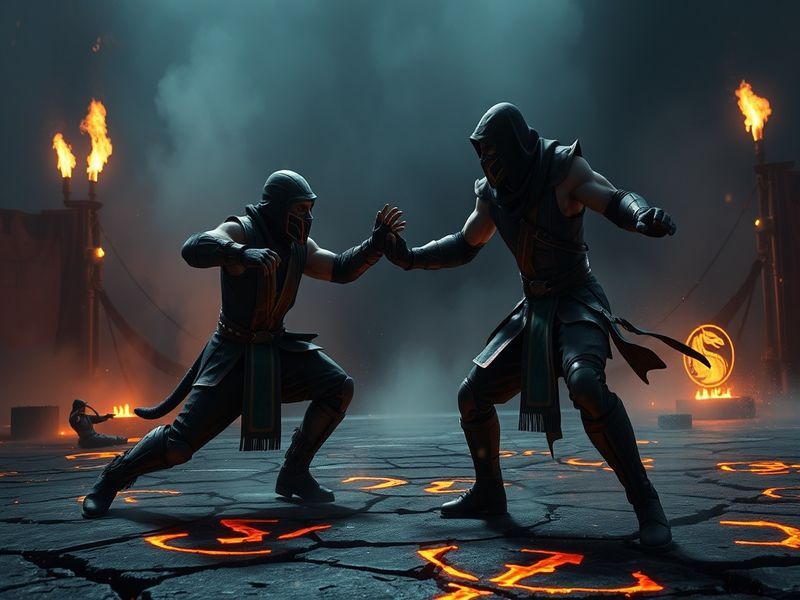
The heart of Mortal Kombat has always been its characters. From the stoic Scorpion to the enigmatic Raiden, each fighter carries a backstory steeped in mythology, tragedy, and revenge. The franchise thrives on contrasts: heroes and villains, gods and mortals, light and dark. Some characters, like Liu Kang and Johnny Cage, became synonymous with the series, while others, like Noob Saibot and Ermac, emerged from the shadows to carve their own niches.
The roster has evolved dramatically over the decades. Early games relied on ninjas, monks, and undead warriors, but later entries introduced figures like Sonya Blade, Jax, and Kabal, expanding the lore into military and supernatural realms. The 2011 reboot, Mortal Kombat (2011), reimagined the continuity while paying homage to the original cast. Characters like Cyber Sub-Zero and Sektor introduced cybernetic elements, blending the franchise’s signature brutality with sci-fi horror.
- Scorpion: The undead ninja seeking vengeance for his clan’s destruction, wielding a signature spear and fire breath.
- Sub-Zero: The Lin Kuei assassin with cryokinetic powers, whose feud with Scorpion became one of gaming’s most enduring rivalries.
- Raiden: The thunder god and protector of Earthrealm, whose godly powers often clash with mortal limitations.
- Mileena: The deranged twin sister of Kitana, embodying chaos and violence in Outworld’s hierarchy.
- Kano: The ruthless mercenary with a cybernetic eye, representing the franchise’s more grounded (yet still brutal) villains.
The characters’ depth extends beyond gameplay. Comics, animated series, and films have explored their motivations, creating a sprawling mythos that rivals major superhero universes. Even when the games stumble in storytelling, the characters remain compelling enough to carry the franchise forward.
The Evolution of Brutality: How Fatalities Redefined Game Violence
No discussion of Mortal Kombat would be complete without addressing its most infamous feature: Fatalities. These cinematic finishing moves transformed a simple fighting game into a spectacle of over-the-top violence. The original game’s Fatalities were crude by modern standards—Scorpion’s iconic “Get over here!” spear toss leading to a gruesome chest rip—but they were groundbreaking for their time.
The sequel perfected the formula. Fatalities became more elaborate, more creative, and, for some, more disturbing. Kano’s heart rip in Mortal Kombat II remains one of the most shocking moments in gaming history. The franchise continued to push boundaries with games like Mortal Kombat: Deadly Alliance, introducing Faction Kills and Brutalities, which allowed players to perform gratuitous violence even outside of victory sequences.
As technology advanced, so did the brutality. Mortal Kombat X (2015) introduced X-Ray moves, which offered a skeletal view of bones snapping and organs rupturing. Mortal Kombat 11 (2019) took it further with Fatal Blows and Krushing Blows, refining the execution of violence while maintaining the series’ signature style. The games stopped just short of outright gore, instead relying on creative choreography to sell the brutality.
This evolution sparked debates about game violence. Critics argued that the franchise glorified brutality, while defenders pointed to its tongue-in-cheek tone and the fact that it was, at its core, a fantasy. Regardless of perspective, Mortal Kombat undeniably pushed the boundaries of what was acceptable in gaming—and in doing so, it redefined player expectations for years to come.
Beyond the Arcade: Mortal Kombat’s Cultural Impact and Legacy
Mortal Kombat’s influence extends far beyond the confines of gaming. The franchise has spawned two live-action films—Mortal Kombat (1995) and Mortal Kombat: Annihilation (1997)—both of which became cult classics despite their flaws. The 2021 reboot, directed by Simon McQuoid, aimed for a grittier, more faithful adaptation, earning praise for its action sequences and faithfulness to the source material.
The franchise has also dipped its toes into television with Mortal Kombat: Defenders of the Realm (1996) and Mortal Kombat: Conquest (1998), though neither achieved the same level of success as the games. Comics from Malibu Comics and later DC Comics expanded the lore, introducing new characters and deepening existing ones. Even the animated film Mortal Kombat: The Journey Begins (1995) tried to capture the franchise’s essence.
In recent years, Mortal Kombat has embraced the esports scene. Competitive play has become a staple of the franchise, with tournaments like Mortal Kombat Pro League drawing large audiences. The games’ emphasis on skill, execution, and strategy has made them a favorite among fighting game enthusiasts. Meanwhile, the NetherRealm Studios team continues to innovate, with Mortal Kombat 1 (2023) rebooting the timeline yet again, blending classic characters with fresh narratives.
The franchise’s legacy is undeniable. It didn’t just survive the backlash of the 1990s; it thrived. It didn’t just adapt to changing gaming landscapes; it helped shape them. From arcades to esports arenas, from comic books to Hollywood, Mortal Kombat has remained a constant force in entertainment.
Why Mortal Kombat Endures
At its core, Mortal Kombat is a franchise built on excess. It doesn’t just push boundaries; it obliterates them. The violence isn’t subtle, the characters aren’t nuanced, and the storytelling often takes a backseat to spectacle. Yet, that’s precisely why it works. The games are unapologetically themselves, a chaotic blend of martial arts, mythology, and outright absurdity.
For decades, players have returned to Mortal Kombat not just for the challenge, but for the experience. It’s a franchise that understands its audience: those who crave competition, those who love a good story, and those who simply want to see someone’s spine ripped out in the most elaborate way possible.
As gaming continues to evolve, Mortal Kombat remains a reminder of where it all began. It’s a franchise that refuses to play by the rules, and in doing so, it has carved out a legacy that few can match.
For more on gaming’s most iconic franchises, explore Entertainment and Gaming at Dave’s Locker.