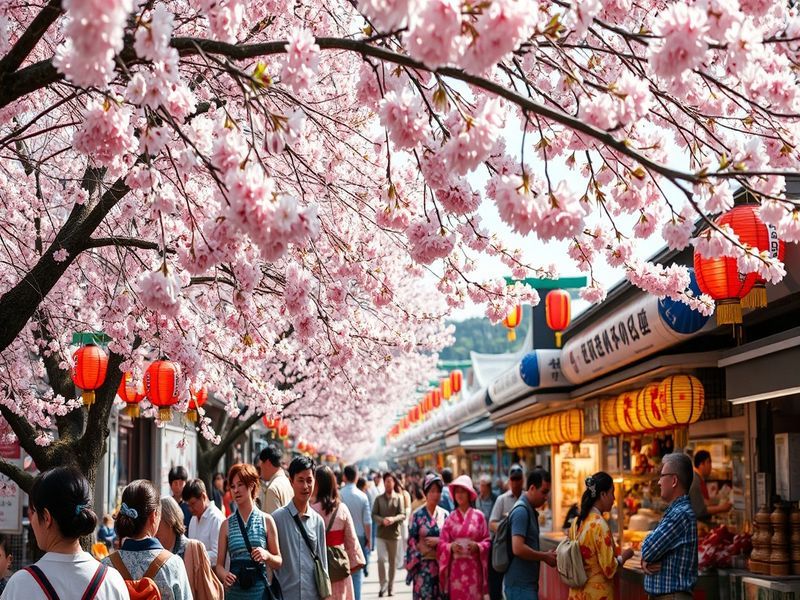
The arrival of spring is marked by many traditions, but few are as visually stunning or culturally significant as cherry blossom festivals. These events transform entire cities into seas of pink and white, drawing millions of visitors each year. From ancient Japanese traditions to modern global celebrations, cherry blossoms have become a universal symbol of renewal and beauty.
The origins of cherry blossom festivals trace back to Japan, where hanami—literally “flower viewing”—dates back over a thousand years. The Japanese have long revered sakura, the cherry blossom, for its fleeting beauty. The tradition of picnicking under blooming trees began among aristocrats in the Heian period (794–1185) and evolved into a national celebration centuries later. Today, Japan’s cherry blossom festivals are among the most anticipated events on the calendar, blending centuries-old customs with contemporary festivities.
The Cultural Significance of Cherry Blossoms
In Japanese culture, cherry blossoms embody the concept of mono no aware, a bittersweet awareness of the impermanence of life. The blossoms’ brief blooming period—typically just one to two weeks—serves as a reminder of life’s fragility and the beauty found in transience. This philosophy extends beyond aesthetics, influencing art, literature, and even business practices in Japan.
Cherry blossoms also hold political and social symbolism. During World War II, the Japanese government promoted sakura as a metaphor for fallen soldiers—beautiful yet short-lived. Post-war, the blossoms became a symbol of peace and resilience. In modern times, they represent hope and new beginnings, making them a fitting emblem for spring festivals worldwide.
Major Cherry Blossom Festivals Around the Globe
While Japan remains the epicenter of cherry blossom celebrations, other countries have embraced the tradition, often adapting it to local customs. Below are some of the most renowned festivals:
-
Japan: The Tokyo and Kyoto Festivals
The most famous celebrations occur in Tokyo and Kyoto. Tokyo’s Ueno Park festival attracts over a million visitors, featuring traditional performances, food stalls, and illuminated nighttime viewings. Kyoto’s festival, held along the Philosopher’s Path, emphasizes the historical and cultural roots of hanami, with tea ceremonies and classical music performances.
-
Washington, D.C.: The National Cherry Blossom Festival
This festival commemorates the 1912 gift of 3,000 cherry trees from Tokyo to Washington, D.C. The event spans four weeks and includes a parade, fireworks, and the Blossom Kite Festival. The Tidal Basin, lined with over 3,700 trees, becomes a focal point for both locals and tourists.
-
Vancouver, Canada: The Cherry Blossom Festival
Vancouver’s festival is one of the largest in North America, celebrating the city’s diverse cultural landscape. Events range from art installations to cycling tours through blossom-lined streets. The festival also highlights the city’s Japanese heritage, with collaborations between local Japanese-Canadian communities and broader multicultural groups.
-
Brooklyn, New York: The Sakura Matsuri
Held at the Brooklyn Botanic Garden, this festival is the largest Japanese cultural event in New York City. It features taiko drumming, martial arts demonstrations, and a traditional tea ceremony. The garden’s collection of over 200 cherry tree varieties ensures a prolonged blooming season, extending the festival’s appeal.
-
Hamburg, Germany: The Alstervergnügen Cherry Blossom Festival
Europe’s most prominent cherry blossom celebration takes place in Hamburg’s Planten un Blomen park. The festival incorporates German and Japanese traditions, including jazz performances and lantern-lit evening walks. It attracts visitors from across Europe, drawn by the rare sight of cherry blossoms in a maritime climate.
These festivals highlight how cherry blossoms have transcended their Japanese origins to become a global phenomenon. Each event reflects the unique cultural and historical context of its host city, yet all share a common thread: the celebration of spring’s fleeting beauty.
The Economic and Social Impact of Cherry Blossom Festivals
Beyond their cultural and aesthetic appeal, cherry blossom festivals have significant economic and social benefits. In Japan, the annual blooming season is a boon for tourism, with cities like Kyoto and Osaka reporting substantial increases in hotel bookings and local spending. According to the Japan National Tourism Organization, cherry blossom tourism contributes billions of yen to the economy each year.
In Washington, D.C., the National Cherry Blossom Festival generates over $100 million in economic activity, supporting local businesses, restaurants, and hotels. The festival also fosters community engagement, with volunteer programs and educational workshops that bring together diverse groups. Similarly, Vancouver’s festival has been credited with revitalizing neighborhoods and promoting intercultural dialogue.
These events also serve as platforms for cultural exchange. For example, the Brooklyn Botanic Garden’s Sakura Matsuri partners with Japanese cultural organizations to offer language classes, film screenings, and workshops on traditional crafts. Such collaborations not only enrich the festival experience but also strengthen ties between diaspora communities and their host countries.
Challenges and Environmental Concerns
Despite their popularity, cherry blossom festivals face challenges, particularly from climate change. Warmer temperatures have disrupted traditional blooming cycles, with some trees flowering earlier or failing to bloom at all. In Japan, the government has invested in research to develop more resilient cherry tree varieties, while festivals in North America and Europe are adapting by diversifying tree species.
Overcrowding is another issue. In Washington, D.C., the festival’s popularity has led to concerns about environmental degradation, particularly around the Tidal Basin. To mitigate this, organizers have implemented timed entry systems and expanded viewing areas to reduce pressure on sensitive ecosystems. Similar measures are being adopted in other major cities to ensure the sustainability of these celebrations.
The growing global interest in cherry blossom festivals also raises questions about cultural appropriation. Some critics argue that the commercialization of hanami in non-Japanese contexts strips the tradition of its cultural significance. In response, many festivals now include educational components, such as lectures on the history of sakura or collaborations with Japanese artists and scholars, to honor the tradition’s roots.
Beyond the Festivals: The Science and Symbolism of Cherry Blossoms
Cherry blossoms are more than just a visual spectacle; they are a subject of scientific study. Researchers in Japan and abroad have explored the genetic diversity of cherry trees, with some varieties now preserved in botanical gardens worldwide. The National Park Service in the U.S. has even planted disease-resistant cherry trees in Washington, D.C., to ensure the longevity of the festival’s namesake blooms.
The symbolism of cherry blossoms extends into contemporary art and literature. In 2020, the Brooklyn Botanic Garden commissioned a series of murals by Japanese artists, blending traditional ukiyo-e techniques with modern street art. Meanwhile, authors like Naomi Novik have drawn on the themes of mono no aware in their works, using cherry blossoms as metaphors for love, loss, and transformation.
For those unable to attend a festival in person, technology offers a way to experience the magic. Virtual reality tours, live-streamed blossom viewings, and augmented reality apps allow users to “walk” through cherry-lined streets or learn about the trees’ history from anywhere in the world. These innovations ensure that the spirit of hanami remains accessible, even in an era of travel restrictions and social distancing.
Conclusion: A Tradition That Blooms Across Borders
Cherry blossom festivals are a testament to humanity’s shared appreciation for beauty and impermanence. From the ancient gardens of Kyoto to the bustling streets of Washington, D.C., these events bring people together, transcending cultural and geographical boundaries. They remind us to pause and appreciate the fleeting moments that define our lives.
As climate change and globalization reshape our world, the future of cherry blossom festivals may evolve. Yet their core message remains timeless: life is transient, but its beauty is worth celebrating. Whether through a quiet moment of reflection under a blooming tree or a lively festival with thousands of others, the tradition of hanami continues to inspire and unite.
For those eager to experience this phenomenon firsthand, planning ahead is key. Cherry blossom seasons vary by region—typically late March to early April in Japan, and April in North America and Europe. Mark your calendars, and prepare to be swept away by the pink and white tide of spring.