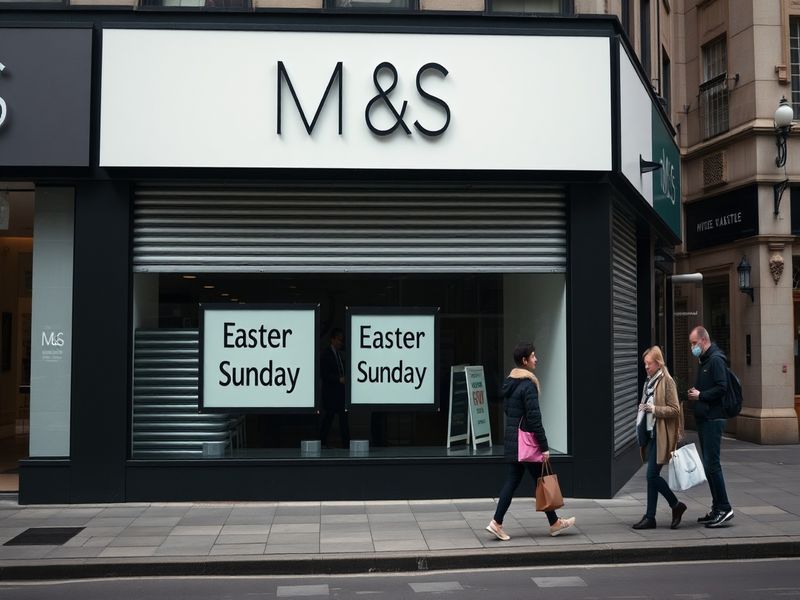
M&S Closes on Easter Sunday: A Cultural Reflection
Marks & Spencer (M&S), the iconic British retailer, has announced its decision to close its stores on Easter Sunday. This move has sparked conversations about retail practices, consumer behavior, and societal values. Easter, a significant holiday for many, has long been associated with family gatherings, religious observances, and a pause from the hustle and bustle of everyday life. M&S’s closure is not just a business decision; it reflects broader cultural trends regarding work-life balance and community engagement.
The Significance of Easter Sunday
Easter Sunday holds a unique place in the calendar for various reasons. Primarily a Christian holiday, it celebrates the resurrection of Jesus Christ, symbolizing hope and renewal. However, its significance extends beyond religious contexts. Many people, regardless of their faith, use this time to connect with family and friends, often sharing meals and traditions.
The decision to close on this day aligns with a growing trend among retailers to respect public holidays. Such closures are not merely about adhering to tradition; they also cater to consumers’ desires for a slower pace during significant times of the year. In a society that often prioritizes productivity, M&S’s closure allows employees and customers alike to enjoy a day without the demands of shopping.
Global Perspectives on Retail Closures
Retail closures on holidays vary significantly around the globe. In some countries, it is customary for businesses to shut down entirely during major holidays, while in others, it is more common to remain open. Here are a few examples:
- United States: Many retailers, including large chains, have opted to close on Thanksgiving and Christmas, recognizing the importance of family time.
- Germany: Strict laws govern shop hours, leading to widespread closures on Sundays and public holidays, promoting a culture of rest.
- Japan: Retailers often remain open during holidays, catering to a consumer base that values convenience and shopping as a leisure activity.
These differing approaches highlight a cultural dichotomy between the desire for consumerism and the need for community and rest. M&S’s decision to close on Easter Sunday places it in the camp that values the latter, resonating with many shoppers who appreciate the opportunity to take a break from their busy lives.
Consumer Reactions and Societal Impact
The announcement has elicited mixed reactions from consumers. Many have expressed support for the closure, viewing it as a necessary step for promoting work-life balance. Others, however, have voiced disappointment, particularly those who rely on last-minute shopping or who see Easter as an opportunity for retail therapy.
Furthermore, the decision may have broader implications for the retail industry. As companies like M&S take a stand on holiday closures, it could influence smaller retailers to follow suit. This change may lead to a ripple effect, where consumers begin to expect similar practices from other brands. The potential for a shift in shopping culture could be significant, fostering a greater appreciation for holidays as times for rest and reflection.
In addition to the direct impact on shoppers, M&S’s closure can also be seen as a move towards corporate social responsibility. By prioritizing employee well-being and family time, the company positions itself as a brand that cares about more than just profits. This approach may enhance customer loyalty, as consumers increasingly gravitate towards businesses that align with their values.
Conclusion
The decision for M&S to close on Easter Sunday is more than a simple operational change; it is a reflection of evolving societal values regarding work, family, and community. As consumers navigate the complexities of modern life, retailers that embrace these principles may find themselves better positioned for success. M&S’s stance may inspire other brands to consider the importance of holidays and the role of retail in fostering a balanced lifestyle. Ultimately, this decision could pave the way for a new understanding of how businesses operate during significant cultural moments.
As the conversation continues, it will be interesting to observe how this decision influences consumer behavior and the broader retail landscape. Will more retailers follow suit, or will the demand for convenience and shopping prevail? Only time will tell.