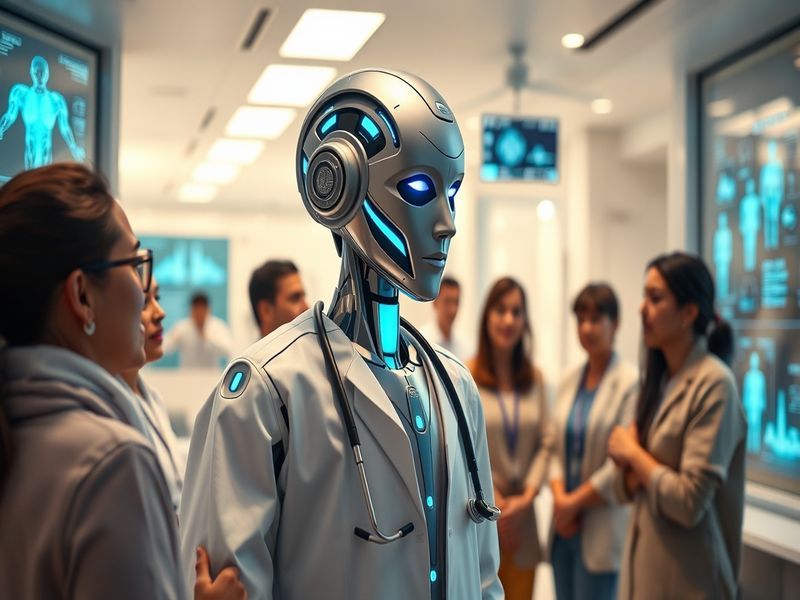
The AI Doc: Transforming Healthcare with Artificial Intelligence
The AI Doc: Revolutionizing Healthcare
The integration of artificial intelligence (AI) into healthcare has transformed the way medical professionals diagnose and treat patients. The AI Doc exemplifies this transformation, providing tools that enhance clinical decision-making, streamline administrative tasks, and improve patient outcomes. As AI technologies continue to evolve, their potential impact on healthcare becomes increasingly significant.
Understanding the AI Doc
The AI Doc refers to a range of AI-driven applications and systems designed to assist healthcare providers. These systems leverage vast amounts of medical data and advanced algorithms to deliver insights that can aid in various aspects of patient care. Key features of AI Doc systems include:
- Predictive Analytics: Utilizing historical data to forecast patient outcomes.
- Natural Language Processing (NLP): Enabling the extraction of meaningful information from unstructured medical texts.
- Image Recognition: Assisting in the analysis of medical imaging for faster diagnosis.
- Personalized Medicine: Tailoring treatment plans based on individual patient data.
These features showcase how AI can enhance the efficiency and accuracy of healthcare delivery. For instance, predictive analytics can help identify patients at risk for chronic conditions, allowing for early intervention and potentially saving lives.
Benefits of AI in Healthcare
The implementation of AI technologies offers several advantages in the healthcare sector. Some of the most notable benefits include:
- Improved Diagnostic Accuracy: AI algorithms can analyze complex data sets more quickly than human practitioners, leading to more accurate diagnoses.
- Enhanced Operational Efficiency: Automating routine administrative tasks reduces the burden on healthcare staff, allowing them to focus on patient care.
- Cost Reduction: By predicting complications and streamlining processes, AI can help lower healthcare costs over time.
- Increased Access to Care: AI-driven telehealth solutions can extend healthcare services to remote areas, improving access for underserved populations.
Each of these benefits contributes to a more effective healthcare system. For example, improved diagnostic accuracy not only enhances patient safety but also builds trust in medical technology.
Challenges and Considerations
Despite its potential, the integration of AI in healthcare is not without challenges. Issues such as data privacy, algorithmic bias, and the need for regulatory oversight require careful consideration. Here are some of the primary challenges:
- Data Privacy: Ensuring patient data is secure and used ethically is paramount, as breaches can have severe consequences.
- Algorithmic Bias: AI systems trained on biased data may produce skewed results, potentially leading to unequal treatment outcomes.
- Regulatory Hurdles: The lack of clear guidelines on the use of AI in healthcare can slow down innovation and implementation.
- Integration with Existing Systems: Merging AI technologies with current healthcare infrastructures can be complex and costly.
Addressing these challenges is essential for the successful adoption of AI in healthcare. Stakeholders must collaborate to establish ethical guidelines and regulatory frameworks that promote innovation while protecting patients’ rights.
The Future of AI in Healthcare
Looking ahead, the future of AI in healthcare appears promising. As technology continues to advance, AI’s capabilities will expand, offering even more sophisticated tools for healthcare providers. Potential developments include:
- AI-driven Robotics: Enhancing surgical precision and patient care through robotic assistance.
- Wearable Technology: Integrating AI with wearable devices for real-time health monitoring and personalized feedback.
- Telemedicine Evolution: Further advancements in AI could improve virtual consultations, making them more effective and user-friendly.
These innovations could lead to a more proactive approach to healthcare, emphasizing prevention and early intervention. As AI continues to evolve, it holds the potential to redefine patient care and reshape the healthcare landscape.
In conclusion, the AI Doc is at the forefront of a significant shift in healthcare delivery. By enhancing diagnostic accuracy, improving operational efficiency, and increasing access to care, AI technologies are transforming the medical field. However, addressing the associated challenges will be crucial to ensure that these advancements benefit all patients equitably. As we look to the future, the potential of AI in healthcare remains vast and largely untapped.