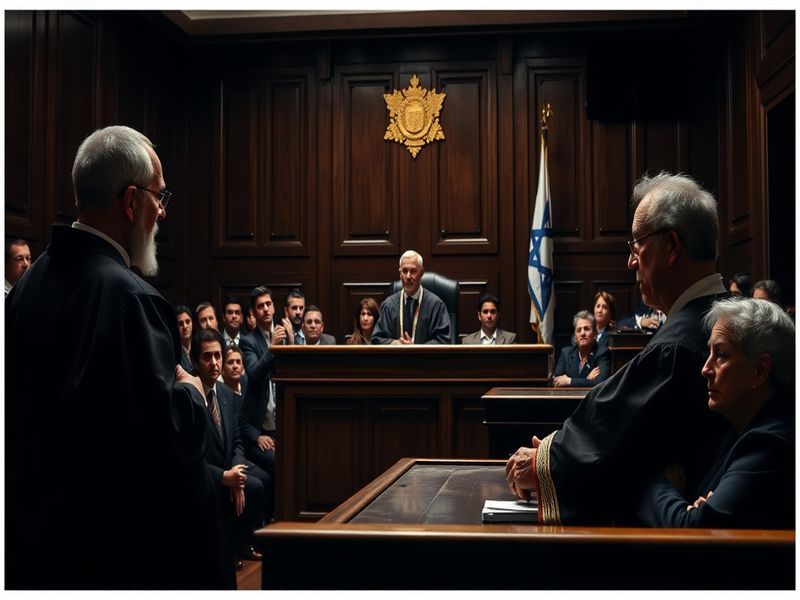
Understanding the Death Penalty in Israel
The death penalty has long been a contentious issue worldwide, with various nations adopting differing stances based on historical, cultural, and political contexts. In Israel, the debate surrounding capital punishment is particularly intricate, influenced by the nation’s unique circumstances and values.
A Brief History of Capital Punishment in Israel
Israel’s legal framework regarding the death penalty is relatively limited. Officially, the death penalty was enacted in 1950, primarily aimed at Nazi war criminals. The only execution carried out in Israel was that of Adolf Eichmann in 1962, who was found guilty of crimes against humanity.
Since then, the use of capital punishment has been highly restricted. In 1981, the Knesset (Israel’s parliament) passed legislation that allowed for the death penalty to be imposed on those convicted of certain heinous crimes, such as genocide and treason. However, the legal and ethical implications of the death penalty have led to intense debates over its application.
Current Legal Framework and Public Opinion
Today, Israel maintains a very narrow scope for the death penalty, with only a handful of cases where it could theoretically be applied. The legal system emphasizes rehabilitation over punishment, reflecting a broader societal belief in the potential for change. This is particularly relevant in a nation that has faced numerous conflicts and has a diverse population with varying beliefs about justice and morality.
Public opinion on the death penalty in Israel is divided. Some argue for its reinstatement, especially in cases involving terrorism, while others advocate for its abolition on moral grounds. According to recent surveys, support for the death penalty fluctuates, often influenced by current events and security concerns. For instance:
- Support rises during periods of heightened violence.
- Opposition is often rooted in ethical considerations and the potential for wrongful convictions.
- Many citizens prefer life imprisonment as a more humane alternative.
Global Perspectives on the Death Penalty
When examining the death penalty from a global perspective, it is essential to consider the varying cultural contexts that shape its acceptance or rejection. Countries like the United States and China maintain active death penalty statutes, while many European nations have abolished it entirely.
In many cultures, the death penalty is viewed as a necessary tool for maintaining order and delivering justice. In contrast, other societies see it as an outdated form of punishment that fails to deter crime effectively. The debate often revolves around several key points:
- Deterrence: Does the death penalty effectively deter crime?
- Moral Implications: Is it ethical for the state to take a life?
- Judicial Errors: What happens if an innocent person is executed?
- Rehabilitation: Is there a possibility for change in individuals?
The Future of Capital Punishment in Israel
The future of the death penalty in Israel remains uncertain. Legislative changes may arise in response to public sentiment and security issues. As the nation continues to grapple with its identity and moral values, the conversation around capital punishment will likely evolve.
Moreover, the international community’s stance on human rights will continue to influence Israel’s policies. Increasingly, nations are moving towards abolishing the death penalty, viewing it as incompatible with modern legal and ethical standards. As Israel navigates its path, it must consider not only its internal values but also its position on the global stage.
In conclusion, the death penalty in Israel reflects a complex interplay of history, culture, and ethics. While its application remains limited, the ongoing debates highlight the challenges of balancing justice with humanity. As discussions continue, the nation must confront profound questions about morality, justice, and the future of its legal system.