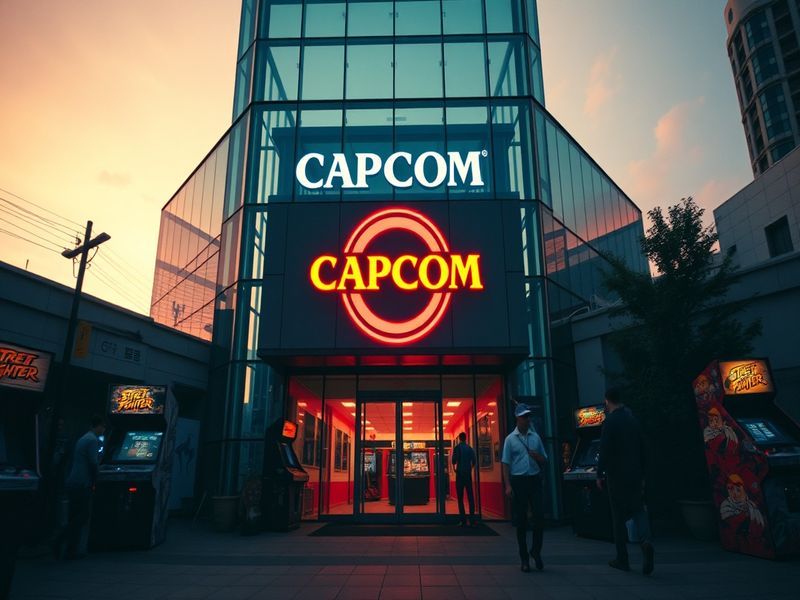
For over four decades, Capcom has stood as one of gaming’s most enduring and influential developers. Born from the merger of two struggling Japanese companies in 1979, the company evolved from arcade cabinets to household names like Resident Evil and Street Fighter. Its journey reflects broader shifts in technology, culture, and the global reach of interactive entertainment.
Today, Capcom remains a case study in resilience, balancing blockbuster franchises with niche experimentation. It’s a company that has weathered industry crashes, technological revolutions, and shifting consumer tastes—all while maintaining a distinct identity rooted in strong characters, tight gameplay, and bold visuals.
The Early Years: From Arcade Roots to Global Ambition
Capcom began as a collaboration between former employees of both Irem and Sanritsu, two companies that had struggled in Japan’s crowded arcade market. The name “Capcom” itself is a portmanteau of “Capsule” and “Computer,” reflecting its early focus on compact, high-quality arcade hardware. In 1983, Capcom released Vulgus, its first original game, but it was 1984’s 1942—a vertical-scrolling shooter—that first drew international attention.
By the mid-1980s, Capcom had established itself as a leader in arcade innovation. Games like Ghosts ‘n Goblins (1985) and Strider (1989) showcased its signature blend of precision controls, punishing difficulty, and striking pixel art. These titles weren’t just popular in Japan; they became staples in arcades across North America and Europe, laying the foundation for Capcom’s global brand.
The Arcade Boom and the Rise of Iconic Characters
No discussion of Capcom’s early success is complete without mentioning Street Fighter. Released in 1987, the original one-on-one fighter was overshadowed at first by its rivals. But when Street Fighter II debuted in 1991, it redefined competitive gaming. With its vibrant sprites, combo system, and playable roster of fighters from around the world, the game became a cultural touchstone. It wasn’t just a hit—it was a phenomenon that helped popularize the fighting genre and cemented Capcom’s reputation for creating characters that resonated globally.
The same year, Capcom launched Final Fight, a side-scrolling beat ’em up that further solidified its place in arcades. These games thrived not only in physical locations but also through home consoles, as Capcom adapted to the rise of the Nintendo Entertainment System and Sega Genesis. The company’s ability to transition from arcade to console was key to its survival during the console wars of the 1990s.
The PlayStation Era: Survival Horror and New Frontiers
The mid-1990s brought a new challenge: the decline of arcades and the rise of 3D gaming. While many developers struggled to adapt, Capcom thrived by embracing the shift. In 1996, it released Resident Evil, a survival horror game that redefined the genre. With its fixed camera angles, limited resources, and cinematic storytelling, Resident Evil didn’t just scare players—it immersed them in a new kind of interactive experience.
The game’s success led to a franchise that would become one of Capcom’s most valuable assets. By 2024, the Resident Evil series had sold over 150 million copies worldwide, spawning films, merchandise, and a dedicated fanbase. It also proved that Capcom could evolve beyond its arcade roots while staying true to its core strengths: strong design, memorable characters, and polished gameplay.
Around the same time, Capcom continued to innovate with titles like Devil May Cry (2001), which popularized the “stylish action” genre. The game’s blend of swordplay, gunplay, and over-the-top visuals appealed to a global audience, further expanding Capcom’s influence beyond Japan.
Modern Challenges and a Focus on Legacy
Despite its success, the 2010s presented new challenges. The rise of digital distribution and mobile gaming forced Capcom to rethink its business model. While it continued to support its major franchises with remasters and reboots—such as Resident Evil 2 Remake (2019) and Street Fighter 6 (2023)—it also ventured into mobile with games like Monster Hunter Stories.
These adaptations reflect a broader trend in gaming: the blurring of lines between traditional and mobile platforms. Capcom’s ability to navigate this shift speaks to its long-term strategy of balancing innovation with preservation. The company has also embraced cross-media storytelling, with Resident Evil and Monster Hunter expanding into anime, comics, and live-action films.
Global Reach and Cultural Impact
Capcom’s influence extends far beyond sales numbers. Its characters—from Ryu and Chun-Li to Leon S. Kennedy and Dante—have become cultural icons, recognized even by those who don’t play games. This level of recognition is rare in entertainment, where most franchises fade after a few years. Capcom’s longevity suggests a deep understanding of what makes a character endure: clear motivations, distinct visuals, and gameplay that feels rewarding.
The company’s games have also played a role in shaping esports. The Street Fighter series, in particular, has been a staple of competitive gaming since the early 2000s. Events like the Evolution Championship Series (EVO) have turned fighting games into spectator sports, with Capcom’s titles at the center of the action. This has helped gaming gain legitimacy as a mainstream form of entertainment, particularly in Asia and North America.
What’s Next for Capcom?
As Capcom looks to the future, it faces both opportunities and challenges. The gaming industry continues to grow, with new platforms like cloud gaming and virtual reality offering fresh avenues for innovation. At the same time, Capcom must contend with rising development costs, increasing competition, and the expectations of a fanbase that has grown up with its franchises.
One area where Capcom has shown promise is in remastering and reimagining its classic titles. Games like Resident Evil 4 Remake (2023) have demonstrated that even decades-old properties can find new life with modern technology. These projects not only satisfy long-time fans but also introduce Capcom’s legacy to younger players.
Another key focus is diversity. While Capcom has historically been associated with action and horror, recent releases like Exoprimal (2023) and Ghosts ‘n Goblins Resurrection (2021) show a willingness to experiment with new genres. This adaptability is crucial in an industry where trends can shift rapidly.
Lessons from Capcom’s Journey
Capcom’s story offers several lessons for the gaming industry and beyond. First, it shows the importance of strong IP. Franchises like Street Fighter and Resident Evil have sustained the company for decades, proving that investment in storytelling and character development pays off.
Second, Capcom’s ability to evolve with technology—from arcades to 3D consoles to modern gaming PCs—highlights the need for adaptability. The companies that survive and thrive are those that can pivot without losing sight of their core identity.
Finally, Capcom’s global success underscores the power of cultural exchange. Games like Monster Hunter and Devil May Cry blend Japanese aesthetics with universal themes, making them accessible to players worldwide. This cross-cultural appeal is a key factor in Capcom’s enduring relevance.
Conclusion: A Legacy Built on Characters and Innovation
From its humble beginnings in a Japanese arcade to its current status as a global gaming powerhouse, Capcom’s journey is a testament to perseverance, creativity, and strategic vision. The company has weathered industry upheavals, technological revolutions, and changing consumer tastes—all while maintaining a distinct voice in a crowded market.
As gaming continues to evolve, Capcom’s role as a bridge between past and future remains vital. Whether through remasters, new IPs, or esports, the company is poised to keep shaping the industry for years to come. For fans and newcomers alike, Capcom’s legacy is a reminder that great games—and great characters—transcend time.