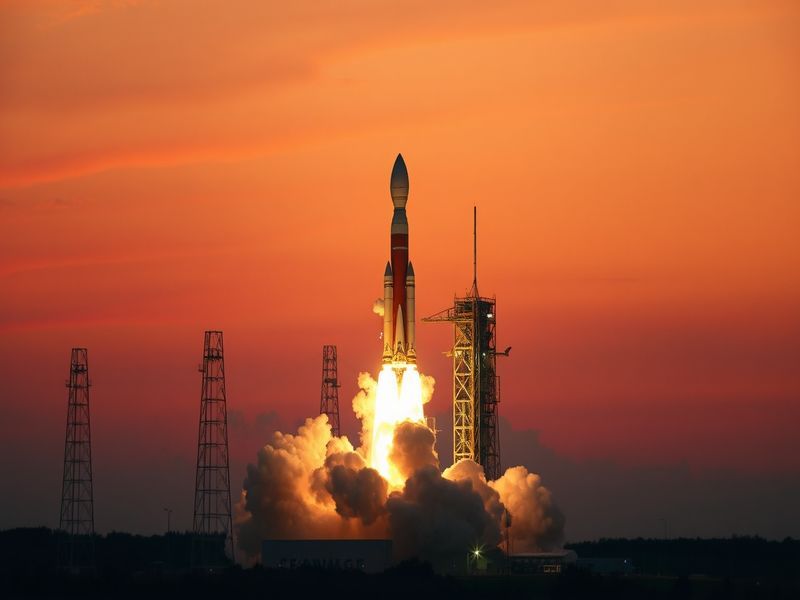
The sight of a rocket ship piercing the sky remains one of humanity’s most awe-inspiring achievements. Whether framed as a scientific triumph or a cultural moment, launches draw millions of eyes—both in person and through livestreams. The spectacle isn’t confined to launchpads in Florida or Kazakhstan. It unfolds in real time across continents, uniting diverse audiences in shared wonder.
From the first Sputnik launch in 1957 to modern private spaceflights, rocket launches have evolved into multimedia events. They are broadcast globally, analyzed by experts, and celebrated in communities far beyond aerospace engineering. This fusion of innovation and spectacle has transformed space travel into a public ritual, one that reflects both technological progress and societal values.
The Evolution of Rocket Launches: From Cold War Rivalry to Commercial Spaceflight
Rocket launches began as symbols of Cold War competition. The Soviet Union’s 1957 Sputnik launch stunned the world, sparking the space race and igniting national pride. The U.S. responded with the Apollo program, culminating in the 1969 moon landing—a moment watched by over 600 million people. These early launches were more than technical feats; they were political declarations.
Today, the landscape has shifted. Private companies like SpaceX and Blue Origin have redefined access to space. SpaceX’s reusable Falcon rockets, for example, have slashed launch costs, making orbital missions routine. In 2020, SpaceX’s Crew Dragon became the first commercially built spacecraft to carry astronauts to the International Space Station. This milestone marked a turning point: spaceflight was no longer solely a government endeavor.
Commercial launches have also diversified. Beyond satellites and cargo, companies now offer space tourism. In 2021, Blue Origin and Virgin Galactic sent civilian passengers on brief suborbital flights. These missions, though brief, have sparked debates about ethics, accessibility, and the future of space exploration.
Key Milestones in Rocket Launch History
- 1957: Sputnik 1 launches, beginning the space age.
- 1961: Yuri Gagarin becomes the first human in space.
- 1969: Apollo 11 lands on the moon, watched by 600 million.
- 1981: First Space Shuttle launch marks the era of reusable spacecraft.
- 2004: SpaceShipOne wins the Ansari X Prize, paving the way for private spaceflight.
- 2020: SpaceX’s Crew Dragon carries astronauts to the ISS.
- 2021: Blue Origin and Virgin Galactic launch civilian space tourists.
Rocket Launches as Cultural Phenomena: Media, Art, and Public Imagination
Rocket launches transcend science—they are cultural touchstones. The Apollo missions inspired generations of scientists and artists. Filmmakers like Stanley Kubrick and George Lucas wove space travel into the fabric of popular culture. Today, launches are live-streamed events, often accompanied by social media commentary and artistic responses.
In India, the 2014 Mars Orbiter Mission (Mangalyaan) became a source of national pride. The rocket’s successful launch was celebrated across media outlets, with citizens sharing the moment through hashtags and public gatherings. Similarly, China’s 2020 Chang’e-5 lunar mission was met with widespread enthusiasm, reinforcing spaceflight’s role in national identity.
Artists, too, have engaged with rocket launches as symbols of aspiration and ambition. The 1960s saw pop art interpretations of space, while contemporary creators use digital media to explore themes of exploration and isolation. Launches even inspire fashion, with space-themed collections by brands like Balenciaga and Louis Vuitton.
How Launches Shape Global Narratives
- National Identity: Countries like the U.S., Russia, China, and India use launches to project technological prowess and unity.
- Youth Inspiration: STEM education programs often tie into launch events, encouraging students to pursue science and engineering.
- Artistic Expression: From murals in Cape Canaveral to digital art inspired by Mars missions, creativity flourishes around launches.
- Economic Impact: Launch sites stimulate local economies, from tourism to aerospace industry jobs.
Behind the Scenes: The Science and Engineering of a Rocket Launch
A successful rocket launch is the result of years of planning. Engineers conduct thousands of simulations, testing everything from propulsion systems to weather conditions. The countdown sequence—often broadcast live—is a carefully choreographed ritual, marking the final minutes before liftoff.
Weather plays a critical role. High winds, lightning, or even temperature fluctuations can delay a launch. In 2018, SpaceX postponed a Falcon 9 launch due to rough seas, as the rocket’s first stage was destined to land on a drone ship. Precision is paramount; even a one-second delay can disrupt orbital mechanics.
Once launched, the rocket undergoes multiple stages of separation. The first stage, often reusable, detaches and returns to Earth. The second stage propels the payload into orbit or beyond. For missions to the moon or Mars, additional maneuvers are required, such as lunar flybys or trajectory corrections.
Tracking systems monitor every aspect of the flight. Ground stations and satellites relay data in real time, ensuring the mission stays on course. In the event of an anomaly, engineers must make split-second decisions—whether to abort or adjust the flight path.
Critical Phases of a Rocket Launch
- Liftoff: The moment of ignition, when thrust overcomes gravity.
- Max Q: The point of maximum aerodynamic pressure, where structural stress is highest.
- Stage Separation: The first stage detaches, allowing the second stage to continue.
- Payload Deployment: The spacecraft or satellite is released into orbit.
- Re-entry (if applicable): Reusable stages return to Earth for recovery.
The Future of Rocket Launches: Sustainability, Exploration, and New Frontiers
The next decade of rocket launches promises to be transformative. NASA’s Artemis program aims to return humans to the moon by 2025, with plans for sustainable lunar bases. SpaceX’s Starship, designed for Mars colonization, is undergoing rigorous testing, with its first orbital flight anticipated soon.
Sustainability is a growing focus. Companies are developing greener propellants and exploring ways to reduce space debris. The European Space Agency, for instance, is testing reusable rocket stages inspired by SpaceX’s design. Meanwhile, private firms are investing in orbital refueling stations, which could extend the lifespan of satellites and spacecraft.
Beyond Earth, launches are paving the way for interplanetary exploration. Missions to Mars, such as NASA’s Perseverance rover and China’s Tianwen-1, rely on precise launch windows and advanced propulsion systems. These efforts are not just scientific—they are reshaping humanity’s place in the cosmos.
Yet challenges remain. Geopolitical tensions can complicate international collaborations, while the environmental impact of rocket fuel continues to spark debate. As launches become more frequent, the need for global regulations and ethical frameworks grows more urgent.
Emerging Trends in Rocket Technology
- Reusable Rockets: Lowering costs and increasing launch frequency.
- Green Propellants: Developing eco-friendly fuels to reduce pollution.
- Orbital Infrastructure: Building space stations and refueling depots.
- Lunar and Martian Missions: Preparing for human settlement beyond Earth.
- Small Satellite Launches: Enabling rapid deployment of constellations for communication and Earth observation.
Rocket launches are more than technical achievements—they are windows into the future. They reflect our collective dreams of exploration, innovation, and connection. As technology advances and ambitions grow, these launches will continue to captivate audiences worldwide, uniting us in the shared pursuit of the unknown.
For those inspired by spaceflight, the next decade offers unprecedented opportunities. Whether through education, careers in aerospace, or simply watching the next launch, the journey has only just begun.
To learn more about the intersection of technology and culture, visit our Technology section. For a deeper dive into space exploration’s impact on society, explore our Science category.