The Teacher Season 3: How the Series Keeps Reinventing Itself
The third season of The Teacher arrives not just as a continuation, but as a statement. The anthology-style series, which began as a darkly comedic thriller about a substitute teacher’s deadly secret, has evolved into something more complex with each installment. Season 3 leans further into psychological tension while sharpening its social commentary, proving that prestige television doesn’t always need sprawling arcs or large casts to make a lasting impact.
This season follows a new protagonist—another outsider navigating a system that seems rigged against them—while maintaining the show’s signature tone: equal parts unsettling and wryly observant. The writing balances sharp dialogue with moments of quiet dread, ensuring that tension lingers long after the credits roll. With streaming platforms prioritizing binge-worthy content, The Teacher distinguishes itself by delivering compact, high-stakes storytelling that rewards attention rather than distraction.
What Sets Season 3 Apart
The Teacher has always thrived on its ability to subvert expectations. Season 1 introduced us to a seemingly ordinary man with extraordinary violence lurking beneath the surface. Season 2 expanded the scope by exploring the ripple effects of his actions, weaving in themes of institutional failure and moral ambiguity. Season 3 takes a different approach—it narrows its focus to a single, claustrophobic setting, where trust is a liability and every interaction could be a trap.
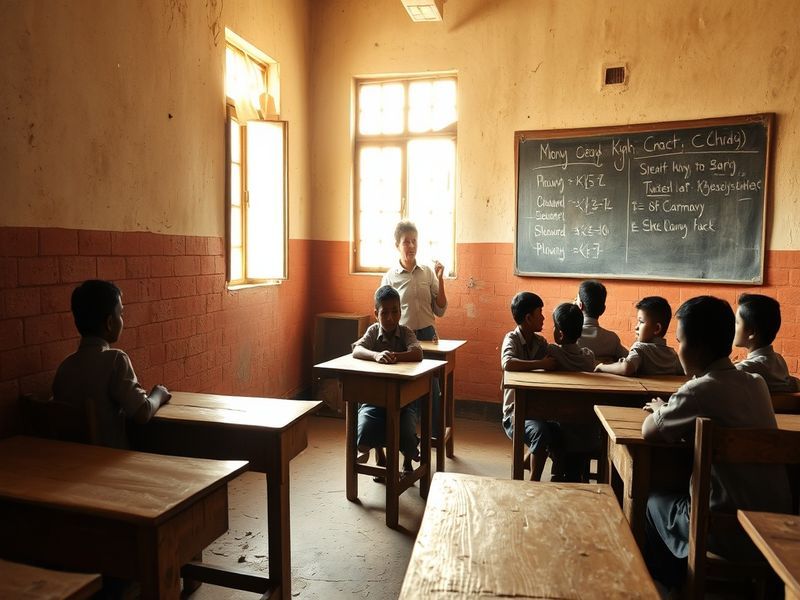
The season’s central location—a remote boarding school—serves as both a prison and a pressure cooker. The confined environment amplifies the psychological strain on characters, making their decisions feel heavier with each passing episode. The writing avoids easy answers, forcing viewers to sit with discomfort rather than resolve. It’s a bold choice in an era where serialized storytelling often prioritizes neat resolutions over thematic depth.
Key Elements That Define the Season
- Unreliable Narrators: No character is entirely trustworthy, and the line between victim and villain blurs repeatedly. The protagonist’s motivations remain deliberately opaque, leaving audiences to question every confession and denial.
- Minimalist Aesthetic: The cinematography strips away excess, using stark lighting and tight close-ups to heighten paranoia. The school’s cold, institutional halls feel like a character themselves—oppressive and inescapable.
- Social Undercurrents: Beneath the thriller framework, the season interrogates class, power, and the illusion of safety in controlled environments. It’s less about shock value and more about the quiet erosion of dignity.
- Subversive Humor: The dark comedy that defined earlier seasons persists, but it’s darker now—less punchline-driven, more a coping mechanism in a world where cruelty is normalized.
The result is a season that feels both familiar and fresh. Fans of the series will recognize its DNA, but newcomers won’t feel lost. The show’s refusal to repeat itself keeps it from becoming stale, a rare feat in today’s crowded TV landscape.
The Broader Implications of The Teacher
On the surface, The Teacher is a psychological thriller, but its resonance goes deeper. The series taps into anxieties about authority, systemic rot, and the fragility of human connection—topics that feel increasingly relevant in a post-pandemic world where isolation and distrust are pervasive.
Season 3, in particular, reflects a cultural moment where institutions are scrutinized like never before. The boarding school setting isn’t just a backdrop; it’s a microcosm of societal structures that demand compliance while failing to protect. The protagonist’s struggle to navigate this world mirrors real-world battles against bureaucracy, predatory systems, and the erosion of empathy in public life.
Critics have noted how the show’s detached tone mirrors the emotional numbness of modern life. Yet, it’s this very detachment that makes its moments of raw humanity so striking. When vulnerability does surface, it lands with unexpected force, underscoring the show’s ability to balance cynicism with quiet hope.
Why The Teacher Matters in Today’s TV Landscape
In an era dominated by franchises and interconnected universes, The Teacher stands out for its self-contained brilliance. Each season tells a complete story, avoiding the pitfalls of over-reliance on lore or spin-offs. This approach allows the series to take risks—like shifting genres or tones—that more formulaic shows wouldn’t dare attempt.
The third season, in particular, demonstrates how anthology series can evolve without losing their core identity. It’s a masterclass in controlled storytelling, where every scene serves a purpose. The pacing is deliberate, rewarding viewers who engage fully rather than passively consume. It’s a refreshing antidote to the quick-cut, attention-grabbing content that dominates streaming platforms.
Moreover, the show’s success highlights a growing appetite for character-driven thrillers that prioritize atmosphere over spectacle. While big-budget productions chase visual effects and CGI set pieces, The Teacher proves that tension can be manufactured from a single well-timed glance or a lingering silence. It’s a testament to the power of restraint in an industry that often confuses excess with quality.
What’s Next for the Series?
With Season 3 now available to stream, speculation about Season 4 is inevitable. Will the anthology format continue? Could we see a return to the original protagonist, now older and perhaps more desperate? The show’s creators have remained tight-lipped, but one thing is clear: The Teacher isn’t interested in resting on its laurels.
What remains to be seen is whether the series can sustain its momentum. Anthology shows often struggle with audience retention between seasons, but The Teacher has cultivated a devoted following thanks to its consistency and originality. If Season 4 maintains the same level of craftsmanship, it could cement the series as a modern classic of the thriller genre.
For now, Season 3 offers a masterclass in how to innovate within constraints. It’s a reminder that great television doesn’t need to be loud to be heard—and sometimes, the quietest stories leave the loudest echoes.
For more on the evolution of psychological thrillers and their cultural impact, explore our coverage of Entertainment trends and in-depth analyses of modern storytelling techniques.