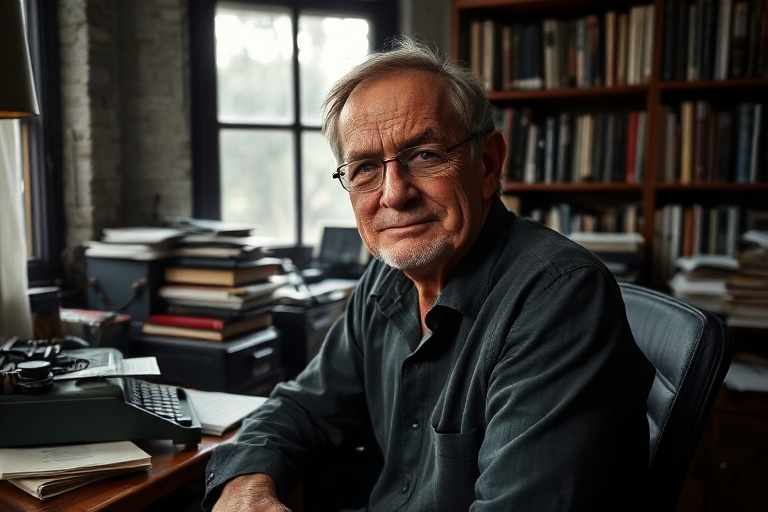
Charlotte Griffiths: How One Artist Is Merging Craft and Technology
Charlotte Griffiths stands at the intersection of innovation and tradition, crafting a body of work that challenges conventional artistic norms. Her approach blends digital experimentation with tactile, organic materials, creating pieces that feel both futuristic and deeply human. With a career spanning over a decade, Griffiths has cultivated a reputation for pushing boundaries in ways that resonate across multiple creative disciplines.
Early Life and Artistic Foundations
Born in Manchester, England, Griffiths grew up surrounded by the city’s rich industrial and artistic heritage. Her childhood was marked by a fascination with both the raw materials of manufacturing and the delicate intricacy of handcrafted art. This duality became a cornerstone of her artistic philosophy. She studied fine arts at the University of the Arts London, where she began to explore the intersections of sculpture, digital media, and performance.
During her formative years, Griffiths worked as an apprentice in a textile workshop, where she learned the patience and precision required for traditional craftsmanship. This experience later informed her digital creations, where she often incorporates handwoven elements into algorithmically generated designs. Her early exhibitions in London’s East End galleries showcased this hybrid approach, earning her critical acclaim for her ability to bridge seemingly disparate worlds.
Key Works and Exhibitions
Griffiths’ portfolio is as diverse as it is cohesive. Some of her most notable works include Fractal Weave, a 2018 installation that combined hand-knitted fabric with projection mapping to create an immersive, ever-changing environment. Another standout piece, Neural Landscapes (2020), used AI-generated imagery to explore themes of memory and perception, exhibited at the Tate Modern’s digital art festival.
Her most recent project, Echo Chambers, debuted at the 2023 Venice Biennale. The exhibition featured a series of kinetic sculptures that responded to the voices of visitors via voice recognition software, transforming sound into physical movement. Critics praised the work for its emotional depth and technical sophistication, noting how it invited viewers to reconsider their role in the creative process.
Below are some key milestones in Griffiths’ career:
- 2015: Graduated from the University of the Arts London with a degree in Fine Arts.
- 2017: Won the Young British Artist Award for her mixed-media sculpture Threadbare.
- 2019: Featured in Frieze London with an installation that explored the tactile qualities of digital art.
- 2021: Collaborated with fashion house Alexander McQueen on a capsule collection integrating her signature woven digital prints.
- 2023: Represented the UK at the Venice Biennale with Echo Chambers.
The Broader Implications of Griffiths’ Work
Griffiths’ art is more than a visual experience; it is a commentary on the evolving relationship between humans and technology. In an era where digital interactions often replace physical ones, her work reminds us of the tactile and emotional dimensions of creation. By merging traditional craftsmanship with cutting-edge technology, she challenges the notion that innovation must come at the expense of heritage.
Her influence extends beyond the art world. In the fashion industry, designers have begun to adopt her techniques, integrating AI and handcrafted elements into their collections. This cross-pollination of disciplines has sparked conversations about the future of creative education, with institutions now offering courses that blend digital and traditional arts. Griffiths herself has become a vocal advocate for interdisciplinary learning, frequently lecturing at universities and industry conferences.
One of the most significant aspects of Griffiths’ work is its accessibility. Unlike many contemporary artists who cater to elite audiences, her pieces often invite public participation, whether through interactive installations or open-source designs that encourage DIY replication. This democratization of art aligns with her belief that creativity should not be confined to galleries or studios but should permeate everyday life.
Looking Ahead: The Future of Griffiths’ Art
As Griffiths continues to evolve, her next project promises to push boundaries even further. Currently in development, Synesthesia Suite will explore the intersection of sound, touch, and vision, using biometric data to create art that adapts in real-time to the emotions of its audience. The project is slated for a 2025 debut at the Centre Pompidou in Paris.
Griffiths’ work also raises important questions about sustainability in art. By repurposing industrial materials and incorporating digital tools that reduce waste, she offers a model for eco-conscious creativity. This aligns with a growing movement within the art world toward sustainability, challenging both artists and institutions to reconsider their environmental impact.
For those interested in exploring more about the intersections of art and technology, Dave’s Locker Culture section offers a wealth of articles on similar themes. Additionally, the Technology section delves into how digital innovation is reshaping creative industries.
Why Griffiths Matters
In a cultural landscape often dominated by fleeting trends and algorithmic curation, Charlotte Griffiths’ work serves as a reminder of the enduring power of human creativity. Her ability to navigate the complexities of tradition and innovation makes her a pivotal figure in contemporary art. As she continues to challenge and inspire, her influence will undoubtedly shape the next generation of artists, designers, and thinkers.
For collectors, enthusiasts, and casual observers alike, Griffiths’ art offers a compelling invitation: to see the world not as it is, but as it could be—where the past and future coexist in harmony.