Earthquake Alert: Causes, Safety Tips and Global Impact Explained
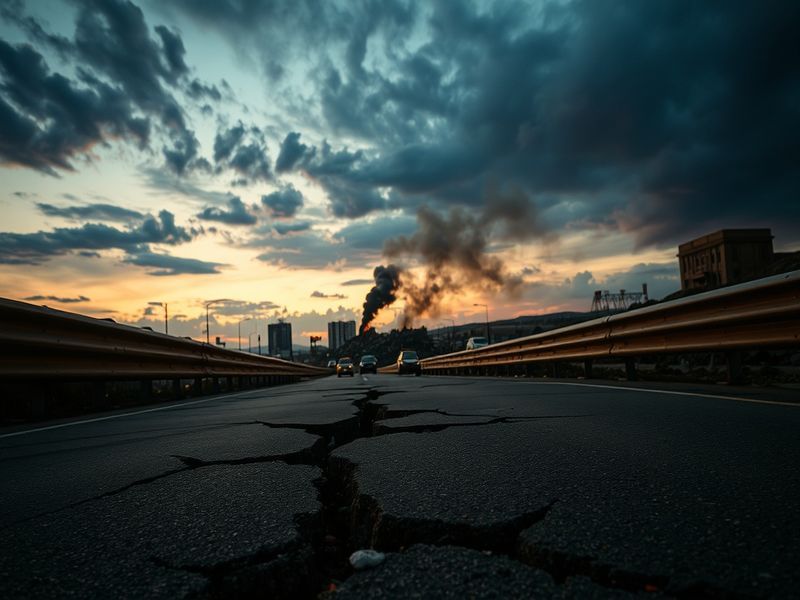
The ground shakes without warning. Windows rattle. Buildings sway. In just seconds, an earthquake can transform a familiar landscape into a scene of chaos. These natural events remind us of Earth’s restless energy, capable of reshaping communities in moments. While some tremors pass unnoticed, others trigger devastating consequences. Understanding earthquakes—why they happen, how they’re measured, and what we can do—is essential for anyone living in or visiting seismically active regions.
The Science Behind Earthquakes: What Causes the Ground to Shake
Earth’s outer shell, called the lithosphere, is broken into tectonic plates that float on the semi-fluid asthenosphere beneath. Most earthquakes occur along the edges of these plates where they grind, collide, or slide past one another. This movement isn’t smooth—friction locks the plates in place until stress builds to a breaking point. When that stress releases, energy radiates outward as seismic waves, causing the ground to shake.
There are three primary types of seismic waves:
- Primary (P) waves: Fastest waves; compress and expand material in the direction of travel. They arrive first and are less destructive.
- Secondary (S) waves: Slower than P waves; move material perpendicular to their path. They cause more intense shaking.
- Surface waves: Travel along Earth’s surface, responsible for the rolling motions that topple buildings and rupture roads.
Not all earthquakes originate from tectonic activity. Some are triggered by volcanic eruptions, human activities like mining or reservoir-induced seismicity, or even fracking operations. The 2011 earthquake in Oklahoma, once rare, became more frequent due to wastewater injection linked to oil and gas production. This human-induced seismicity has raised urgent questions about the balance between energy development and public safety.
Measuring and Monitoring: How Scientists Track Earthquakes
Modern seismology relies on a global network of seismometers—sensitive instruments that detect ground motion. Data from thousands of stations are analyzed in real time to determine an earthquake’s location, depth, and magnitude. The most widely used scale is the Moment Magnitude Scale (Mw), which quantifies the total energy released. Unlike the older Richter scale, which saturates at high magnitudes, the Mw scale remains accurate even for the largest quakes.
Earthquake monitoring has evolved significantly. Today, advanced systems like the USGS ShakeAlert and Japan’s Earthquake Early Warning (EEW) provide seconds to minutes of advance notice before shaking reaches populated areas. While this may seem brief, it’s enough time to trigger automated responses: trains can slow down, gas lines can shut off, and people can drop, cover, and hold on. Such systems have saved lives in regions like California and Japan, where preparedness is a way of life.
However, global coverage remains uneven. Many countries in South Asia, Latin America, and Africa lack sufficient monitoring infrastructure, leaving millions vulnerable to undetected tremors. International cooperation through initiatives like the Global Seismographic Network (GSN) aims to fill these gaps, but funding and political will remain challenges.
Preparation and Response: Building Resilience in Earthquake-Prone Regions
While we cannot prevent earthquakes, we can reduce their impact through preparedness. Structural engineering plays a crucial role. Buildings in high-risk zones must adhere to strict seismic codes—using flexible materials, base isolators, and reinforced foundations. Older structures, especially in cities like Istanbul, Kathmandu, and Los Angeles, often require retrofitting to meet modern standards. Programs like FEMA’s National Earthquake Hazards Reduction Program (NEHRP) provide grants and technical support to help communities upgrade infrastructure.
Individual preparedness is equally vital. Families should maintain an emergency kit with water, non-perishable food, flashlights, batteries, a first-aid kit, and copies of important documents. Identifying safe spots in homes and workplaces—under sturdy tables, away from windows—can prevent injury during shaking. After an earthquake, gas leaks, fires, and aftershocks pose ongoing risks. Knowing how to shut off utilities and having a communication plan are essential.
Public education campaigns have become more sophisticated. In Japan, annual Disaster Prevention Day drills involve millions in simulations of major quakes and tsunamis. Schools teach children the “Drop, Cover, Hold On” protocol as early as kindergarten. In contrast, regions with infrequent but severe quakes often struggle with complacency. For example, the 2010 Haiti earthquake, which killed over 200,000 people, exposed the dangers of poor construction and lack of early warning systems.
Broader Implications: Earthquakes and Society Beyond the Shaking
The ripple effects of earthquakes extend far beyond the initial tremors. Economically, they disrupt supply chains, damage critical infrastructure, and delay recovery for years. The 2011 Tōhoku earthquake in Japan caused an estimated $360 billion in damages and triggered a nuclear crisis at Fukushima Daiichi. The resulting global energy policies shifted away from nuclear power in some countries, accelerating investments in renewable energy.
Environmentally, major quakes can alter landscapes permanently. The 2004 Sumatra-Andaman earthquake shifted the Earth’s rotation axis by centimeters and generated a tsunami that traveled across entire ocean basins. Coastal ecosystems were devastated, and entire communities were erased. In some cases, earthquakes even create new landforms—such as the sudden uplift of coastal areas in New Zealand after the 2016 Kaikōura earthquake.
Socially, earthquakes test human solidarity and governance. The 2015 Nepal earthquake highlighted both the bravery of first responders and the weaknesses in disaster management systems. International aid poured in, but coordination challenges and corruption hindered recovery efforts. Meanwhile, cities like San Francisco and Tokyo have developed sophisticated emergency response plans, integrating technology, volunteer networks, and government agencies.
Climate change adds another layer of complexity. Rising sea levels and extreme weather events may increase the vulnerability of coastal cities already at risk from earthquakes. Melting glaciers, for instance, can alter stress patterns in the Earth’s crust, potentially triggering seismic activity in unexpected regions. Scientists are actively studying these connections, but the full implications remain uncertain.
As urbanization accelerates, more people are living in high-risk zones. Megacities like Istanbul, Tokyo, and Los Angeles sit atop active faults. The challenge is not just engineering safer buildings but also rethinking urban planning. Densely populated areas need multiple evacuation routes, decentralized critical services, and community-based resilience programs. The goal isn’t just to survive the next quake—it’s to thrive in its aftermath.
Earthquakes force societies to confront their fragility. They expose inequalities in infrastructure, preparedness, and response. Yet they also reveal resilience—the ingenuity of engineers, the dedication of first responders, and the compassion of neighbors helping neighbors. In a world where natural disasters are becoming more unpredictable, the lessons learned from earthquakes are universal.
For more insights into disaster preparedness and science, explore our Science and Health categories on Dave’s Locker.