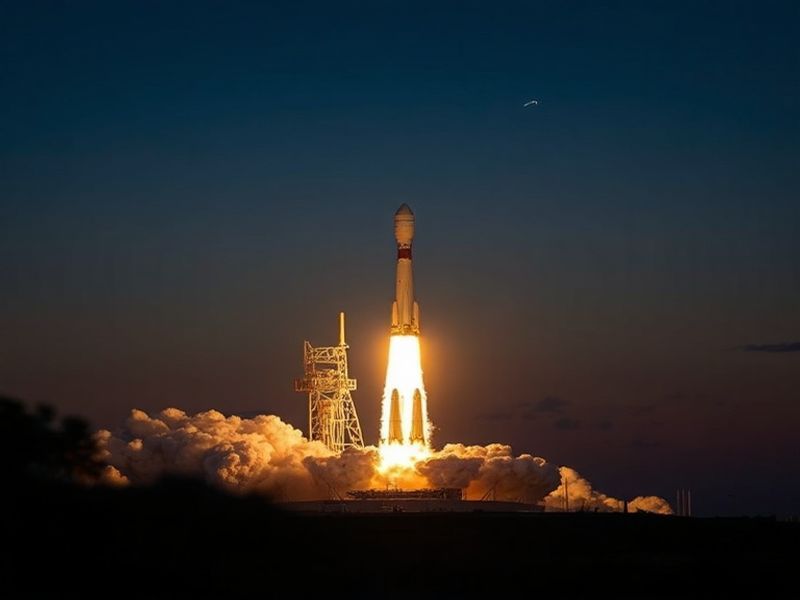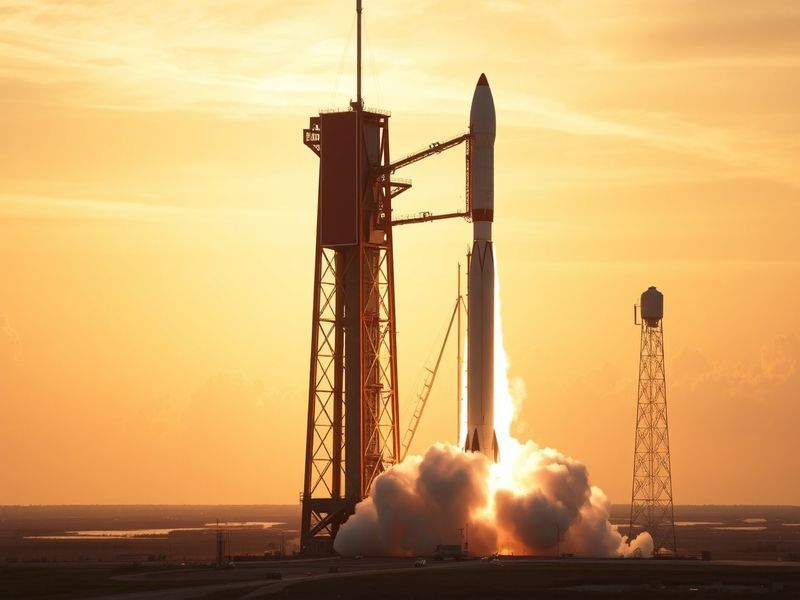
SpaceX’s Starship has once again captured the attention of the world, not just for its audacious design, but for its potential to redefine humanity’s relationship with space. The latest launch, conducted from the company’s Starbase facility in Boca Chica, Texas, marked another step toward operational readiness. While not every test flight has gone perfectly, each iteration brings critical data that inches the program closer to its ambitious goals.
The Starship system, comprising the Super Heavy booster and the upper-stage Starship spacecraft, is designed to be fully reusable. This design philosophy aims to drastically reduce the cost of space travel, making missions to the Moon, Mars, and beyond more feasible. The latest launch demonstrated significant progress, though it also highlighted the challenges that remain before the system can be declared operational.
The Technical Breakdown of the Latest Launch
The most recent Starship launch took place on a clear morning in South Texas, with liftoff occurring at 8:25 AM local time. The Super Heavy booster roared to life, its 33 Raptor engines generating over 16 million pounds of thrust—the most powerful rocket ever flown. The vehicle ascended smoothly, clearing the launch tower without incident, a marked improvement from previous attempts where pad damage and engine failures posed significant hurdles.
After stage separation, the Starship upper stage continued its journey, reaching an altitude of approximately 150 kilometers. While the spacecraft achieved a successful hot-staging maneuver—a critical milestone—the second stage experienced a rapid unscheduled disassembly shortly after engine cutoff. Despite this, the flight provided engineers with valuable telemetry data, offering insights into the vehicle’s performance under real-world conditions.
Key objectives for this mission included validating the booster’s performance, testing the upper stage’s thermal protection system, and assessing the in-flight propellant transfer capabilities. The data collected will inform design refinements, particularly for the heat shield and engine reliability. SpaceX has emphasized that these tests are iterative, with each launch building on the lessons of the previous one.
Lessons from Past Launches
The path to this latest launch has been anything but smooth. Earlier test flights in 2023 ended in spectacular explosions, with the first integrated flight test suffering multiple engine failures and a mid-air breakup. The second attempt saw the vehicle reach space before a propellant leak led to a loss of control. These setbacks, while disappointing, were not failures in the traditional sense but rather critical milestones in a rigorous testing process.
Each launch has contributed to a growing body of knowledge. For instance, the first flight revealed issues with the launch pad’s robustness, prompting the construction of a massive water deluge system to mitigate damage. The second flight highlighted the need for improved stage separation dynamics, leading to design adjustments in the hot-staging mechanism. These incremental improvements underscore the iterative nature of aerospace innovation.
Why Starship Matters for the Future of Spaceflight
The Starship program is not just another rocket development effort—it represents a fundamental shift in how we approach space exploration. Traditional expendable rockets, like those used by NASA’s Space Launch System or the European Ariane 5, are discarded after each flight, driving up costs. Starship’s fully reusable design promises to slash expenses, potentially reducing the cost per kilogram of payload to orbit by a factor of 100 or more.
This cost reduction is pivotal for NASA’s Artemis program, which aims to return humans to the Moon by 2026. Starship has been selected as the lunar lander for the Artemis III mission, tasked with ferrying astronauts from lunar orbit to the Moon’s surface. The vehicle’s payload capacity—up to 100 metric tons to the Moon—makes it uniquely suited for such a demanding role. Beyond the Moon, Starship is also eyed for missions to Mars, where its large capacity could enable crewed expeditions and cargo deliveries.
Commercial applications are equally compelling. Companies like SpaceX envision Starship as a workhorse for deploying large constellations of satellites, enabling global broadband coverage or Earth observation networks. The ability to launch and land payloads of unprecedented size could also revolutionize industries like manufacturing, where microgravity environments offer unique advantages.
Regulatory and Environmental Considerations
The rapid pace of Starship’s development has not been without controversy. Environmental groups have raised concerns about the impact of frequent launches on the Boca Chica ecosystem, particularly regarding air quality and wildlife habitats. SpaceX has implemented mitigation measures, such as reducing launch cadence during sensitive periods and investing in local conservation efforts. However, the long-term ecological effects remain a topic of debate.
Regulatory oversight has also intensified. The Federal Aviation Administration (FAA) has closely monitored Starship’s test campaign, imposing strict safety and environmental review processes. The latest launch, for example, was conducted under a modified launch license, reflecting the agency’s evolving approach to regulating experimental vehicles. This balance between innovation and safety is likely to shape the future of commercial spaceflight regulation.
The Road Ahead: What’s Next for Starship
With each launch, SpaceX edges closer to the operational phase of Starship’s development. The company has outlined a series of milestones for the coming year, including uncrewed lunar landings, in-orbit refueling demonstrations, and crewed test flights. These goals are ambitious, but the progress made so far suggests they are within reach.
One of the most anticipated developments is the completion of the Starship launch site at NASA’s Kennedy Space Center in Florida. This facility, currently under construction, will complement the Boca Chica site and enable higher launch cadences. The ability to launch from multiple locations is critical for meeting the demands of NASA’s Artemis program and commercial customers.
The success of Starship will also hinge on advancements in other areas, such as life support systems for crewed missions and in-situ resource utilization on Mars. SpaceX is not working in isolation; partnerships with NASA, the Department of Defense, and international collaborators will play a crucial role in shaping the vehicle’s future.
For now, the focus remains on refining the hardware and expanding the flight envelope. SpaceX’s iterative approach—build, fly, break, learn, repeat—has become a hallmark of its culture. While the road to operational status is fraught with challenges, the potential rewards are transformative.
A Glimpse into the Starship Ecosystem
The Starship program is more than just a rocket; it’s the cornerstone of a broader vision for space exploration. The vehicle’s design enables a range of missions, from satellite deployments to crewed expeditions. Here’s a look at some of the key components and capabilities:
- Super Heavy Booster: The first-stage booster, powered by 33 Raptor engines, provides the thrust needed to escape Earth’s gravity. Its reusable design is a cornerstone of the cost-saving strategy.
- Starship Upper Stage: The spacecraft itself is designed to carry crew and cargo. Its stainless steel construction offers durability and heat resistance, while its large payload bay accommodates a variety of missions.
- In-Orbit Refueling: Starship’s ability to refuel in space is critical for missions beyond low Earth orbit. This capability will enable trips to the Moon and Mars without the need for massive, expendable rockets.
- Moon and Mars Landings: Starship’s lunar and Martian variants are tailored for specific missions. The lunar lander, for example, will feature a heat shield optimized for Earth re-entry, while the Mars version will prioritize in-situ resource utilization.
As SpaceX continues to push the boundaries of what’s possible, the Starship program stands as a testament to the power of innovation and perseverance. The journey to space has never been easy, but with each launch, we move one step closer to a future where humanity is a multi-planetary species.
Conclusion: The Starship Effect
The Starship program is reshaping the aerospace industry, challenging traditional paradigms, and inspiring a new generation of engineers and scientists. While the road to success is littered with setbacks, the lessons learned from each launch are invaluable. The latest flight, despite its challenges, represents progress—proof that failure is not the opposite of success but a part of it.
For those watching from Earth, Starship is more than a technological marvel; it’s a symbol of human ambition. Whether it’s enabling lunar bases, facilitating Mars colonization, or unlocking new commercial opportunities, Starship’s impact will be felt for decades to come. The journey is far from over, but the destination is within sight.
As SpaceX continues to iterate and improve, the world watches with bated breath. The next launch could be the one that changes everything—or it could be another step in a longer journey. Either way, Starship is a reminder that the future of space exploration is being written today.