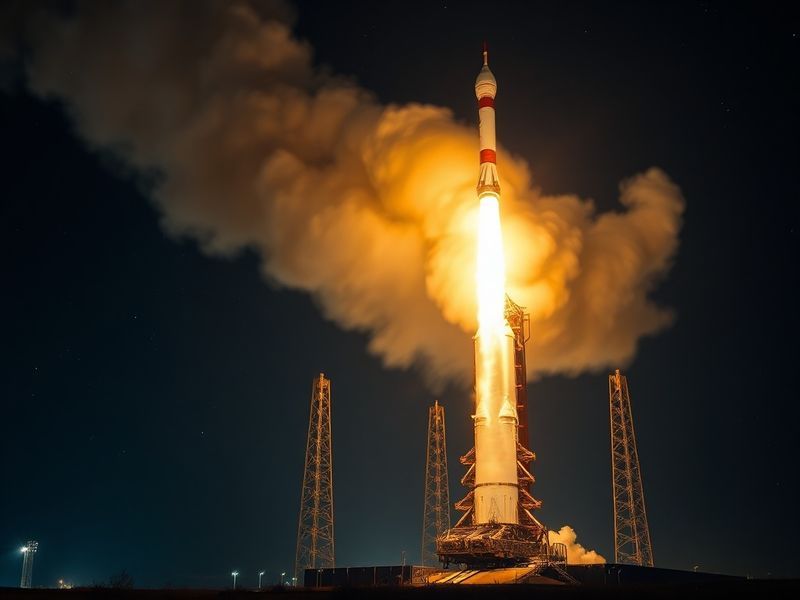
The evening sky is set to light up tonight as a rocket launches from Cape Canaveral Space Force Station. Scheduled for 8:15 PM EST, this mission marks another step in expanding commercial spaceflight capabilities. The payload includes a mix of scientific experiments and commercial satellites, reflecting the growing intersection of research and industry in space exploration.
Weather conditions remain favorable, with a 90% chance of clear skies at launch time. The 45th Weather Squadron has confirmed that wind speeds and cloud cover are within acceptable parameters for liftoff. This reliability is crucial for missions that often operate on tight schedules. Tonight’s launch window extends for three hours, providing flexibility in case of minor delays.
Mission Details and Payload
The rocket, a SpaceX Falcon 9, will carry 53 Starlink satellites into low Earth orbit. These satellites are part of the company’s expanding broadband network, which aims to provide global internet coverage. The first stage booster, making its eighth flight, will attempt a landing on the droneship “Just Read the Instructions” stationed in the Atlantic Ocean.
Among the payload are also three Earth observation satellites for Planet Labs. These satellites will collect high-resolution imagery for environmental monitoring and disaster response. The diversity of payloads highlights the adaptability of modern launch vehicles. Commercial missions now routinely combine telecommunications, scientific research, and Earth observation objectives.
This launch follows a busy month for space activity. Just last week, a NASA mission delivered critical supplies to the International Space Station. The pace of launches reflects both technological advancements and increasing commercial interest in space. Tonight’s event underscores how spaceflight has evolved from government-led initiatives to a collaborative effort involving private companies.
How to Watch the Launch
Viewers can watch the launch through multiple platforms. SpaceX will provide a live webcast on its website and YouTube channel, with coverage beginning 15 minutes before liftoff. The stream will include commentary from mission experts and real-time footage from cameras around the launch pad.
Local spectators near Cape Canaveral may witness the launch in person. The Kennedy Space Center Visitor Complex offers viewing packages that include access to exclusive viewing areas. However, tickets must be purchased in advance and are subject to availability. For those unable to attend in person, the webcast remains the most accessible option.
Social media will also play a role in the event. SpaceX typically shares updates and behind-the-scenes content on platforms like Twitter and Instagram. Hashtags such as #Starlink and #SpaceXLaunch will likely trend as enthusiasts share their experiences and reactions. This digital engagement has become an integral part of modern spaceflight culture.
What to Look For During the Launch
The most dramatic moments will occur in the first few minutes after liftoff. The rocket’s nine Merlin engines will ignite, producing over 1.7 million pounds of thrust. As the vehicle ascends, it will rapidly accelerate, reaching supersonic speeds within a minute. The first stage separation will occur approximately two and a half minutes into the flight, followed by the second stage ignition.
Spectators should also watch for the booster’s landing burn. If successful, the Falcon 9’s first stage will touch down gently on the droneship, creating a bright flare as it slows for landing. This milestone demonstrates the reusability that has revolutionized the space industry by reducing launch costs.
Significance of Tonight’s Launch
Tonight’s mission is more than just another satellite deployment. It represents the continued growth of the commercial space sector, which has become a driving force in space exploration. Companies like SpaceX have lowered the cost of access to space, enabling more frequent and diverse missions. This democratization of spaceflight has opened new opportunities for scientific research and technological innovation.
The Starlink satellites being launched tonight will expand the company’s broadband network to new regions. This infrastructure supports not only consumer internet access but also emergency communications and global connectivity initiatives. The deployment of Earth observation satellites further emphasizes the practical applications of space technology in addressing real-world challenges.
For the space industry, reusability remains a key focus. The Falcon 9’s first stage has flown multiple times, proving that rockets can be reliable and cost-effective. This approach has set a new standard for the industry, with competitors developing their own reusable systems. Tonight’s booster landing will add to the growing body of evidence supporting this technology.
Looking ahead, the success of tonight’s launch could influence future mission planning. If all systems perform as expected, the next Starlink deployment could occur within weeks. This rapid turnaround is a testament to the efficiency of modern launch operations. It also highlights the increasing demand for satellite-based services, from internet connectivity to climate monitoring.
Future Implications and Industry Trends
The launch tonight is part of a broader trend in the space industry. Over the past decade, the number of orbital launches has more than doubled. This surge is driven by the rise of small satellites, reusable rockets, and commercial partnerships. Governments and private companies are collaborating more closely, sharing resources and expertise to achieve common goals.
One emerging trend is the use of rideshare missions, where multiple small satellites are launched together on a single rocket. This approach reduces costs for smaller operators and increases launch frequency. Tonight’s mission includes several such payloads, reflecting this growing practice. It’s a development that could democratize access to space even further.
Another area of focus is sustainability. Companies are increasingly aware of the need to minimize space debris and ensure long-term viability of orbital operations. SpaceX, for instance, has committed to deorbiting its Starlink satellites at the end of their operational lives. This commitment addresses concerns about the growing number of objects in low Earth orbit.
The global space economy is projected to reach $1 trillion by 2040, according to some estimates. This growth will be fueled by advancements in technology, increased investment, and expanding applications. Tonight’s launch is a small but significant step toward that future. It demonstrates how spaceflight has become an integral part of our technological and economic landscape.
For enthusiasts and professionals alike, tonight’s launch offers a glimpse into the future of space exploration. It’s a reminder that space is no longer the exclusive domain of governments and large corporations. With the right combination of innovation and determination, anyone can contribute to the next chapter of humanity’s journey beyond Earth.
Don’t miss this opportunity to witness history in the making. Whether you’re watching the live stream or following along on social media, tonight’s launch is sure to inspire. The sky is not the limit—it’s just the beginning.
For more updates on space missions, visit our Technology section.
Explore additional launches and space industry news in our Science category.